
2025
4(84)
Piotr Springer*, Agata Gawlak**
Correlations and statistical analyses
of user preference assessment
in participatory design of healthcare facilities
DOI: 10.37190/arc250416
Published in open access. CC BY NC ND license
Abstract
The article presents examples of the use of statistical methods in the study of users’ declarations of willingness to participate in the design of healthcare
facilities and the relationship of users’ expectations to the evaluation of the existing built space of hospitals. Selected methods for assessing the correlation
between relevant socio-demographic factors and the spectrum of users’ functional-spatial preferences, such as Mann–Whitney U test, Spearman rank
correlation, Kruskal–Wallis ANOVA test and stepwise regression models, are discussed. The study involved medical sta of selected hospital facilities in
Poznan and caregivers of patients in the emergency room of one of Poznan’s paediatric hospitals. The surveys were conducted in 2015 and 2021. The same
research methods were used in both cases. The methods used made it possible to assess preferences towards the designed space, as well as the willingness
to participate in participatory research (in the case of sta). Consequently, it was shown that the selected statistical methods can be an eective tool in
assessing the spatial needs of users at the stage of investment programming and design. Thus, they can be used by architects and designers.
Key words: statistical methods, correlations, health care architecture, participatory design
Introduction
American architect and representative of postmodernism
Michael Graves pointed out: I am qualied to speak about
the physical properties of hospital space not because I am
an architect, but because I have spent the last three years
as a patient there (Graves 2011). These words emphatical-
ly highlight the importance of the participation of medical
sta and patients in the design of healthcare facilities and
the relevance of the choice of research methods that catalyse
participatory processes.
The design of healthcare facilities is a speciality that is
particularly determined by innovative and rapidly develop-
ing medical technologies and, at the same time, governed
by a very large number of legal regulations. The eciency
of healthcare facilities must be ensured not only when the
facility is commissioned, but during its use, with incredi
-
bly dynamic changes in treatment processes and forms of
patient care. Hence, adaptation to changing functional and
spatial needs is permanently embedded in the programming
and design of these investments. Changing medical technol-
ogies generate the need to modernise and adapt the building
structure more often than in other facilities.
It should also not be forgotten that in the case of hospitals,
we are dealing with dierent groups of users of the same
space, demonstrating radically dierent spatial and func-
tional needs, which is important when including the users
in the design processes. Hence, selected methods are used
which take into account the specic characteristics of the us-
ers concerned, enabling the participation of all groups in the
programming and design process. Statistical methods used
in architecture and urban planning are often inferior to the
entire spectrum of qualitative methods. Nevertheless, they
ensure that user needs are evaluated in a systematic way,
on a much larger scale, with objective weights and criteria.
At the same time, they make it possible to analyse correla-
tions, especially when including a large group of users with
* ORCID:
0000-0001-8874-7229. Faculty of Architecture, Poznan
University of Technology, Poland, e-mail: piotr.springer@put.poznan.pl
** ORCID: 0000-0002-6234-7953. Faculty of Architecture, Poz-
nan University of Technology, Poland.
168
Piotr Springer, Agata Gawlak
dierent characteristics and needs in the evaluation process
(here: patients, sta, visitors).
The aim of the research work presented in this paper was
to demonstrate the feasibility of using statistical methods as
tools to assess the spatial needs of users of healthcare facil-
ities and their willingness to participate in the investment
programming and design process.
State of research
The role of the building user in the process of dening
the spatial structure of the building is closely related to the
design model adopted for the development project. When
trying to establish the relationship between the designer and
the other stakeholders in the design process, it is worth start-
ing with an understanding of the process. Design process
methodologies are well described in the scientic literature
(Asanowicz 2010; Barełkowski 2009; Prokopska 2012). Re -
search
in architectural theory denes the design process
based on the knowledge, experience and talent of the desig-
ner as historically primordial (Niezabitowska et al. 2021,
178). As civilisation developed and new social expectations
of architecture emerged, the process transformed. This ob-
servation, outlined by, among others, a Swiss research team
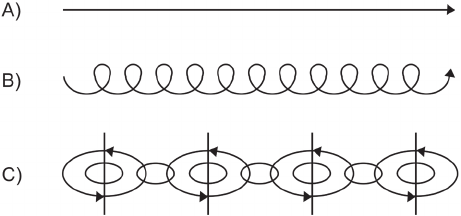
(Hegger et al. 2008, 187), was graphically presented by
Bea ta Majerska-Pałubicka (2014, 174) (Fig. 1).
Methods
Taking this into account, and noting the specicity of hos-
pital facilities, where a huge number of sensitive medi cal
processes are carried out, it is important to select such meth-
ods of evaluating the space of a built healthcare facility that
are as non-conicting as possible with the day-to-day ope-
ration of the facility under analysis, non-invasive and at the
same time enabling the collection of valuable and re liable
data in the shortest possible time. This specicity of carrying
out research in the buildings of healthcare facilities informed
the choice of statistical methods in the two case studies de-
scribed later in this thesis: a study of the socio-demograph-
ic factors inuencing the cooperation of hospital sta with
designers potentially undertaking the transformation of the
workplaces of the employees concerned, and a study which
involved the participation of patients of a paediatric hospi-
tal in the assessment of functional and spatial needs in the
emergency room. The described studies indicate that it is
worthwhile to integrate statistical methods into scientic
work in
the discipline of architecture and urban planning.
They oer, through data analysis and correlations, a chance
to uncover hidden connections in the perception of hospital
space, characterised by objectivity and detachment appro-
priate for the purposes of research, which were emphasised
by Jean S.K. Lee (1992, 89) in her comparative analysis of
quantitative and qualitative methods (Table 1).
Selected statistical methods were indicated for the analy-
ses: the Mann–Whitney U test, Spearman’s rank correlation,
Kruskal–Wallis ANOVA test and stepwise regression models.
The Mann-Whitney U test is a non-parametric test that
demonstrates whether sample values from two independent
populations show a magnitude correlation. The basic condi-
tion for the use of the U test is that the dependent variable is
represented on an ordinal or quantitative scale. This prereq-
uisite is fullled in the representation of the answers to ques-
tions on willingness to participate (the dependent variable of
the question) as a ve-point Likert scale (ordinal scale from 1
to 5) (Mann, Whitney 1947, 50–60). In the study described
here, this test was used, among other things, to compare the
declared level of willingness to participate for two separate
groups, e.g.: Who shows a greater willingness to participate:
women or men? Is the dierence statistically signicant?
Spearman’s rank correlation is a non-parametric mea-
sure of the monotonicity of the statistical relationship be-
tween variables. It describes the strength of the correlation
of two characteristics when both are qualitative, allowing
them to be ordered by the strength of the characteristic. For
the study in question, the values of age and length of service
of the sta were analysed (sortable by their strength – in
this case a numerical value) in relation to the declaration
of willingness to participate (also sortable by magnitude,
due to the structuring of the responses on a ve-point scale)
(Spearman 1904, 72–101).
The Kruskal–Wallis one-way ANOVA – one-way
analysis of variance for rank ANOVA – is a non-parametric
extension of the Mann–Whitney U test to more than two
populations. In the present study, three primary occupation-
al groups were dened, which qualies the use of the test in
question (Kruskal, Wallis 1952, 583–621). In the procedure
described, it was used, among other things, to compare the
declared level of willingness to participate for several sepa-
rate groups, e.g.: Who shows a greater willingness to par ti-
ci pate: doctors, nurses or other employees? Is the dierence
statistically signicant?
Stepwise regression models – a statistical method that
allows the degree of inuence of several explanatory vari-
ables on a given explanatory variable to be determined. In
a certain generalisation, regression models allow further
prediction of data (explanatory variables) on the basis of
separate known characteristics (explanatory variables). For
the present study, a stepwise model was adopted, in which
further explanatory variables would be added in an order of
signicance. This model was used to indicate whether hos-
pital sta’s willingness to participate in architectural design
is more inuenced by sociodemographic factors or by the
spatial characteristics of their current workplace.
Fig. 1. Design processes: A) linear, B) iterative; C) integrated
(source: Majerska-Pałubicka 2014, 174)
Il. 1. Procesy projektowania: A) linearny, B) iteracyjny;
C) zintegrowany (źródło: Majerska-Pałubicka 2014, 174)

Correlations and statistical analyses of user preference assessment in participatory design of healthcare facilities
169
A case study of the use of statistical methods
in research on hospital staff participation
in the design process
Six hospitals in Poznań were selected to carry out a sur vey
(expert questionnaire) among sta of hospital bed wards
1
.
The research work in question
2
, referred, among other things,
to the past experience of medical sta with par ti ci patory de-
sign, hence an important criterion for the se lec tion of the
territorial scope (in this case the selection of hos pitals) was
to select units that had undergone signicant spa tial trans-
formations in the last ten years.
A total of 154 respondents took part in the survey. The
survey was conducted in 2021 only among those who were
employed and actively performing their duties in a given
medical facility. The vast majority of people surveyed were
women (109 respondents, 71% of the total survey group).
The survey methodology was developed by the author on
the basis of his own experience in the programming and de-
sign of healthcare facilities and the current state of research.
In formulating the structure of the survey tool, reference
was made primarily to the work of Scandinavian research-
ers at the forefront of considering participatory design of
hospitals. One of the primary ones was the methodology of
the HospiCaseY project
3
. In this study, the current hospital
space was evaluated by sta, in separate functional catego-
ries, using a Likert scale. The content of the survey sheet
was veried for understanding by potential respondents
1
The following hospitals in Poznań were selected to conduct an ex-
pert survey among the sta of inpatient wards Gynecology and Obstet-
rics Clinical Hospital of the Karol Marcinkowski Medical Universi ty in
Poznań, ul. Polna 33, 60-535 Poznań, Independent Public Healthcare Cen-
ter of the Ministry of Internal Aairs and Administration in Poznań named
after Prof. Ludwik Bierkowski, ul. Dojazd 34, 60-631 Poznań, He lio dor
Święcicki Clinical Hospital of the Karol Marcinkowski Medi cal University
in Poznań, ul. Przybyszewskiego 49, 60-355 Poznań, Ka rol Jonscher Clin-
ical Hospital of the Karol Marcinkowski Medical Uni versity in Poznań,
ul. Szpitalna 27/33, 60-572 Poznań, Transgura tion Clinical Hospital of
the Karol Marcinkowski Medical University in Poznań, ul. Augustyna Sza -
marzewskiego 84, 60-569 Poznań, Józef Struś Multispecialist Municipal
Hos pital with ZOL SP ZOZ in Poznań, ul. Szwajcarska 3, 61-285 Poznań.
2
Chapter based on dissertation (Springer 2023).
3
Overcoming the language barrier of publishing the report in Finn-
ish was helped by the report of the subsequent EVICURES research proj-
ect, which refers in detail to the output of the preceding HospiCaseY study
(Nykänen et al. 2016).
during a pilot study combined with interviews, conducted
in two medical facilities: Face&Skin Dermatology and Der-
matosurgery and Poznań Askodent Implant Centre. During
the pilot, particular attention was paid to the content of the
questionnaire, relating to participatory theory and the level
of medical sta understanding of the nomenclature, identi-
cal to that of the architecture survey.
The content of the questionnaire was contained in two
pages of A4 sheet and consisted of ve main parts:
– information about the respondents,
– questions on the declaration of willingness to partici-
pate in the design of the renovation/expansion,
– questions on the evaluation of the quality of the respon-
dents’ current workplace,
– questions on previous experience with participatory
design,
– open-ended questions about the hospital space.
The primary intention was to construct the spreadsheet in
a way that allowed it to be received unambiguously and as
intended. The resulting tool enabled the collection of data
and analysis of their internal correlation.
An important part of planning a reliable statistical survey
is determining the minimum sample. For this purpose, the
formula (Kuszewski, Podgórski 2008, 26) was used:
N
min
= [N
P
(α
2
.
f (1 – f ))]/[N
P
.
e
2
+ α
2
.
f (1 – f )],
where:
N
min
– minimum sample size,
N
P
–
size of the population from which the sample is taken,
α – condence level for the results,
f – size of the fraction,
e – assumed maximum error, expressed as a fractional
number.
The study assumed:
– population size – approximate, total number of doctors
and doctors and nurses: personnel actively practising their
profession in Poznań hospitals: 3990
4
,
4
Due to the lack of current and unambiguous data on the number of
doctors and nurses strictly for the city of Poznań (only general data from
the Central Statistical Oce and the Supreme Chamber of Physicians for
the Wielkopolskie Voivodeship are available), the size of Poznań’s med-
ical sta was calculated by assuming a nationwide ratio of 2.4
doctors
per 1,000 inhabitants and 5.1 nurses per 1,000 inhabitants (European
Quantitative Qualitative
Ontological assumption objectivity subjectivity
Epistemological assumption positivism phenomenology
Aims of inquiry universality particularity
Role of researcher outsider insider
Researcher-respondent relationship detachment involvement
Research methods statistics description
Table 1. Statistical methods in the context of quantitative and qualitative research (elaborated by P. Springer, based on Lee 1992, 89)
Tabela 1. Metody statystyczne w kontekście badań ilościowych i jakościowych (oprac. przez P. Springer, na podstawie Lee 1992, 89)

170
Piotr Springer, Agata Gawlak
– condence level – non-random, strictly dened popu-
lation assumed: 95%
5
,
– fraction size – it was assumed that the sheets would be
completed correctly by at least 90% of the population: 0.9
6
,
– maximum error – the study group was assumed to be
representative of the issue in question: 5%.
Based on the above factors, a minimum sample size of
134 respondents was determined. The data collected in the
course of this survey research made it possible to determine
which socio-demographic factors may inuence the de-
clared degree of involvement of medical personnel in design
participation. Based on the indicated statistical methods, the
investigators drew conclusions, of which the following are
worth mentioning:
1. The majority of respondents declared that they would
like to be informed about plans to renovate/expand their
workplace (in relation to the statement: “I would like to be
informed about renovation/expansion plans”, 42.21% of
respondents answered “denitely yes”, while 30.52% an-
swered “rather yes”, which adds up to 72.73% interest in
par ticipation in the form of information).
2. The majority of respondents said they would like to be
consulted on their workplace renovation/expansion project
Observatory on Health Systems and Policies 2021), for a population of
Poznań in 2020 of 532,048 inhabitants (Bieniek et al. 2021, 76).
5
The survey sheets were handed over to the medical sta in the so-
cial areas of the hospital wards accessible only to them, which guaranteed
a high level of condence and at the same time a low maximum error.
6
A level of fractionation conducive to the reliability of the study
was ensured by the implementation of the pilot study described above.
(in relation to the statement: “I would like to be consulted
on renovation/expansion plans”, 29.87% of the percentage
of respondents answered “denitely yes”, while 27.27% an-
swered “rather yes”, which adds up to 57.14% interest in
participation in the form of consultation).
In order to analyse the latent correlations based on sta-
tistical tests, it was found that, among other things, dier-
ences between the answers given by representatives of sep-
arate professional groups were noticeable and statistically
signicant for consulting and declarations of devoting free
time. In all categories of participation, doctors expressed
the greatest willingness to participate in the project process
(Table 2). On the basis of the results obtained, it can be con-
cluded that the use of statistical methods may prove helpful
in identifying specic groups of end users for whom there is
the greatest justication for engaging in participatory design
processes, due to their declaration of willingness to cooper-
ate with designers.
A case study of the use of statistical methods
in surveys to assess patient satisfaction
and spatial expectations
A study conducted in 2015 examined the participation of
paediatric hospital patients in the assessment of function-
al-spatial needs in the emergency room
7
(Gawlak 2019). It
used the same statistical methods. The author’s survey was
7
B. Krysiewicz Specialist Complex for Maternal and Child Health
Care in Poznań (hereinafter: SZOZ).
Question
Profession
N
Average*
Median
Min.
Max.
Lower quartile
Upper quartile
Standard
deviation
Standard error
1a) I would like to be informed
about renovation/expansion plans
doctor 62 4.24 4 1 5 4 5 0.88 0.11
nurse 67 3.90 4 1 5 3 5 1.18 0.14
other 25 3.68 4 1 5 3 5 1.28 0.26
1b) I would like to be consulted
on renovation/expansion plans
doctor 62 3.95 4 1 5 3 5 1.05 0.13
nurse 67 3.34 3 1 5 2 4 1.25 0.15
other 25 3.40 3 1 5 2 5 1.38 0.28
1c) I would like to decide on the scope
of the renovation/expansion.
doctor 62 3.56 4 1 5 3 5 1.15 0.15
nurse 67 3.19 3 1 5 2 4 1.20 0.15
other 25 3.20 3 1 5 2 4 1.26 0.25
1d) I am willing to devote my free time
to participate in the design
of the renovation/expansion of my workplace
doctor 62 3.21 4 1 5 2 4 1.29 0.16
nurse 67 2.66 2 1 5 2 4 1.25 0.15
other 25 2.96 3 1 5 2 4 1.21 0.24
Table 2. Comparison of responses to questions concerning declarations of willingness to participate, depending on occupation
(elaborated by P. Springer)
Tabela 2. Porównanie odpowiedzi na pytania dotyczące deklaracji woli partycypacji w zależności od przynależności do wykonywanego zawodu
(oprac. P. Springer)
*The darker shade of green in the table corresponds to values that were found to be statistically signicant in the Kruskal–Wallis ANOVA test.
Correlations and statistical analyses of user preference assessment in participatory design of healthcare facilities
171
conducted among 212 emergency room patients (“satis-
faction assessment”, survey 01) and 203 potential hospital
patients (“expectations assessment”, survey 02).
Satisfaction assessment
The rst part of the study (satisfaction assessment, sur-
vey 01) was conducted among the parents (or guardians) of
patients currently in the emergency room. The evaluation
of their overall impression of the emergency room and the
evaluation of the solutions integrally related to the quality
of their stay in the hospital space were studied, but in this
paper, due to the stated aim of the study, selected results
are discussed, referring to the relation of the evaluation of
the space in relation to: sociodemographic characteristics of
the respondents, time of arrival at the emergency room and
waiting time for registration.
In selecting the size of the study sample, reference was
made to the average number of paediatric patients admitted
by the emergency room at the HES in the year preceding the
survey, which was approximately 20,000 (the record num-
ber of patients admitted was 30,000 in 2004). The resulting
annual average was then converted into a monthly average.
Among the respondents, women were in the vast majori-
ty, 86%, and men 14%. The results of the comparative anal-
ysis show that statistically signicant dierences (p < 0.05)
in the opinion of women and men on the evaluation of the
quality of solutions concerned functional-spatial solutions
(colour scheme, access to drinks, art and design, other fur-
niture, play area). Women rated most of these solutions sig-
nicantly higher. Men only rated the immediate surround-
ings of the hospital, the lighting and the waiting area higher.
However, this dierence was not statistically signicant
(p ≥ 0.05). The result shows that there is a correlation be-
tween the assessment of the emergency room space and the
gender of the respondent.
Further comparative analyses were carried out to demon-
strate the relationship between the assessment of the quality
of the space and functional arrangements of the hospital and
the hour of arrival in the room of the subject. The Kruskal–
Wallis rank-sum ANOVA test was used to compare the as-
sessment related to the quality of stay and the hour of arrival
at the hospital (10.00–12.00, 12.00–15.00, 15.00–20.00). It
was assessed that those who arrived in the morning hours,
i.e., between 10.00 and 12.00, rated the functional-spa-
tial solutions in the emergency room the lowest, while the
highest average ratings were given by the respondents who
arrived in the afternoon and evening hours, i.e., between
15.00 and 20.00.
Another comparative analysis was carried out between
the subjects’ evaluation of the space and their waiting time
for registration. For this purpose, the Kruskal-Wallis rank
ANOVA test was again used. The evaluation of spatial-func-
tional solutions for issues such as lighting, art and design,
play area, waiting area, colour scheme, sanitary facilities
diered statistically signicantly (p < 0.05), depending on
the waiting time for registration. The shorter the waiting
time for registration, the higher the ratings were given to the
in dividual solutions. Those waiting more than 30 min for
re gistration were mostly less satised with the functional
and spatial solutions of the chamber compared to the other
waiting patients.
A comparative analysis was then carried out between the
waiting time for a medical examination and the qualitative
assessment of the functional and spatial arrangements of
the emergency room. For this purpose, the Kruskal–Wallis
rank-sum ANOVA test was used.
On the basis of the research carried out, one might be
tempted to conclude that sociodemographic factors and the
situational context (waiting time for a medical procedure
and the time of arrival at the hospital) should also be taken
into account when shaping tools for evaluating a hospital
building. The results (opinions) obtained through the use
of statistical methods can become an extremely important
guide line for designers of healthcare facilities who will
want to evaluate the way in which a facility that will be
subject to spatial transformations functions.
Assessment of expectations
The sample size for the expectations survey (survey 02)
was selected adequately to the sample size dened for sur-
vey 01. The survey was conducted on a randomly selected
group of 203 people (66% women, 34% men) who were not
emergency room patients at the time of the survey. Expec-
tations towards the quality of the hospital space were ex-
amined in relation to several sociodemographic factors, but
the article exemplarily discusses the results relating to the
inuence of gender and age on these expectations.
In order to demonstrate the relationship between the as-
sessment of the expected quality of hospital space and func-
tional solutions and the gender of the respondent, compara-
tive analyses were carried out. An analysis was made of the
answers given by women and by men. For this purpose, the
Mann-Whitney U test was used. The results of the test indi-
cate that the evaluations of the functional-spatial solutions
of the emergency room, such as intimacy, accessibility, were
rated higher by women, and this dierence was statistically
signicant (p < 0.05). For the other solutions, the vast major-
ity (art, waiting room, sanitary facilities, colours, furniture
and lighting) were also rated higher by women, but the dif-
ference did not show statistical signicance (p ≥ 0.05). Men
only rated access to refreshments, the hospital building envi-
ronment and the changing room higher than women, this dif-
ference was also not statistically signicant (p ≥ 0.05). The
above proportions are analogous to the results obtained in
survey 01, where women also rated most of the chamber’s
functional-spatial solutions higher than men.
The results of the test indicate that the gender of the user
of a space has little inuence on the evaluation of the func-
tional-spatial solutions if they are not a user of that space at
the time of the survey (here: potential hospital patient). The
most convergent responses of the respondents were indicat-
ing: tv, a separate room or so-called other form of improve-
ment within the emergency room. The biggest dierence
in the answers given concerned: so-called other solutions
(22% women vs. 10% men), wi- access (14% women vs.
20% men).
Next, the relationship between the assessment of the qua li -
ty of the space and the age of the respondents was compared.

172
Piotr Springer, Agata Gawlak
To test the correlation of data related to quality of stay and
age of carers (in terms of the age groups adopted in the
stu dy: 18–25, 26–35, 36–45 and over 45 years), the Krus-
kal– Wallis rank-sum ANOVA test was used. Respondents
responded most concurrently by indicating: tv, a separate
room or so-called “other” form of improvement within the
emergency room.
Relationship of satisfaction ratings to expectations
The results of the study were then collated using, among
other things, statistical analysis, including comparative anal-
yses of the two research models (“satisfaction assessment”
vs. “expectation assessment”). In both models, the inuence
of factors such as the respondent’s age, gender, time of day,
waiting time for registration or medical examination on the
perception of hospital space was considered. On this basis,
as well as in the light of the literature studies carried out, it
was proven that the functional-spatial solutions of the emer-
gency room have a signicant impact on the well-being,
safety and satisfaction of patients. The analysis carried out
was intended to conrm that emergency room patient satis-
faction is shaped on many levels related to variables such as
gender or age, while for qualitative studies of the facilities,
the status of the users surveyed is also of great importance,
i.e., whether they make their assessments while “in situ” or
based only on their expectations of the assessed (surveyed)
space. The evaluations of specic functional-spatial solu-
tions of the reception room from both survey studies (“satis-
fac tion evaluation” vs. “expectations evaluation”) were
com pared with each other. The Mann-Whitney U-test was
used to compare the results of the two surveys. Thus: in sur-
vey 01, the following were rated highest: lighting, chang-
ing rooms, access to drinks and art, while in survey 02 the
following were indicated as most important: lighting of the
chamber, accessibility, waiting room (overall impression),
sanitary facilities and the hospital environment.
Importantly, respondents in the emergency room gener-
ally made proportionately lower assessments of spatial ar-
rangements than prospective patients (Fig. 2).
The second comparison (“satisfaction rating” vs. “expec-
tation rating”) concerned the respondents’ suggested possi-
ble improvements within the hospital emergency room.
Similarly, the responses of those who stay in the emer-
gency room were compared with those of respondents who
can imagine this stay. The so-called test of dierences be-
tween the two percentage structure indicators was again ap-
plied. The results show statistically signicant dierences
in the assessment of the impact of individual facilities on
the comfort, satisfaction and sense of security of emergency
room patients (Fig. 3).
By demonstrating signicant dierences in the percep-
tion of hospital space and qualitative assessment between
those surveyed and present in the emergency room at the
same time during the survey and those surveyed who are
potential hospital patients, the expectations of potential hos-
pital patients were veried in relation to their actual sen-
sations and actual perception of hospital space and spatial
needs.
The conclusions of the described research work (Gawlak
2019) point to the possibilities of using the results of the
conducted research and, above all, to the necessity of con-
tinuing them in a broader context, i.e., taking into account
other, including “non-architectural” factors inuencing
patients’ satisfaction with their hospital stay. Comprehen-
sive qualitative studies of architectural space, taking into
account, for example, the acoustic quality of the space, the
reputation of the hospital in question or the reputation of the
medical sta, will allow an objective diagnosis of this space
to be made by assessing the satisfaction of its users and,
consequently, to properly guide design work when mod-
ernising, rebuilding, renovating or building a new hospital.
In view of the above, it can be stated with certainty that
the qualitative assessment of the architectural space should
be carried out taking into account the patient’s expectations.
This is conrmed by the analysis presented, according to
which the potential patient’s expectations of the hospital ar-
chitecture are relatively higher than the satisfaction rating of
the patient staying in the hospital (Fig. 2).
In essence, the indicated conclusions of the studies sup-
port the thesis that hospital architecture shapes the com-
The Y-axis indicates the number of points allocated by respondents on a five-
point scale indicating how important each spatial aspect is to them, where:
1 – don’t know, 2 – not important, 3 – not very important, 4 – quite important,
5 – very important.
The Y-axis indicates the number of people, who have pointed out a solution
listed on the X-axis.
Fig. 2. Assessment of the quality of emergency room solutions.
Comparison of satisfaction with expectations (elaborated by A. Gawlak)
Il. 2. Ocena jakości rozwiązań w obrębie izby przyjęć.
Porównanie satysfakcji z oczekiwaniami (oprac. A. Gawlak)
Fig. 3. Comparison of indicated possible improvements
between patients, residing in the emergency room and -responders
who are potential patients (elaborated by A. Gawlak)
Il. 3. Porównanie możliwych ulepszeń wskazywanych przez pacjentów
przebywających w izbie przyjęć i respondentów będącymi
potencjalnymi pacjentami (oprac. A. Gawlak)
Correlations and statistical analyses of user preference assessment in participatory design of healthcare facilities
173
fort and well-being of patients, depending on socio-de-
mographic and other conditions, such as waiting times for
registra
tion and medical examination, and, above all, pa-
tients’ ex pectations of the characteristics of the built space.
The con clusions of the described research demonstrate the
applica bility of statistical methods in the pre-design evalua-
tion process of the built space of healthcare facilities.
Summary
Both case studies presented above used convergent sta-
tistical methods. The aim was to create project recommen-
dations based on reliable data.
A limitation of the conducted studies, but also of simi-
lar ones, is usually the so-called institutional barriers, often
the fear of evaluation and possible detection of irregulari-
ties, sometimes simply the reluctance to introduce research
teams evaluating space and functional-spatial solutions into
the constructed healthcare facility.
The life cycle of a building consists of stages that last
from several months to several tens or hundreds of years
(Niezabitowska 2004). For the creation of space quality in
architecture, by far the most important is the planning and
programming phase of a building, and then the actual archi-
tectural design, because it is at the planning and program-
ming stage of an investment that decisions are made relating
to, for example, the choice of location for the building (in
the case of a new hospital) and the creation of a functional
programme begins, which is of key importance for the qual-
ity of the space designed later.
Consequently, it is important from the users’ point of
view to programme healthcare buildings properly and com-
prehensively, based on qualitative studies for buildings and
qualitative assessments for buildings with similar functional
programmes.
To this end, during the programming stage of an invest-
ment, whether it involves a new hospital or the expansion,
renovation or modernisation of an existing one, eorts should
be made to
include representatives of all groups of future
users of the building in the design process: sta and pa
-
tients, which is possible – this is conrmed by the case stud-
ies cited in this article. Thus, it should be concluded that the
aim of the research work as stated in the introduction (statis-
tical methods can be an eective tool in assessing the spatial
needs of users at the stage of programming and designing an
investment) has been achieved.
This is borne out by the Evidence-Based Design process
in hospital design, i.e., making design decisions related to
the functional-spatial programme based on the results of re-
liable scientic research.
In terms of practical recommendations arising from this
research work, it is worth highlighting:
1.
The need to use nomenclature in the survey sheets that
is understandable to the recipient – depending on the re-
search: sta or patients. To this end, pilot surveys should be
carried out before the implementation of the targeted studies.
2. With regard to surveys involving hospital sta – when
formulating the survey, it is necessary to narrow its scope
to aspects relevant to the investment in question, so that the
survey does not involve long-term involvement of the sta,
who are likely to ll in the questionnaires during their work.
3. In relation to surveys with the participation of patients
– both the observations of this user group in relation to the
existing space and the expectations towards the space after
the implementation of the target design intervention (con-
struction, reconstruction or extension) should be considered
relevant.
4. When selecting the study group, particular attention
should be paid to ensure a minimum size, determined by the
formula indicated in chapter: “Case study of the use of sta-
tistical methods in research on designer participation with
hospital sta”.
At the same time, consideration should be given to lim-
iting access to the surveys to designated users only, which
will increase the condence level for the results.
Translated by
Agata Gawlak
References
Asanowicz, Aleksander. “Geneza metodologii projektowania.” Architec-
turae et Artibus 2, no. 4 (2010): 11–8.
Barełkowski, Robert. “Zapiski o procesie projektowym.” Przestrzeń
i Forma 12, (2009): 85–102. https://doi.org/10.13140/2.1.3219.4242.
Bieniek, Agnieszka, Emilia Bogacka, Ewa Filipczuk, Marta Kowalczyk,
Katarzyna Piętak, and Maciej Pilarski. Rocznik statystyczny woje-
wództwa wielkopolskiego. Urząd Statystyczny w Poznaniu, 2021.
European Observatory on Health Systems and Policies. “State of Health
in the EU, Polska, Prol systemu ochrony zdrowia 2021.” Pub-
lished December 13, 2021. Accessed January 20, 2022, at www.
oecd-ilibrary.org/social-issues-migration-health/poland-coun-
try-health-prole-2021_e836525a-en.
Gawlak, Agata. Architektura szpitala: izba przyjęć w szpitalu pe dia t
rycz nym. Wydawnictwo Politechniki Poznańskiej, 2019.
Graves, Michael. “Michael Graves at TEDMED 2011.” Video, 25 min.,
45 sec. Accessed June 6, 2024, at https://www.tedmed.com/talk/mi-
chael-graves-at-tedmed- 2011/.
Hegger, Manfred, Mathias Fuchs, Thomas Stark, and Martin Zeumer.
Energy Manual, Sustainable Architecture. Birkhauser, 2008.
Kruskal, William H., and Wilson A. Wallis. “Use of Ranks in One-Cri-
terion Variance Analysis.” Journal of the American Statistical Asso-
ciation 47, no. 260 (1952): 583–621. http://dx.doi.org/10.1080/016
21459.1952.10483441.
Kuszewski, Piotr, and Jarosław Podgórski. Statystyka, wzory i tablice.
Szkoła Główna Handlowa w Warszawie, 2008.
Lee, Jean S.K. “Quanitative Versus Qualitative Research Methods – Two
Approaches to Organization Studies.” Asia Pacic Journal of Ma na
ge ment 9, no. 1 (1992): 87–94, https://doi.org/10.1007/ BF
01732039.
Majerska-Pałubicka, Beata. Zintegrowane projektowanie architekto nicz
ne w kontekście zrównoważonego rozwoju. Doskonalenie procesu.
Wydawnictwo Politechniki Śląskiej, 2014.
Mann, Henry, and Donald Ransom Whitney. “On a Test of Whether one
of Two Random Variables is Stochastically Larger than the Other.”
Annals of Mathematical Statistics 18, no. 1 (1947): 50–60. http://
dx.doi.org/10.1214/aoms/1177730491.
Niezabitowska, Elżbieta, ed. Wybrane elementy Facility Management
w architekturze. Wydawnictwo Politechniki Śląskiej, 2004.
174
Piotr Springer, Agata Gawlak
Niezabitowska, Elżbieta, Anna Szewczenko, Michał Tomanek, and Mag -
dalena Jamrozik-Szatanek. Projektowanie obiektów szpitalnych, rola
badań naukowych w doskonaleniu jakości funkcjonowania szpi tali.
Wydawnictwo Naukowe Śląsk, 2021.
Nykänen, Esa, Tuomaala Pekka, Laarni Jari, et al. A UserOriented, Evidence-
based Besign Project of the First Finnish Single Room ICU. Results of
EVICURES Project, VTT Technical Research Centre of Finland, 2016.
Prokopska, Aleksandra. Projektowanie architektoniczne. Procesy wstęp-
ne. Ocyna Wydawnicza Politechniki Rzeszowskiej, 2012.
Spearman, Charles. “The Proof and Measurement of Association be-
tween Two Things.” The American Journal of Psychology 15, no. 1
(1904): 72–101, https://doi.org/10.2307/1412159.
Springer, Piotr. Projektowanie partycypacyjne obiektów szpitalnych.
PhD
diss., Politechnika Poznańska, 2023.
Streszczenie
Korelacje i analizy statystyczne w ocenie preferencji użytkowników w projektowaniu partycypacyjnym obiektów ochrony zdrowia
W artykule zaprezentowano przykłady wykorzystania metod statystycznych w badaniach deklaracji woli partycypacji użytkowników obiektów
ochrony zdrowia w projektowaniu tych obiektów oraz relację oczekiwań użytkowników do oceny zastanej przestrzeni zbudowanej szpitali. Omówione
zostały wybrane metody pozwalające na ocenę korelacji pomiędzy istotnymi czynnikami socjodemogracznymi a spektrum preferencji funkcjonalno
-przestrzennych użytkowników, takie jak: test U Manna–Whitneya, korelacja rang Spearmana, test ANOVA Kruskala–Wallisa oraz krokowo postępu-
jące modele regresyjne. W badaniu wzięli udział pracownicy medyczni wybranych obiektów szpitalnych Poznania oraz opiekunowie pacjentów izby
przyjęć jednego z poznańskich szpitali pediatrycznych. Badania przeprowadzono w 2015 i 2021 r. W obu przypadkach wykorzystano te same metody
badawcze. Zastosowane metody umożliwiły ocenę preferencji względem projektowanej przestrzeni, jak również wolę udziału w badaniach partycypa-
cyjnych (w przypadku personelu). W konsekwencji wykazano, iż wybrane metody statystyczne mogą stanowić efektywne narzędzie w ocenie potrzeb
przestrzennych użytkowników na etapie programowania i projektowania inwestycji. Tym samym mogą zostać wykorzystanie przez architektów oraz
projektantów.
Słowa kluczowe: metody statystyczne, korelacje, architektura ochrony zdrowia, projektowanie partycypacyjne