
2010
Nr 2(28)
The beginnings of mass culture
1
are connected with
the industrial revolution. They also have direct connec-
tions with urbanization processes that started in the 19
th
century, the indirect effect of which was the unication
and popularization of societies and consequently, the
ways of land development.
In the research conducted on the development of mass
culture, from which pop culture has been evolving since
the 1960s, the meaning of information popularisation (the
inuence of the mass media) and the consequences of
progressing globalization are emphasized. The aspect of
pop culture that still requires an analysis is its impact on
the modern architecture and the feedback relation of this
process, i.e. the inuence of the modern architecture on
other aspects of pop culture.
Researchers of culture emphasize the existence of
stages in the development of mass culture. According to
Antonina Kłoskowska, the rst stage of popularisation
takes place after World War I (the development of lm
and radio, the peak point of the press development), the
second stage is in the middle of the 20
th
century (develop-
ment of TV)
2
[2]. Another stage is marked by the appear-
ance of the Internet and further progress of globalization
processes.
*
West Pomeranian University of Technology, Faculty of Modern
Architecture, Theory and Design Methodology.
1
There are many denitions of the term mass culture. Most of them
refer to numerous problems connected with the development of urbanized
societies (which appeared in the 19
th
century) and the mass media exist-
ing in these societies. As the most important mass media, the following
means are mentioned: press, radio, lm, television and most recently the
Internet.
2
These notions are introduced by A. Kłoskowska in her book Kul-
tura masowa, which is considered to be a classic position in the sociology
of culture.
The 1960s and 1970s are the time of the evolution of
mass culture into pop culture, which is connected with
a new position of rock music, cinema and television. Fas-
cination of pop culture can also be observed in art, which
is manifested by the creation of pop art or the beginnings
of American architectural post-modernism
3
. Linking mass
culture with architecture gives opportunities for a new
original perspective on the history of culture and archi-
tecture of the last two hundred years. We can distinguish
three phases of mutual relations between mass culture and
architecture:
• Phase 1 – 19
th
century and the beginning of the 20
th
century (beginnings of mass culture and the 19
th
century
town development). This phase was connected with the
concept of a new modern city (from circa 1850), demoli-
tion of defence fortications and creating a new unlimited
spatial perspective of city land development based on the
industrial development as well as popularisation of the
employed spatial forms (among other, a tenement house,
factory).
• Phase 2 – the time of modernist culture which takes
place throughout most of the 20
th
century (from 1920s to
1970s). In this period, we can observe further populari-
zation of the ways of architectural implementations and
also a considerable inuence of the international style
which can be perceived as a manifestation of the global
culture. Modernism, as an aesthetic concept, dissociated
itself from eclectic ideas by suggesting a new formal lan-
guage which did not approve of popular (folk) culture
and tried to create its own elitist character. At the same
time in the architecture and urban planning, such terms as
3
Compare: D. Strinati, Wprowadzenie do kultury popularnej, Wy-
dawnictwo Zysk i S-ka, Poznań, 1998.
Krzysztof Bizio*
Pop culture as an inspiration in the modern architecture.
Chosen issues
Introduction. Mass culture in relation to architecture
84 Krzysztof Bizio
repeatability, prefabrication, unication and others were
emphasized.
• Phase 3 – introduction of elements of pop culture
into the area of high culture, which is started in the 1960s
and takes on a new shape from the beginning of the 1990s.
Introduction of the forms, so far associated with popular
culture, into the area of architectural avant-garde resulted
in blurring boundaries between popular architecture and
high architecture.
Post-modernist breakthrough, pop culture and architecture
For many years, an intellectual opposition was created
between popular culture and high (elitist) culture. Popular
culture was ascribed low values, frequent lack of original
ideas, anti-intellectualism, commercialization and putting
the emphasis mainly on mercantilist values and satisfying
the lowest instincts.
We can assume that this division existed in the cul-
ture until the revolution of the 1960s, particularly until
the development of pop art and postmodernism. These
trends introduced a signicant change in the interpretation
of popular culture by involving some attributes of popu-
lar culture in a sort of an intellectual game, thus turning
them into high culture attributes, which in practical terms
meant that the boundaries between these two cultures
blurred
4
[1].
United States of America
Emergence of postmodernism in the USA is connected
with the appearance of new theories and publication of
such books as The Death and Life of Great American Cit-
ies – by Jane Jacobs and Complexity and Contradiction in
Architecture – by Robert Venturi. Particularly important
was the fascination with the popular products of culture
and kitsch, which was analyzed by R. Venturi along with
D.S. Brown and S. Izenour in – Learning from Las Vegas.
This book contains examples of advertisements and ludic
architectural forms into the space of a specic metropolis
4
Symptoms which anticipated this process were the concept of ready
mades, started by M. Duchamp and his Bicycle Wheel (1913), Bottle dryer
(1915) and the famous Fountain (1917).
which is the capital of world gambling – Las Vegas. The
observations made by R. Venturi in practice had a broader
dimension and described the spatial reality in which the
pop attributes were an integral part of the iconosphere of
the city of the 1960s and 1970s [4].
A different interpretation of pop was proposed by
Ch.W. Moore in the design of the town square Piazza
d’Italia in New Orleans. This public design executed in
1978 was addressed to the local community of Italian
origins. It employed traditional elements of classic archi-
tecture (columns, porticos and presentable stairs) for the
purposes of playing with the spectator and it was realized
with the use of modern materials (stainless steel, neon).
Among other examples of connections of the Ameri-
can postmodernism with pop cultural forms, we can men-
tion the projects of SITE workshop for the chain of mar-
kets Best, where typical rectangular façades of great su-
permarkets were enriched by the motives of walls which
fall off and apart or they used lettering as a decorative
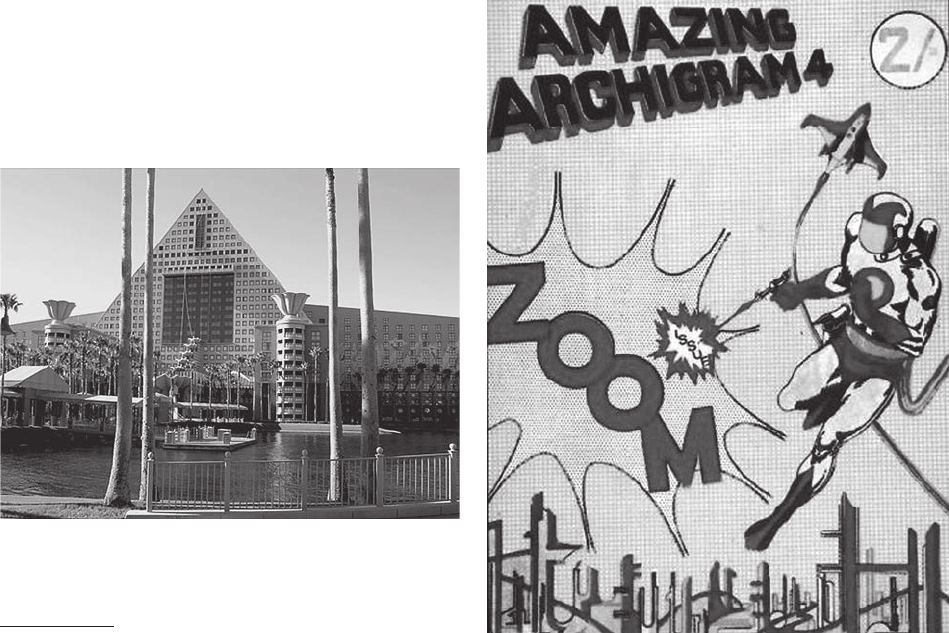
Fig. 1. Dolphin and Swan Hotels in Walt Disney World, Orlando 1990.
Architect Michaela Graves
Fig. 2. The cover of Amazing Archigram 4
in a convention of comics

Pop culture as an inspiration in the modern architecture. Chosen issues 85
element
5
; also, designs by Michael Graves, with a project
that was radical as regards its references to pop culture
Dolphin and Swan Hotels in Walt Disney Word complex
in Orlando from 1990 (Fig. 1), in which he employed
gures of dolphins and swans from Walt Disney stories as
sculptures forming the building’s façade.
Europe
In Europe, the inuences of pop culture on architec-
ture in the 1960s and at the beginnings of the 1970s had
a slightly less direct character.
The achievements of Archigram (ARCHItecture
TeleGRAM) group are very characteristic here. The group
consisted of six architects
6
who were fascinated with new
and futuristic visions of architecture. Their designs had
a theoretical character, the aim of which was to stimulate
reections on new architectural possibilities. The most
famous are the following: Walking city – a design of the
city which transfers like a steel creature; Suitalion – a city
clothes or a mega-structure design – Plug-in-City. The
group signicantly contributed to the form of presenta-
5
The most popular SITE project from this period is a Huston market
from 1974.
6
The Archigram was created by David Greene, Peter Cook, Mike
“Spider” Webb, Warren Chalk, Dennis Crompton and Ron Herron.
tion of the architectonic idea which strayed away from the
pompous and serious approach presented by modernists
and suggested the usage of comics and posters (Fig. 2)
imitated on pop culture heroes (superman, Spiderman).
Among experienced architects, there were no such
radical creators in Europe who would derive their visions
from pop culture. The book by R. Rossi L’achitettura del-
la citta turned out to be very important for the European
post-modernism; however, it was a serious essay which
presented the reasons of the modernist city crisis and at-
tempts to get out of it.
Nevertheless, there were also European experienced
architects who took advantage of pop motives in their
creative activity. Hans Hollein, an Austrian architect, in
the rst stage of his creative activity was the author of
several ne-scale solutions, mainly interiors, in which he
used pop iconography in a specic way. For example, he
designed the interiors in form of steel palms and cash desk
windows with the motives of Rolls-Royce dummy bars
in the Austrian Travel Agency in Vienna. He is also the
author of ideological designs in which sea ships were to
be placed in the interior. On the European ground, Venice
Biennale in 1980 turned out to be a breakthrough event,
in which functionalistic architecture was replaced by nar-
rative architecture.
Artists in architecture
The design presence of artists connected with pop in
architecture may constitute an interesting thread of rela-
tions between architecture and popular culture.
Frank O. Gehry is an architect who in his early works
used some particular ideas – ready made – the example
of which can be his own house in Santa Monica (Califor-
nia) built in the 1970s. He is also a co-author of the ofce
complex Chiat/Day/Mojo in Venice (California) built in
the years 1975–1991. The co-authors of this concept are
the artists connected with pop art: Claesem Oldenburg
and Coosje van Bruggen. The central part of the structure
constitutes a several-storey sculpture by Claesem Olden-
burg, which presents binoculars. Gehry himself also used
the contours of objects in his later designs, the example
of which can be a sh gure motive used in Fish Dance
Restaurant in Kobe (1987); Lewis House in Lyndhurstw
in Ohio (1989–1995) and Villa Olimpica in Barcelona
(1992).
An original combination of art and architecture was
suggested by Friedensreich Hunderwasser – an Austrian
painter, sculptor and performer. He is the author of the
architectural manifest Verschimmelungs-manifest gegen
den rationalismus in der architektur (1957) in which he
criticized functionalism in architecture. Hunderwasser’s
suggestions do not directly derive from pop iconography
but they are examples of a radically different approach
to architecture from the ideological and ne arts point of
view.
Architecture as lm inspiration
In the 1960s, it was possible to observe the specic feed-
back in which other activities in the range of pop culture
were inspired by architecture, in particular, the lm. A good
example of this phenomenon can be the lm by the clas-
sic of the new French nouvelle vague – Jean-Luc Godard
Alphaville
7
; the lm describes a vision of the dehumanised
7
The full title of the lm is as follows: Alphaville, une étrange
aventure de Lemmy Caution. It combines science– ction and noir cinema
by presenting a story about the society managed by Alpha 60 electronic
brain. The location of the lm was in Paris.
world, which can be understood as an indirect accusation
of modernism in architecture. Apart from Godard, the in-
uences of postmodernist iconography can be observed in
Antonioni’s lms and rst of all in Fellini’s lms (Eight
and a Half (1963), Satiricon (1969), Amarcord (1973)). In
his lms, Fellini used architectural space giving it symbolic
and ambiguous values in a way that was characteristic for
architectural postmodernism.
For architectonic creative activity, a science-ction trend
turned out to be the most signicant; in this trend, set designs
were created which were supposed to represent the future.
86 Krzysztof Bizio
An important lm for this trend was 2001 – A Space Odyssey
directed by Stanley Kubrick in1968, in which a new kind of
spatial aesthetics representing the future was created.
A contemporary director who is mentioned by archi-
tects and architecture critics as a person inspiring their
creative activity is Ridley Scott and his two lms in par-
ticular: Alien 1979 and Blade Runner 1982. Impressions
of the suggested aesthetic solutions included in these lms
can be found in contemporary designs by Z. Hadid and F.O.
Gehry [3].
Participation, hippies and ‘do-it-yourself’
Equalization of the achievements of pop culture and
high architecture resulted in the appearance of a new trend
of architecture created by its users
8
as well as in the resi-
dents’ participation in professional architectural designs.
The works of a Belgian architect Lucien Kroll can
constitute an example of participation in creating archi-
tecture. After students’ manifests in 1969, Kroll started
work on his most famous design of La Merne town for the
students of Medicine at Louvain University. Students par-
ticipated in the process of designing actively and the re-
sult of the work was a controversial design which strayed
away from a modernist and ascetic form; however, the
design was enriched with different extensions as regards
8
This phenomenon was described in 1964 by Bernard Rudofsky in
Architecture without architects. A Short Introduction to Non-Pedigreed
Architecture.
the formal aspect, which emphasized the meaning of ar-
chitecture and greens.
Another famous design from this period is the housing
estate ‘Byker Wall’ by Ralph Erskine. The author opened
his ofce for social consultations
9
and created a different
housing sub-estate which took into consideration the re-
marks and suggestions of the future residents in the de-
sign process.
A similar approach characterized also other initiatives,
among which the most famous is the activity of ARCAU
group from Brussels founded in 1969 or the works by Ivo
Waldhor.
9
In order to encourage people to visit him, he connected the func-
tion of the design ofce, which was adapted from the old funeral parlor,
with the function of the lost property ofce as well as garden advice and
plants sale point.
New situation in the days of globalization. Cyber culture and architecture
Since the 1990s along with the development of the
computer studies society, in particular, the development of
computerization, the way of spreading products of culture
has been modied, which has also created a new situation
of the relation between culture and modern architecture.
Inspirations of mass culture products such as traditional
history of art or cinema – characteristic of postmodernism
époque – were replaced by inspirations in the area of new
media. Virtual reality and the appearance of the so called
cyber culture became particularly signicant
10
. Forms de-
rived from computer graphics or virtual reality entered the
sphere of architecture
11
.
A good example of the project which used cyber cul-
ture inspiration can be Victoria University Online Training
Center in Saint Albans in Australia (2001–2002). The au-
thor of the project is Studio Lyons from Melbourne whose
creative activity is characterized by irony in the digital
times
12
. In this design, a part of the building façade was
covered by computer graphics, which constitutes a refer-
ence to the function of the building. The usage of façades
10
A computer studies dictionary gives two basic denitions of cyber
culture: 1. subculture of the Internet users playing computer games; and
2. a new face of pop culture using the multi-media, including mainly com-
puters and the net of computer connections and links. Source: A computer
studies dictionary: www.i-slownik.pl
11
A separate issue constitutes the existence of structures in the virtual
space only. The example of such activities can be Guggenheim Virtual
Museum design by Asympote group.
12
10.10_2.100 Architects.10 Critics, Phaidon, London 2005,
p. 208.
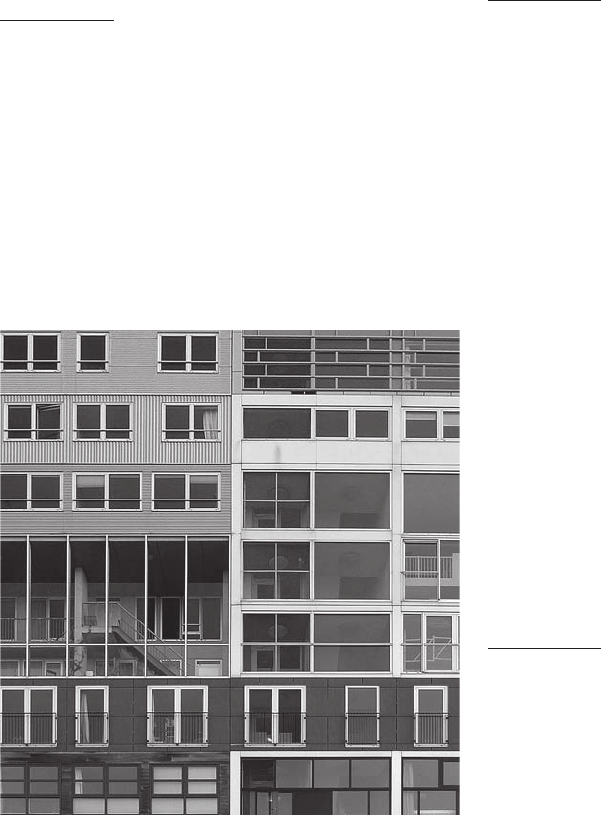
Fig. 3. Silodam of MVRDV group in Amsterdam

Pop culture as an inspiration in the modern architecture. Chosen issues 87
as a media carrier
13
became also a kind of identication of
Herzog de Meuron group which should be regarded as one
of the most inuential groups in modern architecture.
The project of a transformer station in Utrecht made
by NL ARCHITECTS group is also inspiring. It was
changed into a sort of sculpture with façades, which have
grips for climbing and a basket for playing basketball.
This building in its stylistics refers to virtual reality, com-
puter games graphics, representing in this way a wider
trend of the architectonic quest.
13
Herzog de Meuron used façade motives-overprints (among other,
in the design of the University Library in Cottbus) and changeable light
façades (among other, the design of Munich Stadium).
A uniquely interesting thread of architectonic quests
is represented by Dutch MVRDV studio. Their designs
derive from Dutch structuralism trend and refer to the
classic forms of Aldo van Eyck; however, they give
them a postmodernist code – a kind of a formal play
which is characteristic of postmodernism. In the design
of Silodam building in Amsterdam, the façade of the
cuboidal building, which stands on water, was divided
into fragments which can be associated with build-
ing-blocks LEGO or heaps of port containers (Fig. 3).
A similar motive of elements and structure was also ap-
plied in WoZoCo design (residential home) in Amster-
dam or a Dutch Pavilion at Expo Exhibition 2000 in
Hanover.
References
[1] Dziamski G., Postmodernizm wobec kryzysu estetyki współczesnej,
Wydawnictwo Naukowe Uniwersytetu Adama Mickiewicza, Poznań
1996.
[2] Kłoskowska A., Kultura masowa, Biblioteka Socjologiczna.
Wydawnictwo Naukowe PWN, Warszawa 2005.
[3] Maas W., van Rijs J., Richard Koek R., FARMAX: Excursions on
density, Rotterdam1998.
[4] Venturi R. , Brown D.S., Izenour S., Learning from Las Vegas, MIT
Press, Cambridge 1972.
Popkultura jako inspiracja w architekturze współczesnej. Wybrane zagadnienia
W artykule opisano związki między kulturą masową i architekturą
współczesną. Związki te podzielono na trzy podstawowe okresy: faza 1
– to wiek XIX i początek XX wieku (początek kultury masowej i XIX-
-wiecznego rozwoju miast); faza 2 – to czas trwania kultury moderni-
stycznej, obejmujący znaczną część wieku XX (od lat 20. do lat 70. XX
wieku); faza 3 – to wciągnięcie elementów kultury popularnej w obszar
kultury wysokiej na początku lat 60. XX wieku.
Szerzej opisano okres przełomu postmodernistycznego, kiedy to
została zniesiona opozycja intelektualna pomiędzy kulturą popularną i kul-
turą wysoką (elitarną). Kulturze popularnej przypisywano niskie wartości,
częsty brak oryginalnych idei, antyintelektualizm, komercjalizację oraz
nastawienie w głównej mierze na wartości merkantylne, zaspokajające
najniższe instynkty. Podział ten można uznać za istniejący w kulturze do
czasów rewolucji lat 60. XX wieku, a szczególnie do rozwoju pop-artu
i postmodernizmu, kiedy został unieważniony, a pop stał się częścią
kultury wysokiej. W artykule opisano różne przykłady styku kultury
masowej i architektury tego okresu w USA i Europie.
Zaprezentowano także przykłady działań artystów pop-artu w archi-
tekturze, inspiracje architektoniczne w kulturze popularnej (lmie), nurt
partycypacji architektonicznej z lat 70. XX wieku, jako przejaw umaso-
wienia dostępu do architektury współczesnej, oraz przykłady realizacji
inspirowanych kulturą popularną (głównie cyberkulturą) z ostatniego
dziesięciolecia.
Key words: pop culture, modern architecture Słowa kluczowe: popkultura, architektura współczesna