2020
1(61)
DOI: 10.37190/arc200101
This issue of “Architectus” focuses on the particu-
lar challenges of preserving and interpreting “big stu”
– large technology objects and the industrial built heritage
with which they are often associated.
Large technology objects can broadly be described as
those are too big to t in showcases, too heavy to be easi-
ly moved over museum oors (or even roadways), which
have many separate parts and which bring up awkward
questions of whether they can or should be operated, or
should just be preserved as static displays. The largest of
these big machines frequently cross the boundaries be-
tween machines and built heritage. A blast furnace, for in-
stance, is a functional machine, but it is also a building in
its own right, and raises the question of whether to apply
an architectural or an engineering lens to its preservation
and interpretation. Other large machines that cross the line
between machine and building are transport infrastructure
such as ships, trains and aircraft. Many large machines
are examples of scientic or military hardware, while ma-
chines such as cars, trams, washing machines and large
computers have a more domestic or urban context.
Like buildings, large machines become icons in peo-
ple’s lives – in fact their size means that they are often
habitats for people to live and work in and in time become
symbols of community and regional identity. This makes
their transition from service to heritage particularly im-
portant when industries change and move and local com-
munities have to make the decision to either move with
Alison Wain*
Big Stuff – preserving large machinery
as part of our built environment
Big Stuff – ochrona dużych obiektów przemysłowych,
części naszego dziedzictwa materialnego
* ORCID: 0000-0003-3258-1068. University of Canberra, Univer-
sity Drive, Bruce, ACT 2601, Australia.
Niniejszy numer kwartalnika „Architectus” w przewa -
ża jącej części jest skoncentrowany na szczególnych wy-
zwa
niach związanych z ochroną i zabezpieczeniem du-
żych obiektów technologicznych jako dziedzictwa prze -
mysłowego.
Wielkie obiekty techniczne można ogólnie opisać jako
takie, które są zbyt duże, aby mogły zmieścić się w ga-
blotach, zbyt ciężkie, aby można je było łatwo ustawić
na podłogach muzeów, składające się z wielu oddzielnych
elementów i prowokujące trudne pytania, odnośnie do
tego, czy mogą lub powinny być przenoszone, czy też po-
winny być częścią stałych ekspozycji. Największe z tych
dużych maszyn nierzadko są na pograniczu zabytku ru-
chomego lub nieruchomości. Na przykład wielki piec
hutniczy jest funkcjonalnym urządzeniem, ale jest także
budowlą samą w sobie i wywołuje pytanie, czy do jego
ochrony bądź zachowania należy zastosować standardy
architektoniczne czy raczej inżynierskie. Inne duże ma-
szyny, które przekraczają granicę między maszyną a bu-
dynkiem, obejmują infrastrukturę transportową, np. stat-
ki, pociągi i samoloty. Wiele dużych maszyn to przykłady
sprzętu naukowego lub wojskowego, natomiast maszyny
takie jak samochody, tramwaje, pralki i duże komputery
mają bardziej miejski charakter.
Podobnie jak budynki, duże maszyny stają się ikona-
mi w życiu społecznym – w rzeczywistości ich rozmia-
ry sprawiają, że często są miejscami do życia lub pracy,
a z czasem stają się symbolami tożsamości społeczności
i regionu. Dlatego też ich przejście od produkcji do dzie-
dzictwa jest szczególnie ważne, gdy branże się zmieniają
i przenoszą, a lokalne społeczności muszą podjąć decyzję,
4 Alison Wain
them or to change and evolve in place. It is often the very
solid and visible technological giants of yesteryear that
provide the anchoring points that allow communities to
grow again, becoming touchstones for community pride
and resilience. Through these objects communities can
say “We have built amazing things in our past, and we
will build more amazing things in our future”.
Large machines have problems directly related to their
size, which smaller objects do not suer from. Their size
makes them dangerous, both to themselves and to people:
if parts fall o (as they are being moved or maintained, or
alternatively if they are NOT maintained) or they malfunc-
tion while operating, or they contain copious amounts of
hazardous materials, these problems are magnied by the
damage they can cause, the money required to put things
right and the potential for negative media attention. Even
getting the preservation and maintenance right so that the
whole process goes really well generally costs a LOT of
money. On the other hand, the size and impressiveness of
these objects makes them beacons that have the pulling
power to draw communities together, to attract sponsors,
and to generate media attention of the best kind, driving
regeneration by showcasing the history, heritage and resil-
ience of communities.
The ten papers in this volume of “Architectus” discuss
the future of large scale industrial heritage in the face of
a rapidly changing environment, where social relations,
architectural and urban design, landscape environments,
transport and spatial functions are all being transformed,
and where climate change adds another unknown to the
preservation of machinery and the historic buildings that
house it.
Marie Grima’s paper on the Tod Head Lighthouse lan-
tern provides an illuminating discussion of the workings
of historic lighthouse lanterns, and the way that their iden-
tity and place within a network of beacons is embedded in
and communicated through their lens structures. She dis-
cusses the technological upgrades that have transformed
lighthouse technology, and in some places made it redun-
dant, resulting in decommissioning and either the equip-
ment being destroyed or, in more fortunate circumstances,
being accessioned into museum collections. She then de-
scribes in detail the process of researching, cleaning and
reassembling the Tod Head lantern for display at National
Museums Scotland.
Graça Filipe’s paper describes the conversion of an en-
tire industrial complex from a commercially active facility
to a heritage site – an Ecomuseum. The conversion of the
Vale de Milhaços Gunpowder Factory in Seixal in Portu-
gal was achieved in close collaboration with the manage-
ment and workers at the site, an approach that has allowed
much of the machinery to be maintained in an operational
condition, with former workers maintaining an active role
in running the machinery and interpreting it for visitors.
Filipe outlines the practical, legal and administrative pro-
cesses required to gain permission to keep the machinery
working in the new historic context, and the importance
of initiating ongoing partnerships with universities and re-
searchers to deepen understanding of the material, social
and historical aspects of the complex.
czy podążyć za unowocześnianą technologią, czy dokonać
zmiany bądź ewolucji na miejscu. Często maszyny takie to
bardzo istotni, widoczni giganci technologii z przeszłości,
stanowiący swoiste punkty zaczepienia, które pozwalają
społecznościom ponownie się rozwijać, stając się dla tych
ostatnich podstawą dumy i dalszej aktywności. Dzięki tym
obiektom społeczności mogą powiedzieć: „Zbudowaliśmy
niesamowite rzeczy w naszej przeszłości i zbudujemy
więcej niesamowitych rzeczy w naszej przyszłości”.
Duże maszyny wywołują, wynikające bezpośrednio
z ich rozmiarów, problemy niespotykane przy obiektach
mniejszych. Ich rozmiar czyni je niebezpiecznymi, za-
równo dla nich samych, jak i dla ludzi: jeśli jakaś ich część
odpadnie (podczas przenoszenia i konserwacji albo jeśli
NIE są konserwowane) lub działają nieprawidłowo pod-
czas pracy czy zawierają duże ilości materiałów niebez-
piecznych, problemy są dodatkowo powiększane przez
szkody, które mogą powodować, dużą ilość nakładów nan-
sowych potrzebnych na naprawy, a także potencjalną nie-
przychylną uwagę mediów. Nawet samo prawidłowe
utrzy
manie i konserwacja zachowanych obiektów dużo
kosztuje. Jednocześnie rozmiar i imponujący charakter
tych obiektów sprawiają, że są to pewne charakterystycz-
ne wizytówki, które skupiają społeczność, przyciągają
uwagę sponsorów i zwracają uwagę mediów, stymulując
rewitalizację poprzez pokazanie historii, dziedzictwa ak-
tywnych społeczności.
Artykuły w tym wydaniu „Architectusa” są poświęco-
ne przyszłości dziedzictwa przemysłowego o dużej skali
w obliczu szybko ewoluującego środowiska, w którym
zmieniają się relacje społeczne, projektowanie architek-
toniczne i urbanistyczne, krajobraz, transport i funkcje
przestrzenne oraz gdzie zmiana klimatu dodaje kolejną
niewiadomą w procesie ochrony tych urządzeń i zabytko-
wych budynków.
Praca Marie Grimy na temat latarni morskiej Tod Head
stanowi instruktywną dyskusję na temat funkcjonowania
historycznych obiektów tego typu oraz sposobu, w jaki ich
tożsamość i miejsce w sieci latarń są osadzone. Autorka
omawia modernizacje technologiczne, które przekształci-
ły technologię latarni morskich, a w niektórych miejscach
spowodowały, że stały się one zbędne, co przyczyniło
się do wycofania z eksploatacji i zniszczenia sprzętu lub
– w bardziej szczęśliwych okolicznościach – włączenia
go do zbiorów muzealnych. Następnie szczegółowo opi-
suje proces badania, czyszczenia i ponownego montażu
latarni Tod Head na wystawie w Muzeum Narodowym
Szkocji (National Museums Scotland).
W swoim artykule Graça Filipe opisuje przekształce-
nie całego kompleksu z czynnego obiektu przemysłowego
w miejsce dziedzictwa – eko-muzeum. Przebudowę fa-
bryki prochu Vale de Milhaços w Seixal w Portugalii wy-
konano w ścisłej współpracy z kierownictwem i pracow-
ni
kami zakładu, co pozwoliło na utrzymanie dużej części
maszyn w stanie operacyjnym, a byli pracownicy odgrywa-
ją aktywną rolę w obsłudze urządzeń i prezentowaniu ich
odwiedzającym. Autorka przedstawia praktyczne, prawne
i administracyjne procesy wymagane do uzyskania pozwo-
lenia na utrzymanie w ruchu maszyn w nowym kontek-
ście
historycznym, a także znaczenie nawiązania ciągłej
BigStu–preservinglargemachinery / BigStuff–ochronadużychobiektówprzemysłowych 5
Ellie Swinbank’s paper also discusses the acquisition
of heritage machinery elements at the point of decommis-
sioning of industrial facilities. Her case study relates to
the collection of material from the Murchison Oil Plat-
form during the closing down of production in the North
Sea oil and gas industry. As with the Gunpowder Factory
described in Filipe’s paper, it was vital to work closely
with the owners and operators of the platform, Canadian
Natural Resources International (UK), Ltd., to achieve
a successful result. This approach was facilitated by the
artist Sue Jane Taylor, who already had an established rela-
tionship with the owners, having spent more than 30 years
recording the people and technologies of the oil and gas
industry. A platform such as Murchison can be seen sev-
eral ways; it is eectively an articial island, a complex
machine and a small city and everything about it is big,
remote and dangerous. In view of these challenges Na-
tional Museums Scotland chose to acquire just the are
tip from the platform, a “small” component of a little over
four metres tall and a little under one ton that has never-
theless challenged the oorloadings and access ways of
their museum building.
Neil Myers’ paper addresses the role of personal con-
nection and understanding of signicance in the preserva-
tion of large machinery objects. Describing the Australian
heritage context, he notes that old machines, particularly
engines and farm machinery, can be attractive purchases
for rich overseas buyers, who often convert the machines
into “fantasy” vehicles. Stripped of their local connec-
tions, historic features and paint schemes, they are recon-
gured according to the imaginations of their new owners.
He discusses the need for legislative reform to make it
possible to list and protect an historic machine in a similar
way to listing and protecting an historic building, based
on assessments of the machine’s signicance and connec-
tions to local communities. He also discusses the need for
volunteer organisations working with large machinery
to re-examine what they need to do to achieve long term
sustainability, in terms of skills required (which are not
just, or even mostly, “hard” mechanical skills), attracting
more diverse recruits, and working with funding bodies to
design structures that enhance rather than fragment long
term projects.
Pieter Neirinckx and Marc Pinte write about the inte-
gration of large machinery heritage into the urban fab-
ric and social life of new developments in the former
19
th
cen tury industrial belt and old harbor area of Ghent.
Dock cranes of various types and eras have been used as
focal points in the regenerated landscape, providing
a physical, visual reference to the original identity of the
area, and generating social interaction in the new areas by
acting as conversation and meeting points. Some of the
cranes worked in the harbor area of Ghent during their
service lives, while others have been acquired to provide
examples of cranes of dierent types and from dierent
periods. The assemblage can thus be seen as a thematical-
ly coherent outdoor display of a type of technology that is
highly relevant to its dockside location.
Mateusz Grabowski’s and Bartosz M. Walczak’s paper
looks at the challenges of adapting old power generation
współpracy z uniwersytetami i badaczami w celu lepszego
zrozumienia materialnych, społecznych i historycznych
uwarunkowań istnienia kompleksu.
Artykuł Ellie Swinbank także omawia przejęcie za-
bytkowych elementów maszyn w momencie likwidacji
obiektów przemysłowych. Jej studium przypadku dotyczy
zbierania materiału z platformy naftowej Murchison pod-
czas zamykania produkcji w przemyśle naftowym i gazo-
wym na Morzu Północnym. Podobnie jak w przypadku
fabryki prochu opisanej w artykule Filipe, aby osiągnąć
sukces, bardzo ważna była ścisła współpraca z właści-
cielami i operatorami platformy, Canadian Natural Re-
sources International (UK), Ltd. Takie podejście ułatwiła
artystka Sue Jane Taylor, która miała już ustalone relacje
z właścicielami, ponad 30 lat rejestrując ludzi i techno-
logie przemysłu naftowego i gazowego. Platformę taką
jak Murchison można postrzegać na kilka sposobów;
w rzeczywistości jest to sztuczna wyspa, złożona ma-
szyna i małe miasto, a wszystko w niej jest duże, odległe
i niebezpieczne. W związku z tymi wyzwaniami National
Museums Scotland zdecydowało się nabyć tylko końców-
kę pochodni z platformy – „mały” element o wysokości
nieco ponad czterech metrów i ważący nieco poniżej jed-
nej tony – która i tak stanowiła wyzwanie dla obciążeń
stropu i dla dróg dostępu do budynku muzealnego.
Artykuł Neila Myersa dotyczy roli osobistego zaan-
gażowania i zrozumienia jego znaczenia w ochronie du-
żych maszyn i pojazdów. Opisując kontekst dziedzictwa
australijskiego, zauważa on, że stare maszyny, zwłaszcza
silniki i maszyny rolnicze, mogą być atrakcyjnym towa-
rem dla bogatych zagranicznych nabywców, którzy często
przekształcają te maszyny w pojazdy typu „fantasy”. Po-
zbawione lokalnych powiązań, historycznych elementów
i schematów malarskich są one ponownie kongurowane
zgodnie z wyobrażeniami ich nowych właścicieli. Autor
omawia potrzebę reformy legislacyjnej, aby umożliwić
spisanie i ochronę zabytkowych maszyn w sposób podob-
ny do spisania i ochrony zabytkowych budynków, w opar-
ciu o oceny znaczenia maszyny i powiązań z lokalnymi
społecznościami. Omawia także konieczność ponownego
przeanalizowania przez organizacje wolontariuszy pra-
cujące z dużymi maszynami tego, co muszą one zrobić,
aby osiągnąć długoterminową stabilność w pozyskiwaniu
wymaganych umiejętności do pracy i obsługi zabytko-
wych urządzeń, przyciągając różnorodnych fachowców
i współpracując z organami nansującymi w celu zapro-
jektowania struktur, które bardziej wzmocnią długotermi-
nowe projekty zachowania dziedzictwa.
Pieter Neirinckx i Marc Pinte piszą o integracji dużych
obiektów techniki z tkanką miejską i życiem społecznym
nowej zabudowy na terenach po byłym XIX-wiecznym
pasie przemysłowym i obszarze portowym w Gandawie.
Żurawie i dźwigi dokowe różnych typów i epok zostały
wykorzystane jako punkty centralne w zregenerowanym
krajobrazie, zapewniając zyczne i wizualne odniesienie
do pierwotnej tożsamości obszaru i generując interakcję
społeczną w nowych obszarach jako miejsca spotkań. Nie-
które żurawie pracowały w porcie w Gandawie podczas
swojej eksploatacji, a inne zostały pozyskane w celu do-
starczenia przykładów żurawi różnych typów i z różnych
6 Alison Wain
facilities to modern uses as part of the redevelopment of
derelict urban areas. He points out that the functional ma-
chinery is so intimately integrated into the architecture of
the power stations that it forms part of the structural de-
sign of the buildings. Unlike some other industrial facili-
ties, where old machinery is often removed and sold o,
or repositioned as purely decorative features, the function-
al elements of these power stations wind under and around
the building structures and up through the levels and ac-
cess ways, both supporting them and relying on them. In
addition, after decommissioning, the large areas of land
around these facilities that were once used for storage and
movement of materials, become empty wastelands that
promote urban neglect and degeneration. Redeveloping
these areas, and helping people to re-evaluate them as im-
portant local heritage, requires very creative thinking and
large investments of money.
The paper by Aleksandra Kozaczek and her colleagues
Gabriela Wojciechowska, Maria Czarnecka
and Agniesz-
ka Nowicka takes an in-depth look at the architecture and
possibilities of three very dierent railway buildings, from
the larger buildings associated with central town and junc-
tion stations to a smaller building of almost domestic pro-
porations that serviced a minor line. Following historical
analysis and physical modeling to study the architectural
styles of these buildings, the authors explore options for
adaptive re-use by drawing comparisons with imaginative
re-use projects in railway buildings of similar size and
levels of preservation in Germany, the United Kingdom
and Switzerland.
Piotr Gerber expands on the loss of community iden-
tity and historical knowledge that occurs when industrial
heritage is demolished and removed, and even when it is
redeveloped for new purposes without acknowledgement
of its past. Even where the buildings are retained and
adapted, the historic equipment inside is rarely kept or in-
terpreted. Gerber outlines processes for documenting and
analyzing these historic industrial sites to underpin a rich-
er approach to preserving and interpreting them, both by
preserving physical material and by aiming to understand
how they changed over time in response to key techno-
logical developments. Finally he describes some of these
approaches in practice in projects carried out by the Foun-
dation for the Protection of Silesian Industrial Heritage.
Agnieszka Gryglewska turns her attention to the lived
experience of industrial workers in early 20
th
century Po-
land with her examination of housing associations and
co-operatives in Wrocław. These associations focused on
the benet of workers and their families rather than prots
for rich business people and corporations, and they reect
an emerging concern for civil and humanitarian rights,
and encouraged a spirit of self-help and autonomy. Gry-
glewska describes the architectural features of a selection
of dwellings constructed by these associations, including
the modern amenities and decorative elements provided
within many of them, and the provision made for pleasant
and health-promoting outdoor spaces.
Finally, Jakub Lewicki discusses the scope of the con-
servation works carried out in recent years in the region of
Mazovia. In particular Lewicki discusses the preservation
okresów. Zespół można zatem postrzegać jako spójną
tematycznie wystawę technologiczną na wolnym powie-
trzu, której lokalizacja w dokach jest bardzo istotna.
Artykuł Mateusza Grabowskiego i Bartosza M. Wal-
czaka analizuje wyzwania związane z adaptacją starych
obiektów produkcji energii elektrycznej do nowocze-
snych zastosowań w ramach przebudowy opuszczonych
obszarów miejskich. Wskazuje, że funkcjonujące w elek-
trowniach urządzenia są tak ściśle zintegrowane z jej
architekturą, że stanowią część projektu konstrukcyjne-
go budynków. W przeciwieństwie do niektórych innych
obiektów przemysłowych, w których stare maszyny są
często usuwane i sprzedawane lub zmieniane jako ele-
menty czysto dekoracyjne, elementy funkcjonalne tych
elektrowni meandrują pod konstrukcjami budynków i wo-
kół nich oraz w górę, poprzez poziomy i drogi dostępu,
zarówno je wspierając, jak i opierając się na nich. Ponad-
to po wycofaniu z eksploatacji duże obszary wokół tych
obiektów, które kiedyś były wykorzystywane do przecho-
wywania i przemieszczania materiałów, stają się pustymi
nieużytkami, niestety sprzyjającymi zaniedbywaniu i de-
generacji miast. Przebudowa tych obszarów i pomaganie
ludziom w ich ponownej ocenie jako ważnego lokalnego
dziedzictwa wymaga bardzo kreatywnego myślenia i du-
żych inwestycji nansowych.
W swoim artykule Aleksandra Kozaczek, Gabriela Woj -
ciechowska
, Maria Czarnecka i Agnieszka Nowicka do -
głębnie przyglądają się architekturze i możliwościom
trzech bardzo różnych dworców kolejowych, od więk-
szych budynków związanych z centrum miasta i stacjami
węzłowymi po mniejszy, o niemal domowych propor-
cjach, który obsługiwał niewielką linię. Po dokonaniu
analizy historycznej i modelowaniu zycznym w celu
określenia stylów architektonicznych tych budynków, au-
torki badają adaptacyjne możliwości ponownego ich wy-
korzystania, dokonując porównań z różnymi projektami,
które zrealizowano w budynkach kolejowych o podobnej
wielkości i poziomie zachowania w Niemczech, Wielkiej
Brytanii i Szwajcarii.
Piotr Gerber mówi o utracie poczucia tożsamości spo-
łeczności oraz wiedzy historycznej, która ma miejsce, gdy
dziedzictwo przemysłowe jest zaniedbane i niszczone, a na-
wet gdy jest przebudowywane na nowe cele bez informo-
wania o swojej przeszłości. Nawet tam, gdzie budynki prze-
trwały i zostały zaadaptowane do pełnienia nowych funkcji,
historyczne wyposażenie produkcyjne jest rzadko zacho-
wane i właściwie interpretowane. Gerber nakreśla procesy
dokumentowania i analizowania historycznych terenów
przemysłowych w celu wsparcia drogi do ich zachowania
i interpretacji, zarówno poprzez zachowanie materialnych
śladów, jak i przez zrozumienie procesów wpływających
na kluczowe zmiany w rozwoju techniki. Na koniec opisu-
je niektóre z tych rozwiązań zrealizowanych przez Funda-
cję Ochrony Dziedzictwa Przemysłowego Śląska.
Agnieszka Gryglewska zwraca uwagę na sytuację
pracowników przemysłu na początku XX w. na terenach
Polski, badając spółdzielnie mieszkaniowe we Wrocła-
wiu. Stowarzyszenia te koncentrowały się na korzyściach
pracowników i ich rodzin, a nie na zyskach bogatych biz-
nesmenów i korporacji, odzwierciedlając rosnącą troskę
BigStu–preservinglargemachinery / BigStuff–ochronadużychobiektówprzemysłowych 7
o prawa obywatelskie i humanitarne oraz zachęcając do
samopomocy i autonomii. Gryglewska opisuje cechy ar-
chitektoniczne wybranych mieszkań zbudowanych przez
te stowarzyszenia, w tym nowoczesne udogodnienia i ele-
menty dekoracyjne zapewnione w wielu z nich, a także
przyjemne i prozdrowotne przestrzenie na zewnątrz.
Na koniec Jakub Lewicki omówił zakres prac konser-
watorskich przeprowadzonych w ostatnich latach na Ma-
zow szu. W szczególności przedstawił stan zachowania bu-
dynków o konstrukcji drewnianej, w tym zabytkowych
uzdrowisk, domów letniskowych i kościołów, a także po-
trzebę skoordynowanych działań w celu podjęcia doku-
mentacji, pozyskiwania funduszy i lobbowania w celu
za pewnienia ochrony i utrzymania tych struktur. Inne kate-
gorie dziedzictwa wymagające ochrony i naprawy na Ma-
zowszu to średniowieczne zamki, architektura wojskowa
i kolejowa, architektura modernistyczna. Ważnymi czyn-
nikami ułatwiającymi zachowanie tego rodzaju dziedzic-
twa jest ich ujęcie w odpowiednich rejestrach oraz ich po-
pularyzacja wśród społeczności lokalnych.
Tłumaczenie
BogusławSetkowicz
of timber-framed buildings including historic health re-
sorts, summer houses and churches and the need for
co-ordinated action to undertake the documentation, fund-
raising and lobbying need to ensure the protection and
maintenance of these structures. Other categories of herit-
age in need of protection and repair in Mazovia are medi-
eval castles, military and railway architecture, modernist
architecture. Critical elements facilitating preservation of
these types of heritage is ensuring that they are listed in
relevant heritage registers, and that work is undertaken to
increase their popularity amongst local communities.
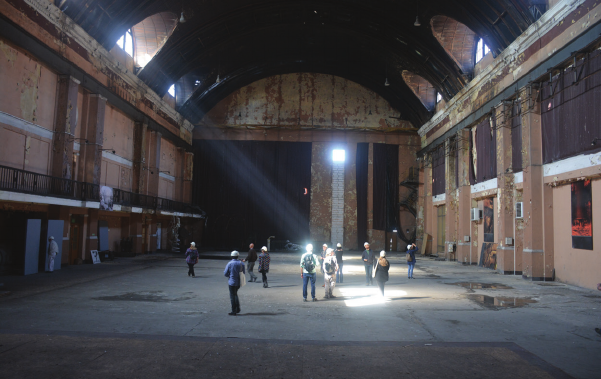
Hala turbin Elektrociepłowni Szombierki
(fot. P. Gerber, 2019)
Turbine hall
at the Szombierki Electric Power Station
(photo by P. Gerber, 2019)