
2015
3(43)
DOI: 10.5277/arc150308
Ewa Łukaszewicz-Jędrzejewska*
„Efekt motyla”
“Butterfly effect”
Po siedemdziesięciu latach od rozgrywającej się od
stycznia do początków maja 1945 r. tragicznej misji ob-
rony Wrocławia wiele wątków mających bezpośredni
lub pośredni wpływ na decyzję o strategii obrony miasta
po zostaje nadal w sferze badań źródłowych. Najcenniej-
sze z punktu widzenia wiarygodności przekazów są źród
ła
zawarte w dziesięciotomowym dziele Breslauer Apo ka lypse
1945 [1]. Kolejnym świadectwem tragedii miasta
stała się
praca Echolot: Fuga furiosa [2]. Obie mo no gra fi e upadku
Wrocławia zostały zredagowane na pod sta wie nie pub li-
kowanych źródeł archiwalnych Bun desarchiv-Mi li tär-
archiv znajdujących się we Fry bur gu Bryz go wij skim, Im-
perial War Museum w Lon dy nie, alian ckich materia łów
dyplomatycznych i wywia dow czych. Ważnymi dokumen-
ta mi do oceny sytuacji miesz kań ców pozostałych w ob-
lę żo nym mieście stały się re lacje świadków, którzy na-
zy wali gauleitera Karla Hankego Henker von Breslau
(„siepaczem z Wroc ła wia”) [3, s. 200]. Świadkami historii
są nie tylko zmu sze ni do opuszczenia miasta zwykli mie -
szkańcy, ale także urzędnicy magistratu, urzędów pub-
licznych, funkcjonariusze partyjni podlegli Hankemu.
Cha rakterystycznym i niezwykle często pojawiającym się
motywem jest w tych relacjach uczucie przerażenia wy-
wołane metodami terroru stosowanymi przez gau lei tera.
Terroru, który w warunkach powszechnego już w upa -
dającej III Rzeszy morale bojowego stawał się nie sku-
tecz ny. „Demoralizujące uwagi” według tekstów źród ło -
wych były powszechne nie tylko wśród powołanych do
od działów Volksturmu, ale także często zdarzały w wy-
Seventy years after the tragic defense of Wrocław,
lasting from January till the beginning of May 1945, there
are many aspects having a direct or indirect impact on
the decision concerning the city defense strategy which
still remain in the source research sphere. The sources
included in the ten-volume work entitled Breslauer
Apokalypse 1945 are the most valuable from the point of
view of credibility of materials [1]. Another testimony
of the tragedy of the city was the study Echolot: Fuga
furiosa [2]. Both monographs describing the collapse
of Wrocław were prepared on the basis of unpublished
archival sources of Bundesarchiv-Militaerarchiv located
in Freiburg im Breisgau, the Imperial War Museum in
London, allied diplomatic and intelligence materials.
When assessing the situation of the inhabitants who re -
mained in the besieged town, some important documents
are accounts of eyewitness who called Gauleiter Karl
Hanke Henker von Breslau (“Hangman of Breslau”) [3,
p. 200]. The witnesses of history are not only ordinary
residents of the city who were forced to leave it, but
also offi cials of the municipality and public offi ces as
well as party functionaries subordinate to Karl Hanke.
In these reports a characteristic and unusually frequently
appearing motive is the feeling of dread caused by me-
thods of terror which were used by the Gauleiter. The
terror which became ineffective in the conditions of the
general decline of combat morale of the Third Reich.
“Demoralizing comments” according to the source texts
were commonplace not only among Volksturm troops
members, but happened also in statements of front
offi cers, military intelligence offi cers, clerks – they were
punished by death in front of a fi ring squad preceded by
a “dishonour” procedure. I decided to have no mercy in
* Akademia Sztuk Pięknych im. Eugeniusza Gepperta we Wroc-
ławiu/The Eugeniusz Geppert Academy of Art and Design in Wrocław.

90 Ewa Łukaszewicz-Jędrzejewska
powiedziach ofi cerów frontowych, ofi cerów wywiadu
woj skowego, urzędników – karą za nie była śmierć przed
plutonem egzekucyjnym poprzedzona procedurą „hań-
by”. Postanowiłem porzucić wszelkie opory przed trak to -
wa niem z największą surowością tych, którzy pa ra liżują
albo szkodzą powszechnej woli walki, na skutek bez -
myślnych lub nieodpowiedzialnych działań [3, s. 272–273].
Naj bardziej spektakularnym i jednocześnie z pro pa gan-
do we go punktu widzenia – w sytuacji w jakiej znaleźli
się obroń cy Festung Breslau – bezsensownym wyrokiem
była publiczna egzekucja zastępcy burmistrza Wrocławia
Wolf ganga Spielhagena
1
.
W relacjach wrocławskich ofi ar Festung Breslau po ja -
wia się często wątek „szaleństwa”, „megalomanii”, ok ru -
cieństwa i nienawiści wyczuwalnej w stosunku Han kego
do mieszkańców miasta. Krótką charakterystykę oso bo-
wości gauleitera konstruuje Richard Hargreaves [3, s. 201,
503] na podstawie źródeł z Breslauer Apokalypse 1945:
[...] w większości przypadków nie okazywał on swoim
ofi arom żadnego współczucia ani litości [...] w czasie
jego rządów stracono w mieście co najmniej 1000 osób.
Był w najlepszym razie niezręcznym mówcą, a zazwyczaj
w czasie swoich wystąpień publicznych wypadał po prostu
okropnie. Był apodyktyczny i często nadużywał swoich
stale rosnących uprawnień. Miał zbyt wygórowane po-
czu cie własnej wartości, był wyniosły, jego wystąpienia
były brutalne, miał zaciśnięte usta i mówił wymijająco,
był „kalką Hitlera” i człowiekiem, który bawił się w od-
gry wanie roli dyktatora [3, s. 271–273].
Ciekawym wątkiem w historii końca III Rzeszy jest
próba przeciwstawienia się rozkazowi „Neron” wydanemu
przez Hitlera w marcu 1945 r. Ale próby tej nie podjął Karl
Hanke, lecz jego przyjaciel Albert Speer. Wprowadzenie
w życie rozkazu „Neron” miało spowodować totalne
znisz czenie niemieckiej gospodarki, pozostawienie zwy-
cięz com dziedzictwa w postaci „spalonej ziemi”. Rozkaz
ten dotyczył nie tylko substancji związanej z przemysłem,
ale także z dziedzictwem kulturowym. Ostatnie miesiące
wojny to walka Speera – ministra przemysłu Rzeszy od-
powiadającego za realizację rozkazu – z gauleiterami,
któ rzy mieli zamiar ślepo wykonywać rozkazy Hitlera.
Kon frontacja postaw racjonalnej oceny sytuacji i ślepego
po słuszeństwa wobec tracącego kontakt z rzeczywistością
przełomu lat 1944/1945 wodza III Rzeszy to kolejny
wątek godny eksploracji.
Celem mojego artykułu jest próba ukazania – w sposób
czysto hipotetyczny – psychologicznych przesłanek, które
mogły być źródłem tragedii miasta. Ten, kto obawia się
honorowej śmierci, umiera w hańbie – cytat z wystąpienia
Hankego po egzekucji burmistrza Spielhagena stał się
mottem dla początku końca gauleitera – haniebnej uciecz-
ki z Festung Breslau [3, s. 41].
Karl Hanke znalazł się w kręgu moich zainteresowań
badawczych w 2003 r., w związku z otwarciem przewodu
doktorskiego, którego promotorem zgodził się zostać
1
Powodem była „defetystyczna” postawa, próba uratowania ro -
dziny oraz planowana przez Spielhagena zmiana miejsca pracy –
ucieczka do Berlina.
treating with the greatest severity those who paralyse or
harm the common will to fi ght as a result of thoughtless
or irresponsible behaviours [3, pp. 272–273]. The most
spectacular and from the propaganda point of view – in the
situation of the defenders of Festung Breslau – senseless
sen tence was a public execution of the Wrocław deputy
mayor Wolfgang Spielhagen
1
.
Frequent motifs that appear in the accounts of Wrocław
victims of Festung Breslau are those of “madness”, “me-
galomania”, cruelty and hatred that could be sensed in
Hanke’s attitude towards the city inhabitants. A brief cha-
racteristics of the Gauleiter’s personality was pre sented
by Richard Hargreaves [3, pp. 201, 503] on the basis
of the sources from Breslauer Apokalypse 1945: [...] in
most cases he did not show any compassion or mercy
to his victims [...] at least 1000 people were executed in
the town during his rule. He was, at best, an awkward
pub lic speaker, usually he fared just awfully during his
pub lic speeches. He was apodictic and tended to abuse
his ever-increasing powers. He held himself in high self-
esteem, was haughty, his speeches were brutal, with his
lips clenched he spoke evasively and was “Hitler’s copy”
who played a dictator’s role [3, pp. 271–273].
One interesting aspect in the history of the end of the
Third Reich is an attempt to oppose the “Nero” order
that was issued by Hitler in March 1945. This attempt,
how ever, was not made by Karl Hanke but by his friend
Albert Speer. The implementation of the “Nero” order
was supposed to cause the total destruction of the Ger-
man economy by leaving “scorched earth” as heritage to
victors. This order referred not only to the industrial fa ci-
lities but also to cultural heritage. The last months of the
war were characterized by a fi ght conducted by Speer –
the Reich minister of industry responsible for the order’s
implementation – with gauleiters who intended to obey
Hitler’s orders blindly. The confrontation of these two
attitudes, i.e. a rational assessment of the situation and the
blind obedience to the Third Reich leader who was losing
touch with the 1944/1945 reality constitutes another as-
pect worth being explored.
The purpose of my article is an attempt to show – in
a purely hypothetical way – psychological reasons that
could be the source of the tragedy of the city. He who fears
death with honour, dies in dishonour – this quotation from
Hanke’s speech after the execution of mayor Spielhagen be -
came a motto for the beginning of the end of the Gau leiter
– a dishonourable escape from Festung Breslau [3, p. 41].
Karl Hanke appeared in the circle of my research
interests in 2003 in connection with the opening of the PhD
prog ram whose supervisor was Professor Janusz Dobesz.
The fi rst piece of advice that the Professor gave me was
the following: Writing must give you a pleasure or at least
some fun. The issue of “fun” – especially in the context of
the theme of the future dissertation – seemed slightly con-
troversial to me. However, after several seminar meetings
1
The reason was a “defeatist” attitude, an attempt to save the
family and Spielhagen’s intention to change the workplace as he planned
to do through his escape to Berlin.

„Efekt motyla” /„Butterfly effect” 91
prof. Janusz Dobesz
.
.
Pierwsza zasada, którą przekazał mi
Profesor, brzmiała następująco: Pisanie musi ci sprawiać
przyjemność albo przynajmniej bawić. Kwestia „zaba wy”
– szczególnie w kontekście tematu przyszłej dyserta cji
– była dla mnie nieco kontrowersyjna. Jednak po kil ku
seminaryjnych spotkaniach nabrała nowego znaczenia
– tajemnicy, którą mogę odkryć, wątku, który mogę roz-
winąć, sytuacji, którą mogę wykreować, a następnie pod-
dać weryfi kacji podczas kwerendy źródłowej. Taka kon-
cepcja pracy była bliska cenionej przeze mnie anglo sas kiej
metodologii badania środowiska kul tu ro wego. Pozwalała
ukazać obiekt w jak najszerszym kontekście, rozwinąć
kontrowersyjne hipotezy i bronić ich z wykorzystaniem
dostępnych źródeł, dawała autorowi szansę na dużą sa-
modzielność.
Moją pierwszą publikacją i jednocześnie pierwszą
pró bą zmierzenia się z biografi ą Karla Hankego był ar -
tykuł Wrocławska rezydencja gauleitera Karla Hanke [4]
opisujący historię budowy wrocławskiej służbowej re zy-
dencji gauleitera Dolnego Śląska, przy ulicy Akacjowej
17/19 (Akazien Alle)
2
. Podczas kwerend źródłowych,
a także podczas prywatnych rozmów z wrocławianami
prze konałam się, jak nikła była znajomość faktów z ży-
cio rysu człowieka, który dowodząc obroną Festung Bres-
lau, doprowadził do zagłady miasta. W powszechnej świa-
domości gauleiter Karl Hanke funkcjonuje tylko jako kat
miasta. Praktycznie nie spotkałam się z przejawami chęci
bliższego poznania biografi i tego człowieka, poznania
okoliczności i przesłanek, którymi kierował się podczas
obrony miasta, stosując strategię „spalonej ziemi”
3
. Wroc-
ław, który w sierpniu 1944 r. został ogłoszony twierdzą,
był od 16 lutego 1945 r. bezlitośnie niszczo ny równocześ-
nie przez niemiecką załogę i przez artyleryjski ostrzał
ok rą żających miasto wojsk 1. Frontu Ukraińskiego pod
dowództwem marszałka Iwana Koniewa. Walki w ruinach
twierdzy trwały aż do 6 maja – Berlin upadł wcześniej.
Ucieczka z miasta jeszcze przed kapitulacją – okryty ta -
jem nicą odlot z lotniska powstałego po wyburzeniu kwar-
tałów zabudowy obecnego placu Grunwaldzkiego – koń-
czył wrocławski wątek biografi i Karla Hankego.
W poszukiwaniu historii
Artykuł jest próbą subiektywnej interpretacji jednego
z autentycznych wątków z prywatnego życia Karla Han -
kego i powiązania go z decyzją o zniszczeniu hi sto rycz-
nego – ponad siedemsetletniego miasta, którego miał zo-
stać obrońcą.
Starałam się odpowiedzieć na pytanie, jakie przy czy -
ny zadecydowały o tym, że urzędnik partyjny bez do-
świadczenia wojskowego, wieloletni osobisty sekretarz
2
Willa została w 2008 r. wpisana do gminnej ewidencji obiektów
zabytkowych, obecnie jest remontowana i adaptowana na obiekt
hotelowy.
3
Pierwszym opublikowanym w Polsce dokumentem obrony
Festung Breslau był pamiętnik księdza Paula Peikerta [5], w którym pod
datami dziennymi odnajdujemy kolejne etapy zagłady miasta. Do lat 90.
XX w. był to jedyny dostępny tekst, tym bardziej cenny, że pisany przez
Niemca.
it acquired a new meaning – a mystery that I can discover,
a topic I can develop, a situation I can create and then ve -
rify during the source query. This research concept was
close to the Anglo-Saxon methodology of cultural en-
vironment research, which I appreciated a lot. It enabled
me to show an object in the broadest possible context,
to develop controversial hypotheses and to defend them
using the existing data sources and it also gave a chance
to be independent as an author.
My fi rst publication and at the same time the fi rst
attempt to deal with Karl Hanke’s biography was the article
Wrocław residence of Gauleiter Karl Hanke [4] describing
the history of building the Wrocław offi cial re sidence of
Lower Silesia Gauleiter situated at 17/19 Aka cjowa Street
(Akazien Alle)
2
. During the source que ries, as well as
during individual conversations with Wro cław inhabitants,
I learned that the knowledge of the bio gra phical facts
about the man who, while commanding the defense of
Festung Breslau, led to the destruction of the city, was very
limited. In the general awareness of the society Gauleiter
Karl Hanke functions only as the hangman of the city. In
practice I have never encountered any manifestations of
willingness to know the biography of this man or to learn
about the circumstances and rea sons which led to the
defense of the city during which he used the strategy of
scorched earth’
3
. Wrocław, which was declared a fortress
in 1944, since 16
th
February 1945 was at the same time
ruthlessly destroyed by the German army and by the
artillery shelling of the First Ukrainian Front Army under
the command of marshal Ivan Koniev, which besieged the
city. Battles in the ruins of the fortress lasted until May 6
th
– Berlin surrendered earlier than that. The escape from the
city before the capitulation – a mystifi ed departure from
a makeshift airport which was built after demolishing the
development quarters of the present Grunwaldzki Square
– ended the Wrocław aspect of Karl Hanke’s biography.
In search of a story
The article is an attempt at a subjective interpretation
of one of the authentic aspects of Karl Hanke’s private life
and then linking it with the decision to destroy the over
seven-hundred-year old historical city, of which he was
to be a defender.
I tried to answer the question of reasons lying behind
the fact that a party offi cial with no military experience,
a longtime personal secretary of Joseph Goebbels, Mi ni-
ster of State in the Ministry of Propaganda of the Third
Reich was in August 1939 immediately delegated to the
line troops on the Polish border and then after returning
from the front at the turn of 1941 took up the post of
2
In 2008 the villa was entered into the municipal register of
historical buildings and it is currently being renovated and adapted for a
hotel
.
3
The first document of the defence of Festung Breslau which was
published in Poland was the diary of Father Paul Peikert [5], where we
can find the subsequent destruction stages of the city under particular
dates. Until 1990
s
it was the only available text and all the more valuable
due to the fact that it was written by a German.

92 Ewa Łukaszewicz-Jędrzejewska
Josepha Goebbelsa, minister stanu w Ministerstwie Pro-
pagandy III Rzeszy został w sierpniu 1939 r. błyskawicz-
nie oddelegowany do wojsk liniowych na granicy z Pol ską,
aby po powrocie z frontu na przełomie 1940/1941 r. objąć
stanowisko gauleitera we Wrocławiu. Kolejne py ta nie
dotyczyło aktu niesubordynacji w stosunku do roz kazów
Ministra Przemysłu i Uzbrojenia Rzeszy Al ber ta Speera,
w sytuacji gdy funkcjonowanie w ramach totalitarnego
systemu III Rzeszy było zdeterminowane bezwzględnym
posłuszeństwem. Postępowanie wbrew zarządzeniom,
le kceważenie instrukcji czy jakakolwiek indywidualna
de cyzja graniczyła z samobójstwem
4
[6]. Rozkaz z koń-
ca 1942 r. był skierowany do gauleiterów i nakazywał
ochronę obiektów zabytkowych uszkodzonych podczas
na lotów aliantów.
Barbara W. Tuchman w pracy Szaleństwo władzy. Od
Troi do Wietnamu przedstawiła tezę, że charakter de ter-
minuje przeznaczenie [7, s. 14]. Postacie historyczne,
które stały się podmiotami jej badań, to ludzie naznaczeni
destrukcyjnymi cechami charakteru. Przed czytelnikiem
przesuwa się barwna galeria socjopatów, którzy dzięki
swoim umiejętnościom manipulacji ludźmi, okrucieństwu,
chciwości, egoizmowi i kompleksom tworzyli polityczną
mapę świata. Dramatis personae tej historii to zaczadzone
władzą jednostki, które deprawują otoczenie poprzez
oso bisty przykład bezkarności, jaką daje władza. Nad tą
osobliwą „galerią” unosi się paradygmat bezwzględności
jako nieodłącznej cechy władzy
5
. Tuchman, kończąc jeden
z rozdziałów swojej książki – nie podając jednak źródła
cytatu – pisze tak: Powiedziano kiedyś, że gdyby można
było zamienić w rolach Hamleta i Otella, nie doszłoby do
żadnej tragedii. Hamlet natychmiast przejrzałby Jagona,
a Otello ani chwili nie wahałby się zabić króla Klaudiusza
[...] domysły mają swój czar, lecz to rzeczywiste działania
tworzą historię [7, s. 288].
Materiałami źródłowymi, na podstawie których przy-
go towałam kalendarium wydarzeń determinujących eta-
py życia bohaterów tej historii, są opracowania pa-
miętni ków oraz pamiętniki polityków III Rzeszy i osób
po wią za nych z nimi towarzysko. Cytowane w nich ma -
4
Jest możliwa jeszcze jedna hipoteza, biorąca pod uwagę tzw.
spisek gauleiterów z lat 1941–1942. Polegał on na samowolnej
interpretacji przez prawie wszystkich gauleiterów zarządzeń Speera
dotyczących postępowania z substancją zabytkową w bombardowanych
przez aliantów niemieckich miastach. Zarządzenie zezwalało na
wyburzenia zniszczonych obiektów zabytkowych tylko wtedy, gdy ich
rekonstrukcja i odbudowa znajdowała się w planach programu mo -
dernizacji miast III Rzeszy. Ponieważ fundusze przeznaczone na te cele
były przekazywane do budżetu gauleiterów, w ich interesie było za -
wyżanie kosztów przedsięwzięcia [6, s. 380–381, przyp. 7, s. 391].
5
Podczas lektury książki – wydanej w Polsce dopiero w 1992 r.
– początkowo zaskakujący wydawał mi się fakt pominięcia przez Tuch-
man tak klasycznych przypadków „szaleństwa lub bezmyślnej przekory
władzy”, jak casus Adolfa Hitlera w latach 1933–1945. Au torka z eru-
dycyjną brawurą opisała okrucieństwa popełniane przez an tycznych
boha terów Wschodu i Zachodu, zanalizowała czarne tajemnice pa -
piestwa, przywołała anglosaskich generałów wojny secesyjnej oraz
kosz mary lokalnych wojen po 1945 r. Wydaje się, że szaleństwa władzy
na zis towskiej lat 1939–1945 oglądane z perspektywy lat 80. XX w.
miały już niski potencjał badawczy – wykorzystany w niezliczonych
tomach prac naukowych, które ukazały się od lat 60. XX w.
Gauleiter in Wrocław. Another question referred to the
act of insubordination in relation to the orders of the
Minister of Industry and Reich Armaments Albert Speer
in the situation when the functioning under the totalitarian
system of the Third Reich was determined by absolute
obedience. Acting against directives, disregarding in struc-
tions or any other individual decision was on the brink of
suicide
4
[6]. The order from the end of 1942 was addressed
to Gauleiters, imposing protection of historical buildings
which were damaged during air raids by the allies.
Barbara W. Tuchman in her work Madness of power.
From Troy to Vietnam presented the thesis that destiny is
determined by character [7, p. 14]. Historical fi gures that
constituted the subject of her research were people mar-
ked with destructive features of character. The reader can
ob serve a colourful gallery of sociopaths who thanks to
their skills of manipulating human beings, cruelty, greed,
selfi sh ness and complexes formed a political map of the
world. Dramatis personae of this story are represented
by individuals poisoned by power who corrupt the en vi -
ronment through their personal example of impunity that
power gives. A paradigm of cruelty as an integral feature
of power hovers over this peculiar “gallery”
5
. Tuch man,
when ending one of the chapters of her book – with out
indicating the source of the quote – writes: It was once
said that had it been possible to replace the roles of Ham-
let and Othello, there would not have been any tra gedy.
Hamlet would immediately see Iago through and Othello
would not hesitate a moment to kill King Claudius [...]
speculations do have their charm, but it is real actions
that make history [7, p. 288].
The source materials, on the basis of which I prepared
a calendar of events that determined the life stages of the
heroes of this story, consisted of diaries and memoirs
of politicians of the Third Reich and persons socially
connected with them. The archival materials, which are
cited there, are currently in the German state archives in
Koblenz and Berlin
6
. Selected monographic publications
4
There is another possible hypothesis, which takes into con-
sideration the so-called gauleiters’ plot from the years 1941–1942. It
consisted of an arbitrary interpretation of Speer’s regulations by almost
all gauleiters, which regulation dealt with the treatment of the historical
substance in German cities bombed by the Allies. The regulation per-
mitted demolition of destroyed historical buildings only when their re -
construction and restoration was included in the modernization program
plans of the Third Reich cities. Since the funds allocated for these
purposes were transferred to the budget of gauleiters, it was in their
interest to inflate the costs of the enterprise [6, pp. 380–381, ft. 7, p. 391].
5
While reading the book – which was not published in Poland
before 1992 – what surprised me at first was the fact that Tuchman
omitted such classical cases of “madness or mindless contrariness of
power” as casus of Adolf Hitler in the years 1933–1945. With erudite
bravado, the author described cruelties committed by ancient heroes of
the East and the West, then she analyzed dark secrets of the papacy,
mentioned Anglo-Saxon generals of the American Civil War and
nightmares of local wars after 1945. It seems that the madness of the Nazi
government in the years 1939–1945 viewed from the perspective of the
1980
s
already had a low research potential as it had been exhausted in
countless volumes of research papers that appeared since the 1960
s
.
6
This article is one of the drafts prepared with a view to a larger
form. I am sharing my thoughts on this subject later on. I realise that
a few of the topics which are only hypothetically outlined here can be

„Efekt motyla” /„Butterfly effect” 93
te riały archiwalne znajdują się obecnie w pań stwo-
wych niemieckich archiwach w Koblencji i Berlinie
6
.
Ma te riałem uzupełniającym realia środowiska stały się
wy brane publikacje monografi czne pojawiające się la-
wi nowo na rynku wydawniczym od lat 90. XX w. Do
spe
cjalnie założonego folderu „Hanke” trafi ały fragmenty
roz mów, opinie, cytaty z pamiętników osób będących
w la tach 1933–1945 w najbliższym otoczeniu Kancelarii
Rze szy. Postać Karla Hankego – jednego z najwyższych
urzęd ników III Rzeszy, sekretarza stanu w ministerstwie
propagandy – przewija się także w monografi i E.C. Króla,
opisującej mechanizm działania niemieckiej administracji
[8]. Folder zapełniał się notatkami z coraz częś ciej pub
li-
ko wanych materiałów przedstawiających śro dowisko kul -
tu rowe
nazistowskich Niemiec, a po cho dzących z suk ce-
syw nie otwieranych archiwów. Szcze gólnie inte re su ją ce
informacje znajdowały się w pamiętnikach kobiet zwią-
zanych z politykami III Rzeszy [9]. Wszystkie pro wa-
dziły do konkluzji, że w 1938 r. Karl Hanke nawiązał tok-
syczny romans z Magdą Quandt-Goebbels, żoną mini stra
propagandy. Romans, który w dramatyczny spo sób musiał
zaważyć na jego dalszej karierze i mógł przy czynić się
do
za chowań bliskich szaleństwu władzy – pro wadzeniem
po lityki sprzecznej z własnym interesem, łą czeniem bez-
sen su z okrucieństwem – opisywanemu przez Tuchman [7,
s. 50–52]. Od 1940 r. Wrocław stał się dla Hankego punk tem
wygnania z Berlina i Kancelarii Rze szy, w której bu dował
całą swoją partyjną i państwową karierę od 1933 r.
Narracja – w poszukiwaniu formy
Po dziesięciu latach powracam do tematu... Hipoteza
o emocjonalnym stosunku do miasta, które stało się dla
bohatera przymusowym wygnaniem, zaczyna nabierać
waloru prawdopodobieństwa, gdy staramy się poznać
kon tekst sytuacji. Dramatis personae to postacie z krę-
gów najbardziej prominentnych urzędników Kan ce larii
III Rzeszy, polityków, przyjaciół i członków ich rodzin.
Szu kając analogii do historii, którą się zajmuję, bez
obaw możemy skierować swoją uwagę w historyczne
rejony dworskich tragedii miłości, walki o władzę, zdra -
dy, zbrodni i kary. Zmieniły się tylko didaskalia, ale
emocje pozostały tak samo intensywne. Biorąc pod
uwa gę towarzyski i wizerunkowy – także w sensie pro -
pa gan dowym dla III Rzeszy – kontekst emocji to wa rzy-
szących tym zdarzeniom, mogą być one jeszcze bardziej
intensywne. Opowieść o fatalnie ulokowanym uczuciu,
zdradzie i wygnaniu, a w końcu być może o świadomym
zniszczeniu miasta wygnania łączy w sobie kilka dra ma-
tycznych wątków.
6
Artykuł jest jednym ze szkiców przygotowanych z myślą o więk-
szej formie. Dzielę się przemyśleniami na ten temat w jego dalszej
części. Zdaję sobie sprawę z tego, że kilka obecnie tylko hipotetycznie
zarysowanych wątków możliwych jest do wyjaśnienia po źródłowej
kwerendzie w aktach personalnych Karla Hankego i Magdy Goebbels,
znajdujących się w Berlin Document Center oraz w zbiorach Archiwum
Federalnego w Koblencji (Bundesarchiv Koblenz) – Zestaw NL 118
zawierający dokumenty wytworzone przez Ministerstwo Propagandy
i Oś wiecenia Publicznego III Rzeszy.
that started appearing rapidly on the publishing market
since the 1990
s
constitute the material which supplements
the environment reality. Fragments of conversations,
opinions, quotes from diaries of the people who were
in the immediate vicinity of the Reich Chancellery in
the years 1933–1945 were collected in a special folder
named “Hanke”. The fi gure of Karl Hanke – one of the
highest offi cials of the Third Reich, the Secretary of
State in the Ministry of Propaganda – also appears in the
monograph by E.C. Król, which describes the mechanism
of the German propaganda [8]. The folder was fi lled
with notes coming from the materials which were more
and more frequently published and which depicted the
cultural environment of Nazi Germany, coming from
successively opened archives. Particularly interesting
information could be found in memoirs of the women
connected with the Third Reich politicians [9]. All the
information led to the conclusion that in 1938 Karl Hanke
started a toxic love affair with Magda Quandt-Goebbels,
the propaganda minister’s wife. The romance which was
bound to infl uence his career in a dramatic way and might
have contributed to his behaviour close to the madness of
power – pursuing a policy contrary to one’s own interest
and combining senselessness with cruelty – as described
by Tuchman [7, pp. 50–52]. From 1940 Wrocław became
for Hanke an exile after being expelled from Berlin and
the Reich Chancellery where he had been building his
entire party and state career since 1933.
Narration – in search of a form
Ten years after, here I come back to the topic... The
hypothesis of an emotional relation to the city, which
became a forced exile for our hero, begins to take up
a probability value when we try to get to know the context
of the situation. Dramatis personae are the characters of
the most prominent offi cials in the Chancellery of the
Third Reich, i.e. politicians, friends and members of their
families. When searching for an analogy to the story I am
dealing with, without any doubt we can now turn our
attention to historical areas of courtly tragedies of love,
struggles for power, unfaithfulness, crime and punishment.
The only aspect that changed were the didascalies (stage
instruction), but the emotions remained just as intense.
Taking into account the social and image context – also
in the propaganda sense for the Third Reich – pertaining
to emotions accompanying these events, they may be
even more intense. A story of a fatally located feeling,
unfaithfulness and exile, fi nally perhaps a conscious
idea of destroying the city of exile thus combines several
dramatic plots.
The topic outlined like this calls for a special manner
of narration. Intuitively I felt that the form of a scientifi c
explained in more detail with the use of the source query in the personal
files of Karl Hanke and
Magda Goebbels which are kept in the Berlin
Document Centre as well as in
the collections of the Federal Archives in
Koblenz (Bundesarchiv Koblenz) – Set NL 118 containing documents
produced by the Ministry of Propaganda and Public Enlightenment of
the Third Reich.

94 Ewa Łukaszewicz-Jędrzejewska
Tak zarysowany temat wymaga szczególnego sposobu
narracji. Intuicyjnie czułam, że forma naukowego artykułu
spłaszczy temat, a narzędzia analizy psychologicznej,
jakimi dysponuje historyk sztuki, są niewystarczające.
Brałam pod uwagę różne formy narracji dla tej historii
– także posłużenie się pastiszem gatunków literackich;
ludową „pieśnią dziadowską” o nieszczęśliwie zako cha-
nym i porzuconym kochanku. Przywoływałam melodię
piosenki Lili Marleen – opowiadającej o dziewczynie wy -
cze kującej
na żołnierza pod berlińskimi koszarami. Za
sta-
na wiałam się nad nowymi bohaterami piosenki, Karolem
i Magdą – taka forma mieściłaby się w skan da li zu ją cej
konwencji berlińskich kabaretów
7
. Tekst o ce chach re fe -
ratu naukowego... przypisy wymagałyby kon sul ta cji kon -
sy lium profesorów psychiatrii. Forma sce na riu sza fi l mo -
we go... być może, tym bardziej że w tle tej hi storii jest
wątek poboczny. „Godowy taniec” mi nistra pro pa gan dy
Rzeszy Josepha Goebbelsa wokół Leni Riefenstahl i pu-
łap ki godne Clausewitza zastawiane przez ową „drugą
żonę Rzeszy” właśnie na Goebbelsa [9]. Recenzentów
mojego artykułu proszę o wybaczenie stylistycznych pro -
wokacji – ale profesor Janusz L. Dobesz jest ich wy traw-
nym wielbicielem...
Dla historii miasta istotne pozostaje pytanie, dlaczego
wydano rozkaz totalnego zniszczenia Wrocławia wbrew
instrukcjom Ministra Uzbrojenia III Rzeszy Alberta
Speera. Rozkaz tym bardziej zastanawiający, że główny
bo hater dramatu był w latach 30. XX w. protektorem,
mecenasem, w końcu jedynym przyjacielem Speera [6,
s. 175–176]. W warunkach gospodarki wojennej, gdy sy-
tuacja na froncie zbliżała się do klęski, niesubordynacja
gau leitera mogła być jednoznaczna z samobójstwem nie
tylko politycznym...
Dramatis personae
On – Karl August Hanke, urodzony 22 sierpnia 1903 r.
w Lubaniu (Lauben), nauczyciel w berlińskiej szko le
za wo-
dowej, do partii wstąpił w 1928 r., w 1930 r. zwol nio ny został
z posady przez władze miasta z po wo du bo jów karskich
akcji przeprowadzanych na rzecz NSDAP
8
[11, s. 152]
(il. 1). W 1931 r. jako „przekonany prze ciwnik systemu”
mianowany przez Goebbelsa na sta no wisko kierownika
organizacyjnego partii w Berlinie i kierownika wydziału
w urzędzie propagandy NSDAP [11, s. 193]. Opisywany
przez Speera jako [...] prosty, ale inteligentny i pełen
energii młody czeladnik młynarski [6, s. 32]. Bezrobotny
architekt (ale dysponujący małym mercedesem) Speer
i kierownik obwodu zachodniego berlińskiego oddzia łu
partii Hanke spotkali się po raz pierwszy w 1930 r. pod
willą w dzielnicy Grunnewald. Speer był tymczasowo
7
W latach 1939–1945 Lili Marleen stała się najbardziej znaną
żołnierską piosenką, opowiadającą o tęsknocie kochanków rozdzielonych
wojną. Wprawdzie tekst powstał w 1915 r., ale przecież jego temat jest
ponadczasowy tak jak i uczucia.
8
Data urodzenia ustalona na podstawie dokumentu „Terminarz
urodzinowy adiutantury Hitlera”, zawierającego listy z zestawieniem
nazwisk i dat urodzin osób z otoczenia Hitlera. Bundesarchiv Berlin NS
10/124 [10, s. 370].
study may fl atten the topic since the psychological ana-
lysis tools of an art historian are insuffi cient. Hence
I con sidered various forms of narration for this story –
also a pastiche of literary genres; a folk song about an
aba n doned lover unhappily in love. I evoked the melody
of the song Lili Marleen – it tells about a girl waiting
for a soldier near the Berlin’s barracks. I was thinking
about new heroes of the song, i.e. Carl and Magda – this
form would be within the infamous convention of Berlin
cabarets
7
. The text of the nature of a scientifi c paper... the
footnotes would require consultations with professors of
psychiatry. The form of a screenplay... perhaps, as there
is
a subplot in the background of this story. A “mating dance”
of the Minister of Propaganda of the Third Reich Joseph
Goebbels around Leni Riefenstahl and the traps of Clau se-
witz type laid by the “second Reich lady” just on Goebbels
[9]. I must ask the reviewers of my article to forgive me the
use of such stylistic provocations – but Professor Janusz
L. Dobesz is a sophisticated admirer of them...
In terms of the history of the city, it remains an im-
portant question why, in spite of the instructions of the
Minister of Armaments of the Third Reich Albert Speer,
an order of the total destruction of Wrocław was given.
All the more puzzling order if we recall the fact that in
the 1930
s
the main character of the drama was a protector,
a patron and fi nally the only friend of Speer [6, pp. 175–
176]. In the war economy conditions when the situation
on the front was approaching defeat, insubordination of
the Gauleiter could have been tantamount not only to
a political suicide...
Dramatis personae
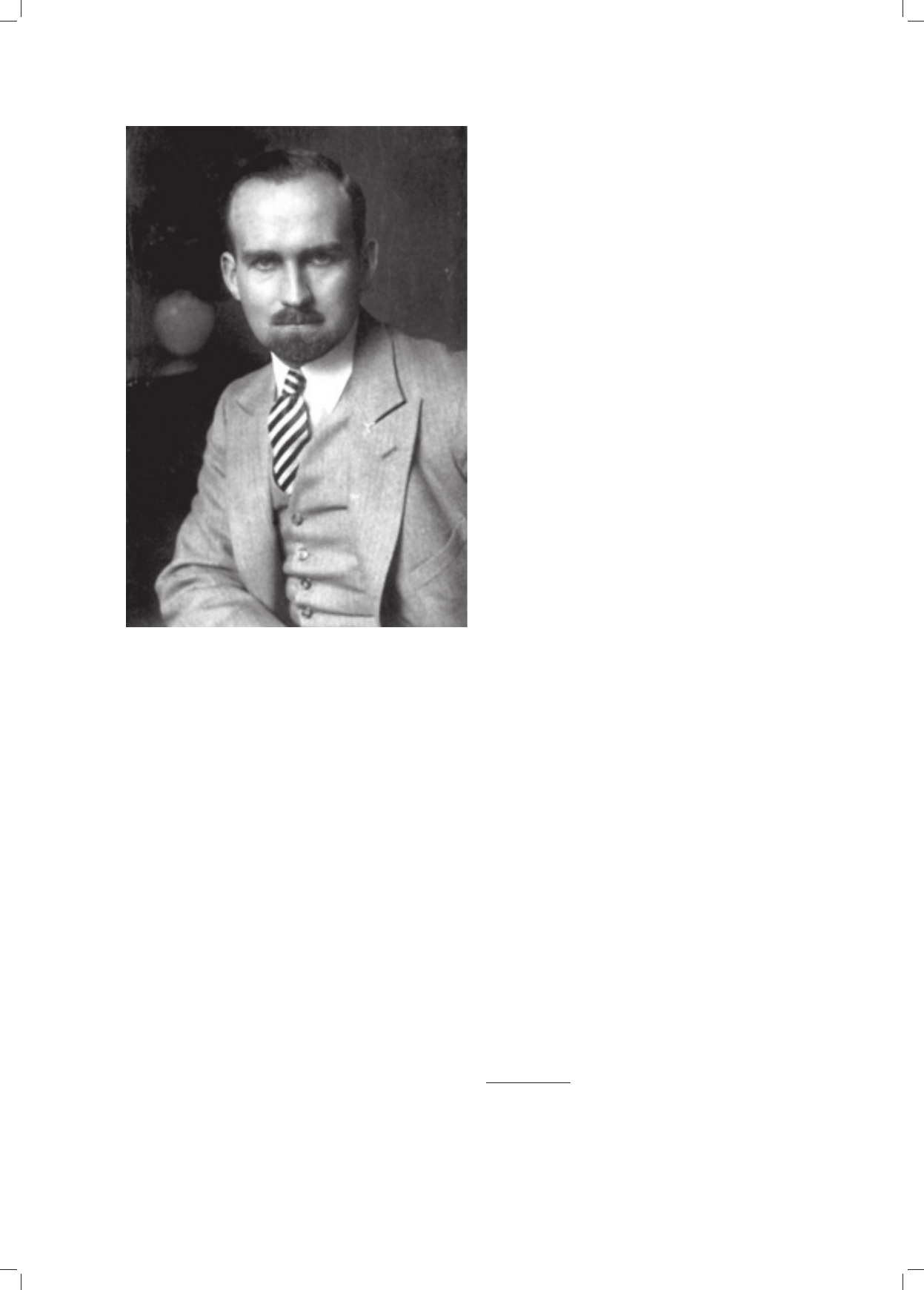
He – Karl August Hanke, born on 22 August 1903 in
Lubań (Lauben), was a teacher at a vocational school in
Berlin, he joined the party in 1928, in 1930 he was dis-
missed from his post by the city authorities due to his
mi litant actions carried out for the NSDAP
8
[11, p. 152]
(Fig. 1). In 1931 as a “determined opponent of the system”
he was appointed by Goebbels as the organization head of
the party in Berlin and head of the propaganda department
of the offi ce of the NSDAP [11, p. 193]. Described by
Speer as [...] a simple, but intelligent and energetic young
journeyman miller [6, p. 32]. The unemployed architect
(but having a small Mercedes) Speer and Hanke, the
head of the western district of the Berlin department of
the party, met for the fi rst time in 1930 near the villa in
Grunnewald
district. Speer was temporarily a driver whom
Hanke asked to design the rooms of the villa to be used
as the party district seat. The architect was impressed by
Hanke’s
aesthetic sense as Hanke suggested designs from
7
In the years 1939–1945 Lili Marleen became the most famous
soldier’s song, telling the story of lovers separated by war longing for
each other. Although the text was written in 1915, its topic is timeless
like feelings are.
8
Date of birth was established on the basis of document “Birthday
Schedule of Hitler’s Adjutancy” which contained a list of names and
dates of birth of the people from
Hitler’s environment. Bundesarchiv
Berlin NS 10/124 [10, p. 370].
„Efekt motyla” /„Butterfly effect” 95
kierowcą, któremu Hanke zaproponował aranżację po -
miesz czeń willi na siedzibę obwodową partii. Architekta
za in teresował zmysł estetyczny Hankego, który przy wy-
borze nowych tapet zasugerował projekty pochodzące
z wzorcowni „Bauhausu”. Po słowach Speera, że [...] są
to tapety komunistyczne, młody kreisleiter zbył tę uwa gę
szerokim ruchem ręki: Bierzemy co najlepsze od wszyst -
kich, także od komunistów [6, s. 33–34]. Tak roz po częła
się znajomość, która przerodziła się z cza sem w przy jaźń.
W jakiej mierze była to przyjaźń bez in tere sow na, może-
my się tylko domyślać, analizując portfel zle ceń mło de-
go architekta w latach 1933–1940 [6, s. 33–57, 48–53,
126–130], [12]. W 1932 r. kreisleiter otrzymał awans na
osobistego adiutanta Goebbelsa. Z chwilą dojścia Hit -
le ra do władzy w marcu 1933 r. Hanke pełnił już od po-
wie dzialną funkcję osobistego referenta, aby w lipcu te-
goż roku awansować do stopnia radcy ministerial nego.
W lutym 1938 r. kariera Hankego w Kancelarii Rze szy
osiągnęła apogeum. Na skutek roszad personalnych zwią -
zanych ze zmianami w ministerstwie spraw za gra nicz nych,
the showroom “Bauhaus” when choosing new wall-
papers. After the words of Speer saying that [...] this is
communist wallpaper, the young kreisleiter ignored the
comment with a broad movement of his arm: We take
the best from everyone, even from the communists [6,
pp. 33–34]. Thus their acquaintance began, which later
turned into friendship. To what extent this friendship was
dis in terested, we can only guess by analyzing a backlog of
orders of the young architect in the years 1933–1940 [6,
pp. 33–57, 48–53, 126–130], [12]. In 1932 the kreisleiter
was promoted to the personal adjutant of Goebbels. As
soon as Hitler came to power in March 1933 Hanke
already performed the responsible function of a personal
referent and in July of the same year he was promoted to
the ministerial adviser. In February 1938 Hanke’s career
reached its apogee in the Reich Chancellery. As a result
of personal reshuffl ing connected with changes in the
Ministry of Foreign Affairs, he was promoted to the post
of the Secretary of State in the Ministry of Propaganda
– at the request of Goebbels himself. In August 1939
Hanke resigned from the post of the Secretary of State
and “volunteered” to an armoured regiment in Lehr with
which he participated in the 1939 September campaign in
Poland and then he fought with the 7
th
Armoured Division
of General Erwin Rommel in France as a lieutenant [11,
pp. 296–335]. According to personal folders contained in
the Archive in Koblenz, his offi cial resignation from the
post of the Secretary of State took place only in the mid-
1940. His next offi cial assignment was Wrocław [12, p. 49].
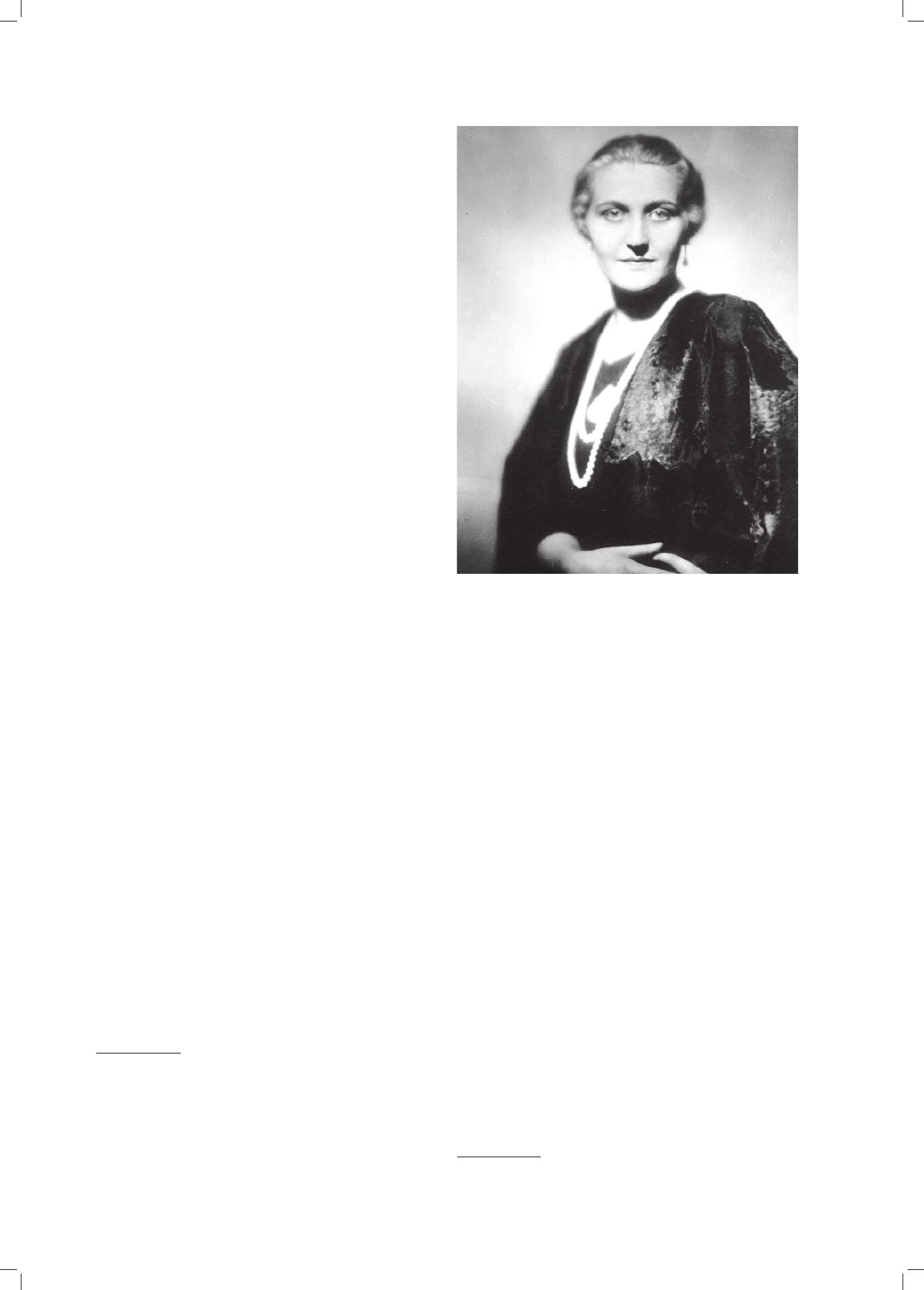
She – Johanna Maria Magdalena Behrend, born on 11 No-
vember 1901 in Berlin-Kreuzberg
9
(Fig. 2). The fa mily
situa tion was complicated: Parents did not have enough time
to take care of Magda’s education [13, p. 22]. A graduate
of the “Institute of Virgo Fidelis” (Order of St. Ursula) in
Brussels, Kolmorgena junior high
school in Berlin and
a boarding girl-school in Goslar. In 1920 she fi rst married
Günther Quandt, one of the richest manufacturers of Ger-
man textile and automotive industries, who was 21 years
older than her. Neglected, but at the same time strictly
controlled by her husband, in 1927 she had a love affair
with a 29-year-old man who appeared in the biographies
under the pseudonym “Ernst”. Betrayed Quandt reacted
violently, driving his unfaithful wife out of the house with
only a few suitcases [13, pp. 24–25]. Her life situation was
accurately characterized by biographer Erich Ebermayer:
She is talented and resourceful, but she is cursed – as
many other so-called ladies from the society who know
enough to claim to be educated, but in reality they cannot
do anything to be able to earn a living [14, pp. 86, 89–90].
In 1929 Magda Behrend-Quandt got divorced, she was
paid a compensation and alimony to their son, but only
until the time she remarried
10
. Soon a romantic meeting of
9
Date of birth could not be verified on the basis of the document
“Birthday Schedule of Hitler’s Adjutancy” because the “November”
card does not exist.
Bundesarchiv Berlin NS 10/124.
10
The argument determining the course of the divorce proceedings
was a bundle of love letters by Quandt written to his lovers, which was
successfully seized by Magda’s lawyer. This history was repeated ten
years later in another relationship.
Il. 1. Karl Hanke, zdjęcie wykonane w 1924 r., wykorzystane w ulotce
reklamowej nr 81 papierosów „Schwarz Weiss” w roku 1932.
Slogan: Männer und Ereignisse unserer Zeit (źródło: http://collections1.
yadvashem.org/arch_srika/1A-245G/108A-143G/126DO7_.jpg
[data dostępu: 8.07.2015)])
Fig. 1. Karl Hanke, a photo taken in 1924, used in a leaflet advertising
No. 81 of “Schwarz Weiss” cigarettes in 1932.
Slogan: Männer und Ereignisse unserer Zeit (source: http://collections1.
yadvashem.org/arch_srika/1A-245G/108A-143G/126DO7_.jpg
[accessed: 8.07.2015])
96 Ewa Łukaszewicz-Jędrzejewska
awansowano go na stanowisko sekretarza stanu w mi-
nisterstwie propagandy – na wniosek samego Goebbel
sa.
W sierpniu 1939 Hanke opuścił stanowisko sekretarza
sta nu, zgłaszając się jako „ochotnik” do puł ku pancernego
w Lehr, z którym uczestniczył we wrze ś niowej kampa nii
w Polsce oraz we Francji w 7. Dywizji Pancernej gene ra ła
Erwina Rommla, w stopniu porucznika [11, s. 296, 335].
Według teczki osobowej znajdującej się w Archiwum
w Ko blencji formalną dymisję z urzędu sekretarza stanu
złożył dopiero w połowie 1940 r. Na stępnym przydziałem
służbowym był Wrocław [12, s. 49].
Ona – Johanna Maria Magdalena Behrend, urodzona
11 listopada 1901 r. w Berlinie-Kreuzbergu
9
(il. 2). Sytuacja
ro dzin na
skomplikowana: Rodzice mieli za mało cza su,
aby troszczyć się o wychowanie Magdy [13, s. 22]. Wy -
cho wan ka „Instytutu Virgo Fidelis” (klasztor ur szu la nek)
w Brukseli, gimnazjum Kolmorgena w Ber li nie i pen -
sjonatu dla dziewcząt w Goslar. Pierwszy raz wy szła za
mąż w 1920 r. za Günthera Quandta, jed ne go z naj bo-
gat szych przemysłowców niemieckich bran ży teks tyl-
nej i mo tory za cyjnej, starszego od niej o 21 lat. Za nied-
by wa na, ale jednocześnie restrykcyjnie kon tro lo wa na
przez mę ża, na wiązała w 1927 r. romans z 29-let nim męż -
czyz ną, który w biografi ach występuje pod pseu do ni-
mem „Ernst”.
Zdradzony Quandt zareagował bru tal nie,
wy pędzając z domu niewierną żonę tylko z kil ko ma wa -
liz kami [13, s. 24–25]. Jej sytuację życiową traf nie
scha rak teryzował biograf Erich Ebermayer: Jest zdol-
na i obrotna, ale ciąży na niej klątwa – tak jak na wie-
lu tak zwanych damach z towarzystwa, które wiedzą wy-
star czająco wiele, aby uważać się za wykształcone, ale
w rzeczywistości nie potrafi ą nic, co by im pozwoliło za -
robić na utrzymanie [14, s. 86, 89–90]. W 1929 r. Mag-
da Behrend-Quandt otrzymała rozwód, jednorazowe od-
szkodowanie i alimenty na syna przysługujące tylko do
czasu ponownego wyjścia za mąż
10
. Wkrótce doszło do
romantycznego spotkania Magdy Behrend z kuzynem
pre zydenta Herberta Hoovera – obu poznała jeszcze
w 1926 r. podczas podróży z mężem do USA. Jak napisa-
ła w pamiętniku jej przyjaciółka, Henrietta von Schirach:
Spot kanie doprowadziło do krótkiej, burzliwej historii mi-
łos nej, którą kontynuowano w Berlinie [13, s. 26], [15,
s. 174]. Rozstanie pary było dramatyczne, zakończone
wypadkiem samochodowym, w którym Magda została
cięż ko ranna i wiele miesięcy przebywała w berlińskim
szpitalu, lecząc złamane kości czaszki [14, s. 110–111]
11
.
W lecie 1930 r. doszło do pierwszego spotkania Magdy
Behrend z dr. Josephem Goebbelsem, gauleiterem Berli-
na. Miało ono miejsce w Pałacu Sportu w Berlinie, na
wiecu zorganizowanym przez NSDAP. Mówca zrobił
9
Data urodzenia nie mogła być zweryfikowana na podstawie
dokumentu „Terminarz urodzinowy adiutantury Hitlera”, ponieważ
karta „listopadowa” nie istnieje. Bundesarchiv Berlin NS 10/124.
10
Argumentem decydującym o przebiegu rozprawy rozwodowej
stał się pakiet listów miłosnych Quandta do kochanek, które udało się
przejąć adwokatowi Magdy. Historia powtórzyła się 10 lat później,
w in nym związku.
11
Powodem rozstania była odrzucona przez Magdę propozycja
małżeństwa.
Magda Behrend with the cousin of the President Herbert
Hoover took place – she met the two of them in 1926
during the journey with her husband to the United States.
As her friend Henrietta von Schirach wrote in a diary: The
meeting led to a short and passionate love story which
was continued in Berlin [13, p. 26], [15, p. 174]. The
parting of the couple was dramatic and culminated in a car
accident in which Magda was seriously injured and stayed
in a Berlin hospital for many months where her bro ken
bones of the skull were treated [14, pp. 110–111]
11
.
In the summer of 1930 Magda Behrend met doctor
Joseph Goebbels, the Gauleiter of Berlin. It took place in
the Palace of Sport in Berlin, at a rally organized by the
NSDAP. Magda was so much impressed by the speaker
that she willingly applied for a job – fl uent English, Ita-
lian and French, her beauty and good manners – in the
management of the Berlin district party. She received
the job in the secretarial offi ce of the deputy Gauleiter
of Berlin without any problems, where she was quickly
11
The reason for the separation was Magda’s refusal to a marriage
proposal.
Il. 2. Joanna Maria Magdalena Quandt-Goebbels
– oficjalny portret, 1932 (źródło: Bundesarchiv, Bild 146-1973-034-56
/ CC-BY-SA [CC BY-SA 3.0 de (http://creativecommons.org/licenses/
by-sa/3.0/de/deed.en)], via Wikimedia Commons)
[data dostępu: 8.07.2015])
Fig. 2. Joanna Maria Magdalena Quandt-Goebbels
– an official portrait, 1932 (source: Bundesarchiv, Bild 146-1973-034-
56 / CC-BY-SA [CC BY-SA 3.0 de (http://creativecommons.org/licens-
es/by-sa/3.0/de/deed.en)], via Wikimedia Commons
[accessed: 8.07.2015])

„Efekt motyla” /„Butterfly effect” 97
promoted and already in November she dealt with the
party press archives and with Doctor Goebbels equally
effectively, performing the role of his personal translator.
Magda Quandt and Joseph Goebbels got married on
December 19, 1931 in the presence of Adolf Hitler, who
witnessed the ceremony. The marriage was registered in
the mayor’s house in Goldenbow and the church wedding
in the Protestant rite took place in the family estate of the
Quandts [12, pp. 140, 143, 149]
12
.
Italian journey – February 1939
The crisis in their marriage began in 1935 due to
another Goebbels’ love affair, this time with the Czech
fi lm star Lída Baarová and later (1938) it also became
a catalyst of the relationship between Magda Quandt-
Goebbels and Karl Hanke – he then held the post of the
Secretary of State in the Ministry of Propaganda
13
. In
1938 the scandal, which after three years already seriously
tarnished the reputation of the Reich Propaganda Minister,
coincided with the dramatic political events – occupation
of Bohemia and Moravia. The hectic nature of entries in
Goebbels’ Diaries concerning political intrigues coincides
with an equally hectic records of scandals with women
[11, p. 291]. In September 1938 in order to save the
situation which started to get out of control, Goebbels
sent Hanke to his wife, who was supposed to act as an
in termediary – mediator in their marriage settlement.
The circle of confi dants of the betrayed wife – they were
Emma Goering and Henriette von Schirach, Eleonor
Quandt, Leni Riefenstahl – was joined by the Secretary
of State himself who worked in the offi ce of her husband.
The mediations proved to be so successful that the couple
declared a truce for a three-month trial period due to the
interests of the state policy
14
.
Albert Speer, who was extremely discreet in his me-
moirs, also writes about the coalition which was concluded
with Hanke in order to save the image of Mrs Goebbels
this time. Speer’s record is as follows: Goebbels had many
love affairs; his Secretary of State
Hanke who was half-
amused and half-disgusted talked about how Goebbels was in
the habit of blackmailing young
fi lm actresses. [...] however,
his attitude to Baarová was something more. Then his wife
renounced him and de manded that he move out and leave
her and the children. Hanke and I were totally on the side
12
Unusual circumstances preceding their formal relationship are
meticulously recorded in the Diaries, about which its researcher and
editor Elke Froelich writes as follows: [...] Almost till the end they re -
mained a serious and conscientious chronicle report in spite of nar -
cissistic self-glorification and auto-suggestive mendacity
[11, ft. 7,
p. 438].
The circumstances accompanying the organization of the wedding
ceremony in the estate of the former husband of Magda Goebbels could
constitute the material for a separate story of social affairs in the
environment of future prominent figures of the Third Reich.
13
The beginning of a love affair with Lída Baarová coincides in
time with the opening of the next volume of the Diaries, which
Goebbels decorated with the following motto The wildest life is the most
beautiful [10, p. 249].
14
A quotation from the diary by Alfred Rosenberg, in: [11, p. 280,
ft. 320].
na niej tak wielkie wrażenie, że Magda zgłosiła swoją
chęć do pracy – biegły angielski, włoski i francuski, uro-
da oraz dobre maniery – w kierownictwie partii ok ręgu
berlińskiego. Bez problemów otrzymała posadę w se kre -
tariacie zastępcy gauleitera Berlina, gdzie szybko awan -
so wała i już w listopadzie zajmowała się partyj nym ar-
chiwum prasowym i równie skutecznie dr. Goebbel sem,
pełniąc funkcję osobistej tłumaczki. Magda Quandt
i Jo-
seph Goebbels wzięli ślub 19 grudnia 1931 r., w obec noś-
ci Adolfa Hitlera, który pełnił funkcję świad ka. Re jes tracja
małżeństwa odbyła się w domu sołtysa w miejs co woś ci
Goldenbow, a kościelny ślub w obrządku ewan gelickim
w ma jątku rodzinnym Quandtów [12, s. 140, 143, 149]
12
.
Włoska podróż – luty 1939
Kryzys w małżeństwie rozpoczął się w 1935 r. z po-
wodu kolejnego romansu Goebbelsa, tym razem z czeską
gwiazdą fi lmową Lídą Baarovą, ale stał się też później
(1938) katalizatorem związku pomiędzy Magdą Quandt-
-Goebbels a Karlem Hankem – wówczas pełniącym
funk cję sekretarza stanu w ministerstwie propagandy
13
.
Skandal, który po trzech latach godził już poważnie w re-
puta cję ministra propagandy Rzeszy, w 1938 r. zbiegł się
z dramatycznymi wydarzeniami politycznymi – zajęciem
Czech i Moraw. Gorączkowy ton wpisów Goebbelsa
w Dziennikach dotyczący intryg politycznych zbiega się
z równie gorączkowymi zapisami skandali z babami [11,
s. 291]. We wrześniu 1938 r., aby ratować sytuację wy-
mykającą się spod kontroli, Goebbels wysłał do swojej
żony Hankego, który miał pełnić funkcję pośrednika –
mediatora w sprawie ugody małżeńskiej. Do kręgu po -
wierniczek zdradzonej żony – zaliczały się do nich pa-
nie Emma Goering, Henriette von Schirach, Eleonor
Quandt, Leni Riefenstahl – dołączył sam sekretarz stanu
w urzędzie męża. Mediacje okazały się na tyle skuteczne,
że małżonkowie zawarli rozejm na trzymiesięczny okres
prób ny ze względu na interesy polityki pa
ństwowej
14
.
Albert Speer, niezwykle dyskretny w swych wspom-
nieniach, także pisze o koalicji, jaką zawarli z Hankem,
tym razem dla ratowania wizerunku pani Goebbels.
Relacja Speera brzmi następująco: Goebbels miał wiele
przygód miłosnych; na poły ubawiony, na poły oburzony
jego sekretarz stanu Hanke opowiadał, jak to Goebbels
miał w zwyczaju szantażować młode aktorki fi lmowe. [...]
czymś więcej był jednak stosunek do Baarovej. Jego żona
odżegnała się wtedy od niego i żądała, by wyprowadził
12
Burzliwe okoliczności poprzedzające formalny związek są
skrupulatnie notowane w Dziennikach, o których ich badaczka i edy tor-
ka
Elke Froelich pisze: [...] zachowały niemal do końca charakter poważ-
nej i sumiennej relacji kronikarskiej, pomimo narcystycznego samo uwiel-
bienia i autosugestywnej kłamliwości [11, przyp. 7, s. 438]. Okolicznoś ci
towarzyszące organizacji uroczystości zaślubin w majątku byłego męża
Magdy Goebbels stanowić mogą materiał na osobną historię towa-
rzyskich rozgrywek w środowisku przyszłych prominentów III Rzeszy.
13
Początek romansu z Lídą Baarovą zbiega się w czasie z ot -
warciem kolejnego tomu Dzienników, które Goebbels ozdobił mottem
Najdziksze życie jest najpiękniejsze [10, s. 249].
14
Cytat z pamiętnika Alfreda Rosenberga, w: [11, s. 280,
przyp. 320].

98 Ewa Łukaszewicz-Jędrzejewska
of Mrs. Goebbels. In the meantime Hanke complicated the
marriage crisis because he fell in love with the much older
wife of his minister [6, p. 177]. “Nothing stains a wo man
more than ink” – the old wisdom also refers to the bundle of
letters written by Baarová to Goebbels, which Hanke seized
in the offi ce of the Secretary of State and handed over to
Magda. In this way he made the situation, which was already
diffi cult, even worse at the same time making it clear how
much he cared for the favour of the lady [13, p. 48].
Speer offered another initiative of help in the belief
that going on holidays would stifl e Berlin emotions: To
help her get out of this embarrassing situation, I invited
her to go with us to the south [6, p. 176]. The itinerary
of the trip to Italy was perfectly planned by Speer who
was fascinated by the art of antiquity. The group of closest
friends, including Josef Thorak, Arno Breker, Robert
Frank, Karl Brandt with their spouses, was a little bit later
joined by Magda Goebbels – incognito. The tour itinerary
covered southern Italy and Sicily, including the most
interesting regions. According to Speer’s report: Hanke
wanted to follow her, during the journey he showered
her with love letters, but she stayed clearly reserved [6,
p. 177]
15
. The atmosphere of this trip, a sudden and my-
ste rious departure of Magda Goebbels’ to Rome, where
her husband was on a state visit with Hanke added to the
at mo sphere of another disgraceful love affair. According
to Speer’s report, the way Hanke courted his boss’ wife
was defi nitely beyond the limits of adoration that could be
generally accepted by the society, however, it proved to be
effective [11, p. 291, ft. 421].
At that time, the relationship between Goebbels and
Hanke – due to emotional reasons – seems to be quite
interesting. Ralf Reuth after having studied the transcripts
of talks at the Ministry arrived at the conclusion that
[...] many of Hanke’s statements from that period are
characterized by the distance to his boss, especially that
he was trying to drag him into the circle of his adventures
again. The atmosphere, while delivering reports to the
minister at the turn of 1939, reminded of a cold winter
scenery. Goebbels also felt some emotional discomfort
by being forced to [...] often discuss unpleasant things
concerning me with my Secretary of State Hanke [11, pp.
287, 291, ft. 421]. In the summer of 1939 Magda Goebb-
els was already Hanke’s lover. Volker Elis Pilgrin claims
that she played an extremely risky game in the po li tical
and social reality of those times. This would show the
strength of the feeling that connected them or Magda’s
manipulation – a desire for revenge for the hu mi liation she
experienced from Goebbels. Pilgrin also draws attention
to the fact that if it had not been for the special favori-
tism of Hitler towards Magda, this embarrassing situation
for the minister could have ended quickly and radically
– sentencing Hanke for high treason under any pretext
[12, pp. 48–49]. Speer assessed the situation as follows:
In the meantime the matter of Hanke and Frau Goebbels
15
The defense of the good name of Frau Goebbels also took the
form of more spectacular methods. In the Diaries Goebbels complains
about the audience shouting Down with the minister’s b...h! as well as
about caricatures that appeared in the city [11, pp. 277, 280–281].
się od niej i od dzieci. Hanke i ja staliśmy całkowicie po
stronie pani Goebbels; Hanke tymczasem skomplikował
jeszcze kryzys małżeński, zakochał się bowiem w o wiele
starszej żonie swego ministra [6, s. 177]. „Nic tak nie
plami kobiety jak atrament” – ta stara mądrość dotyczy
także pakietu listów Baarovej do Goebbelsa, które Hanke
przejął w biurze sekretarza stanu i wręczył Magdzie. Spro-
wokował w ten sposób zaostrzenie i tak trudnej sytuacji,
jednocześnie dając do zrozumienia, jak bardzo zależy mu
na przychylności damy [13, s. 48].
Z kolejną inicjatywą pomocy wystąpił Speer, sądząc,
że wyjazd na wakacje uciszy berlińskie emocje: Chcąc
pomóc jej wyjść z kłopotliwej sytuacji, zaprosiłem ją,
aby wybrała się razem z nami na południe [6, s. 176].
Program podróży do Włoch perfekcyjnie zaplanował za-
fascynowany sztuką antyku Speer. Do grona najbli
ższych
przyjaciół, do których należeli Josef Thorak, Arno Bre ker,
Robert Frank, Karl Brandt z małżonkami, dołączyła nie-
co później Magda Goebbels – incognito. Trasa podróży
wiodła po południowych Włoszech i Sycylii, obejmując
najbardziej interesujące regiony. Według relacji Speera:
Hanke pragnął za nią jechać, w czasie podróży zasypywał
ją listami miłosnymi, lecz ona zachowywała wyraźną
re zerwę [6, s. 177]
15
. Atmosfera tej podróży, nagły i ta-
jem niczy wyjazd Magdy Goebbels do Rzymu, gdzie
z wi zytą państwową przebywał jej mąż wraz z Hankem,
dodatkowo budowały atmosferę rodzącego się kolejne -
go kompromitującego romansu. Według relacji Speera
awanse czynione żonie szefa przez Hankego wymykały
się zdecydowanie akceptowanym w towarzystwie gra ni-
com adoracji, jednak okazały się skuteczne [11, s. 291,
przyp. 421].
W tym czasie interesująca jest – ze względów emo-
cjonalnych – relacja pomiędzy Goebbelsem a Hankem.
Ralf Reuth po przestudiowaniu stenogramów z rozmów
prowadzonych w ministerstwie doszedł do wniosku, że
[...] wiele wypowiedzi Hankego z tego czasu cechuje dy-
stans wobec przełożonego, zwłaszcza iż ten ponownie
usiłował wciągnąć go w krąg swoich przygód. Nastrój
pod czas składania raportów ministrowi przypominał już
na prze łomie 1938/1939 roku chłodną, zimową scenerię.
Rów nież Goebbels odczuwał
emocjonalny dyskomfort,
bę d ąc zmuszony [...] często omawiać nieprzyjemności
mnie dotyczące ze swym sekretarzem stanu Hankem [11,
s. 287, 291, przyp. 421]. W lecie 1939 r. Magda Goebbels
była już kochanką Hankego. Volker Elis Pilgrin twier -
dzi, że podjęła ona grę niezwykle ryzykowną w ówczes -
nych realiach politycznych i towarzyskich. Dowodziło by
to siły uczucia łączącego obojga lub manipulacji ze stro-
ny Magdy – chęci zemsty za upokorzenia, których do-
znawała ze strony Goebbelsa. Pilgrin zwraca uwagę także
na to, że gdyby nie szczególna protekcja Hitlera wo bec
Magdy, ta kompromitująca dla ministra sytuacja mo -
gła by zakończyć się szybko i radykalne – skazaniem
Han kego pod byle pretekstem za zdradę stanu [12,
15
Obrona dobrego imienia Frau Goebbels odbywała się także
bardziej spektakularnymi metodami. W Dziennikach Goebbels skarży się
na publikę, która podczas seansów krzyczała Precz z k...ą ministra, a tak-
że na karykatury, które pojawiały się na mieście [11, s. 277, 280–281].
„Efekt motyla” /„Butterfly effect” 99
became so serious that, to the dismay of all the initiates,
they wanted to get married. Uneven couple: Hanke was
young and impetuous, while she was much (?) older, an
elegant lady of the society. Hanke urged Hitler to agree
on a divorce, but he refused taking into consideration the
national interest [6, p. 180]. Speer also witnessed Hanke’s
despair – in his house in Berlin – at the news that the
Goebbels had reconciled at the festival in Bayreuth under
the infl uence of Mrs. Wagner and Hitler. The setting for
the ending of this love affair was Wagner’s opera Tris tan
and Isolde [...] that we listened to while sitting in a large
central lodge – Hitler, the Goebbels, Mrs. Winifred Wag-
ner and me. Sitting on my right hand, Mrs. Goebbels con-
stant ly cried quietly, looking straight ahead [6, p. 181].
The question of scale – the question of emotions
After the defeat and embarrassment in Bayreuth, al-
most immediately – in August 1939 – Hanke resigned
from the post of the Secretary of State in the Ministry
of Propaganda and “volunteered” to the eastern front –
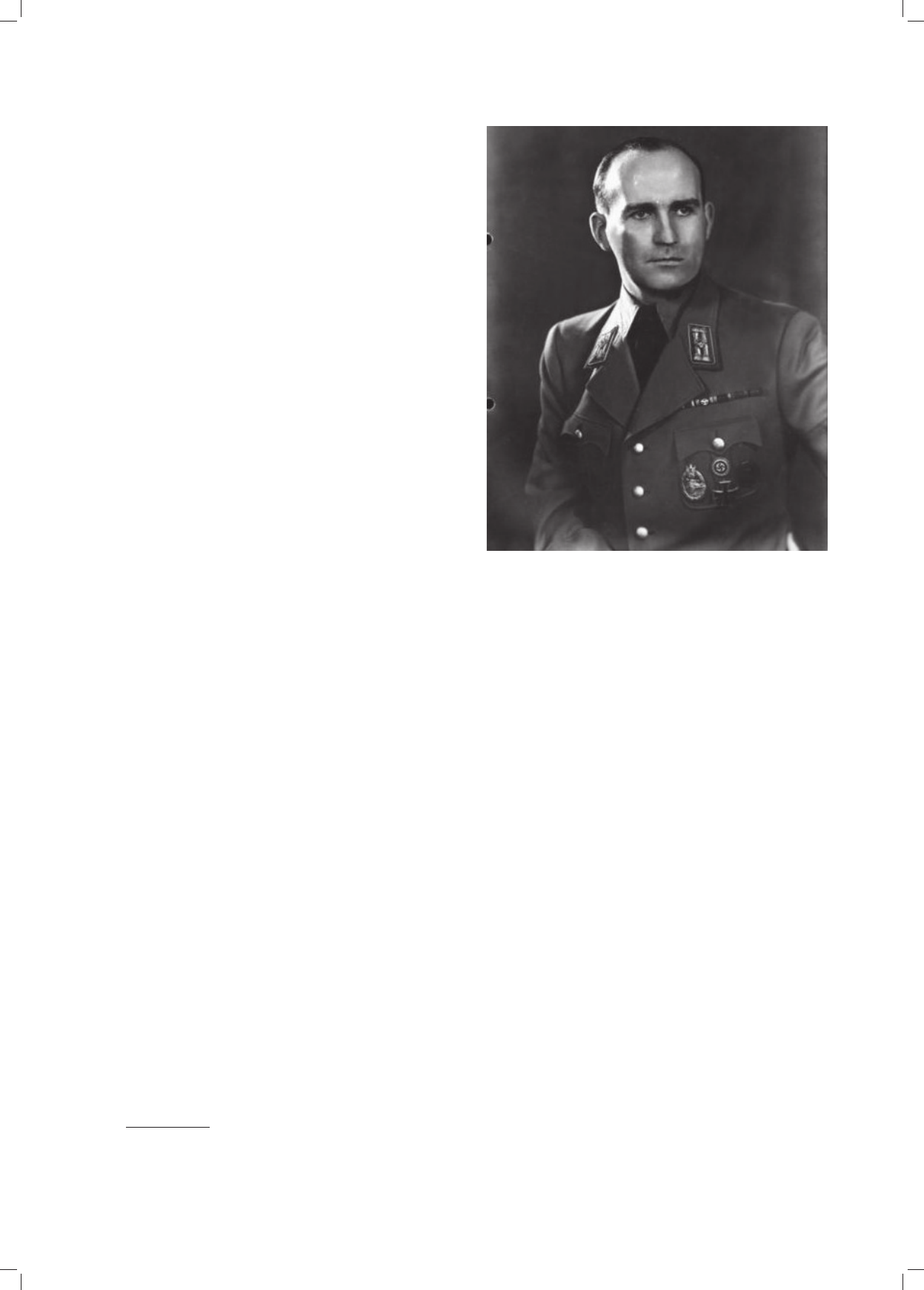
luckily it was only the beginning of World War II. After
a spectacular entry of troops to Paris along with General
Rommel, Lieutenant Hanke received his new assignment
– the post of Gauleiter of Lower Silesia (Fig. 3). The
Berlin sce nery was replaced by the reality of a great city
s. 48–49]. Speer ocenił sytuację następująco: Sprawy
Hankego i Pani Goebbels dojrzały tymczasem na tyle, że
ku przerażeniu wszystkich wtajemniczonych, chcieli się
pobrać. Nierówna para: Hanke był młody i porywczy,
ona znacznie (?) starsza, elegancka dama z towarzystwa.
Hanke nalegał na Hitlera, aby zgodził się na rozwód, ale
ten odmawiał, mając na uwadze rację stanu [6, s. 180].
Speer był także świadkiem rozpaczy Hankego – w swoim
domu w Berlinie – na wiadomość, że Goebbelsowie gosz-
czący na festiwalu w Bayreuth pod wpływem pani Wag-
ner i Hitlera pojednali się. Scenerią dla kończącego się
romansu była opera Wagnera Tristan i Izolda, [...] której
wysłuchaliśmy, siedząc w wielkiej środkowej loży – Hit-
ler, małżeństwo Goebbelsów, pani Winifreda Wagner i ja.
Siedząca po mojej prawej ręce pani Goebbels nieustannie
cicho płakała, patrząc przed siebie [6, s. 181].
Kwestia skali – kwestia emocji
Po klęsce i kompromitacji w Bayreuth, niemal natych -
miast – w sierpniu 1939 r. – Hanke odszedł ze sta no wis -
ka sekretarza stanu w ministerstwie propagandy i zgło -
sił się „na ochotnika” na front wschodni – szczęśliwie
był to dopiero początek II wojny światowej. Po od by-
ciu u boku generała Rommla spektakularnego wjazdu do
Pa ryża porucznik Hanke odebrał swój nowy przy dział
– sta no wisko gauleitera Dolnego Śląska (il. 3). Scenerię
ber lińs ką zastąpiła rzeczywistość wielkiego miasta, które
wy ma ga ło przygotowania do funkcjonowania w stanie
go spodarki wojennej. Praca urzędnicza zastąpić musiała
splen dor Kancelarii Rzeszy. Pilgrin napisał wprost: Po
afe rze z Baaro vą Karla Hanke przeniesiono. Został gau -
leiterem Śląska i tam się ożenił [13, s. 49]
16
. W rea liach
wo jen nych Niemiec Hanke stał się człowiekiem niewy
god -
nym z ideologicznego i propagandowego punktu widze-
nia. Dwa razy zdradził swojego szefa, Josepha Goe bbelsa,
narażając go na gniew kanclerza, a nawet za grożenie
dymisją. Jednocześnie Hanke zbyt wiele wie dząc o ku -
lisach funkcjonowania III Rzeszy, mógł być nie bez piecz-
ny. Speer przypuszczał, że przed surowszym wy ro kiem
niż „zesłanie” na Śląsk mogła jeszcze go och ronić Magda
Goebbels – ulubienica Hitlera, ikona nie mieckiego ma-
cierzyństwa. Być może właśnie dzięki niej otrzymał swój
służbowy przydział do Wrocławia [14, s. 70], [15, s. 188].
Z punktu widzenia charakteru relacji społecznych
kariera polityczna Hankego splatająca się z karierą za-
wo dową Speera oraz ich wieloletnia przyjaźń jest inte -
resującym wątkiem, ukazującym mechanizm fun k cjo-
nowania na najwyższych szczeblach władzy w III Rzeszy.
W przypadku Hankego jest to również historia upad ku
i degradacji, tłumionych emocji i wściekłej bezsilnoś-
ci wobec ludzkiej natury, epizodu który mógł spowodo-
wać „efekt motyla” – zagładę miasta.
Jak wyglądała urzędnicza kariera wygnanego z Ber-
li na dygnitarza? W latach 1940–1941 Karl Hanke urzą-
16
Związek małżeński Karla Hankego z baronessą Fredą von
Fircks primo voto Johnson został zawarty 25 listopada 1944 r. we Wro-
cławiu, a więc już po ogłoszeniu miasta twierdzą. Jej akta personalne nie
figurują w Berlińskim Centrum Dokumentów.
Il. 3. Karl Hanke we frontowym mundurze z dystynkcjami porucznika
7. Dywizji Pancernej Erwina Rommla, 1939/1940
(źródło: http://www.ww2incolor.com/german_leadership/hanke.html
[data dostępu: 8.07.2015])
Fig. 3. Karl Hanke in the front uniform with the insignia of lieutenant
of the7
th
Armoured Division of Erwin Rommel, 1939/1940
(source: http://www.ww2incolor.com/german_leadership/hanke.html
[accessed: 8.07.2015])
100 Ewa Łukaszewicz-Jędrzejewska
that required some preparation for the functioning in the
con ditions of war economy. An offi ce job was supposed
to replace the splendor of the Reich Chancellery. Pilgrin
just wrote: After the scandal with Baarová Karl Hanke
was trans ferred. He was appointed Gauleiter of Silesia
and he got married there [13, p. 49]
16
. In the context of
wartime Germany Hanke became a persona non grata
from the ideological and propaganda point of view.
He betrayed his boss Joseph Goebbels twice exposing
him to the wrath of the chancellor and even the threat
of dismissal. At the same time Hanke, who knew too
much about the functioning of the Third Reich Behind
Closed Doors, could be quite dangerous. Speer believed
that Magda Goebbels – Hitler’s favourite and an icon of
German motherhood – was the only one who was able
to save him from a more severe punishment than “exile”
to Silesia. Perhaps it is thanks to her that he received his
offi cial assignment to Wrocław [14, p. 70], [15, p. 188].
Taking into consideration the nature of social rela tion-
ships, Hanke’s political career which went along with
Speer’s
professional career as well as their long friendship, is an
interesting theme showing the me cha nism of functioning
at the highest levels of power in the Third Reich. In the
case of Hanke it is also the story of failure and degradation,
suppressed emotions and furious powerlessness in the
face of human nature, the episode that might have caused
a “butterfl y effect” – the destruction of the city.
What did the offi ce career of a dignitary who was
exiled from Berlin look like? In the years 1940–1941,
Hanke arranged his offi cial residence in Wrocław at 17/19
Akacjowa Street and conducted race cleansing in Borek
architecture, commissioning the execution of plans of
a pro tected administrative enclave by a Luftwaffe squad
that was stationed in a nearby villa [4]. Due to propaganda
and ideological reasons it was a model example of a new
order in a pre-war professor district. It is quite probable
that the fi nal form of the villa design was infl uenced by
talks with Speer who quite frequently contacted Hanke
offi cially – at that time he performed the function of the
Reich representative for Silesia defense issues.
In his memoirs, when referring to one of the last con-
versations with Hanke, Speer expressed his concern about
the tone of fanaticism in Hanke’s speech on Wrocław
defense: [...] he spoke with pathos, the Russians will never
conquer the city. I’d rather burn it. A few lines later: I made
objections, but Hanke insisted on his ideas [...] but in the
end I managed to convince him about the hi storical quali-
ties of at least this building [Town Hall] [6, pp. 506–507].
The conversation took place in January 1945 and we
can think that the Gauleiter’s attitude becoming less aggre-
ssive was a noncommittal concession in relation to the
minister rather than a promise of changes in the strategy
of fortress defense. Speer also recalled conversations in
the living room with green armchairs, when drinking
a glass of cognac he confi ded to Hanke all his troubles
16
Hanke married Baroness Freda von Fircks primo voto Johnson
on November 25, 1944 in Wrocław, i.e. after Wrocław was proclaimed
a fortress. Her personal files do not appear in the Berlin Document
Centre.
dzał swoją służbową rezydencję we Wrocławiu, przy Alei
Akacjowej 17/19, prowadząc rasową czystkę w ar chi -
tek turze Borka i zlecając wykonanie planów chro nio nej
en klawy administracyjnej, strzeżonej przez sta cjo nu jący
w pobliskiej willi oddział Luftwaffe [4]. Ze względów pro -
pagandowych i ideologicznych był to mo delowy przy kład
nowego ładu w przedwojennej, pro fe sorskiej dziel ni cy.
Być może na ostateczny kształt pro jektu willi wpływ miały
rozmowy ze Speerem, który wie lo krot nie kon tak tował się
z Hankem na szczeblu służ bo wym – pełnił wówczas funk-
cję pełnomocnika Rzeszy do spraw obronności Śląska.
We wspomnieniach jednej z ostatnich rozmów z Han-
kem Speer wyraził zaniepokojenie tonem fanatyzmu w je-
go
wypowiedzi na temat obrony Wrocławia: [...] mó
wił
z pa tosem, Rosjanie nie zdobędą go nigdy. Raczej spalę
go. Kilka linijek dalej: Wysuwałem zastrzeżenia, ale Han-
ke upierał się przy swoim [...] w końcu jednak udało mi się
go przekonać o zabytkowych walorach przynajmniej tej
budowli [Ratusza] [6, s. 506–507].
Rozmowa odbyła się w styczniu 1945 r. i należy są-
dzić, że złagodzenie stanowiska gauleitera było raczej
nie zobowiązującym ustępstwem w stosunku do ministra
niż obietnicą zmian w strategii obrony twierdzy. Speer
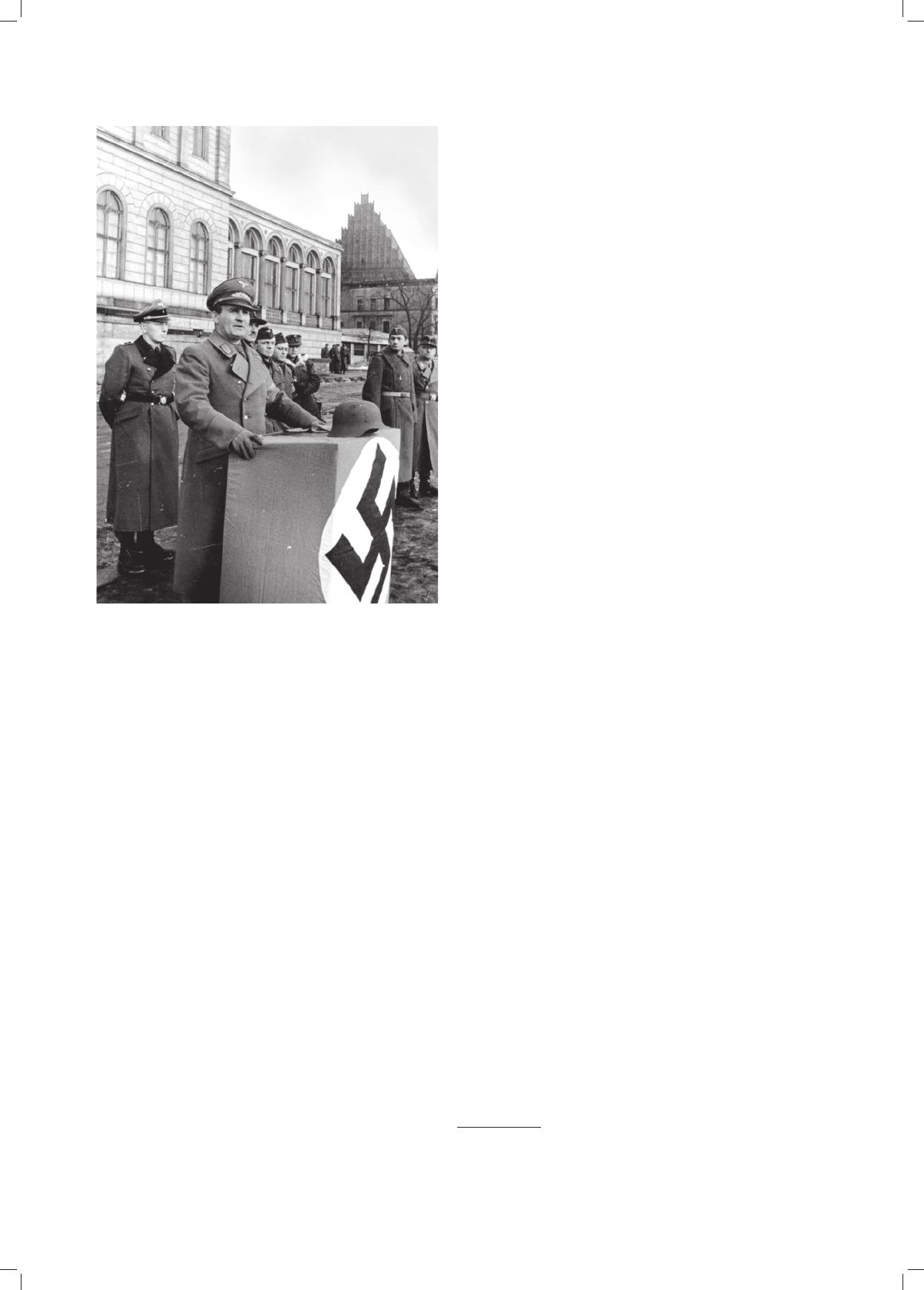
Il. 4. Karl Hanke, przemówienie do obrońców Festung Breslau,
marzec 1945 [źródło: Bundesarchiv, Bild 183-1989-1120-502 /
CC-BY-SA [CC BY-SA 3.0 de (http://creativecommons.org/licenses/
by-sa/3.0/de/deed.en)], via Wikimedia Commons
[data dostępu:
8.07.2015])
Fig. 4. Karl Hanke, a speech to the defenders of Festung Breslau,
March 1945 (source: Bundesarchiv, Bild 183-1989-1120-502 / CC-BY-SA
[
CC BY-SA 3.0 de (http://creativecommons.org/licenses/by-sa/3.0/de/
deed.en)], via Wikimedia Commons [accessed: 8.07.2015])

„Efekt motyla” /„Butterfly effect” 101
wspominał także rozmowy w salonie z zielonymi fote-
lami, kiedy z lampką koniaku zwierzał się Hankemu ze
swoich kłopotów z uzbrojeniem, zaopatrzeniem wy co-
fujących się armii i brakiem ludzi do pracy, obniżeniem
morale, męczącymi inspekcjami w terenie. Czy podczas
tych rozmów Hanke nie czuł nienawiści, żalu i złości,
konfrontując swoją pozycję z pozycją przyjaciela? Czy
Speer będący świadkiem upokorzenia Hankego w cza-
sach romansu z Magdą Goebbels jeszcze był dla niego
przy jacielem, czy tylko niewygodnym świadkiem ka ta-
strofy? Czy Wrocław – miasto zesłania – był jego oso bis-
tym wrogiem przypominającym każdym swoim mu rem
o klęsce, miastem, które prowokowało do „uka ra nia”
go w sposób ostateczny? Co czuł, pamiętając o tym, jak
wprowadzał bezrobotnego i nieśmiałego ar chi tekta na
mi nisterialne salony III Rzeszy, był jego pro tektorem
i pierwszym zleceniodawcą – odkrył go, jak przyznaje to
sam Speer? W roku 1940 Speer pełnił funkcję ministra
uzbrojenia, a zakres jego kompetencji był praktycznie
nieograniczony [6, s. 322–486], [12, s. 176–220]. Konty -
nuował także w wolnych chwilach misję zleconą mu
przez kanclerza Adolfa Hitlera – plantowanie za pomocą
artylerii berlińskiej osi wschód–zachód pod budowę
Germanii, nowej stolicy Tysiącletniej Rzeszy.
Sytuacja, w której Hanke musiał odgrywać rolę miłego
gospodarza, była naprawdę emocjonalnie obciążająca
i po wodująca kumulację negatywnych nastrojów. Może
chciał rzeczywiście spalić to miasto w akcie bezsilnej
nie na wiści – może nawet autoagresji. Te wszystkie reto-
ryczne pytania i hipotezy w świetle współczesnych teo-
rii przeniesienia relacji emocjonalnych na inne obiek-
ty nie wydają się nieprawdopodobne. Szczególnie, gdy
konfrontujemy je z zapisami księdza Peikerta [5] i pa sto-
ra Horninga prowadzonymi od 25 lutego 1945 r. do dnia
kapitulacji Festung Breslau, 6 maja. Ukazują one oso-
biste wręcz okrucieństwo Hankego wobec miasta i je go
mieszkańców [16].
Zdaję sobie sprawę, że problemy strategiczne zwią-
zane z obron
ą Festung Breslau były zdeterminowane
zde cydowanie poważniejszymi przesłankami niż tok sycz-
ny romans Hankego. Dyskusja na temat strategii i sensu
tak dra matycznej obrony Wrocławia trwa ła w powo jen-
nych Niemczech kilkanaście lat. Jej biblio gra fi ę podają
Kazimierz Jońca i Adam Konieczny w podstawowej do tej
pory polskiej publikacji [16]. Coraz częściej powtarzają
się opinie o niezrozumiałym z powodu znaczenia militar-
nego Wrocławia w schyłkowym okresie wojny oporze.
Książką obiektywizującą spór była wspólna publikacja
komendantów twierdzy – generałów Hansa von Ahl fe na
i Hermanna Niehoffa [17], która stała się pró bą re ha bi-
litacji dowództwa pozostającego pod presją poli tycz ną
coraz bardziej nieobliczalnego, niepanującego nad emo-
cjami Hankego. Polskie wydanie tej książki dotarło do
rąk czytelników dopiero w końcu lat 90. XX w. Do dziś
najbardziej obiektywnymi opisami bezsensownej zagłady
miasta, metodycznie – dzielnicami – podpalanego przez
sonderkommanda są relacje księdza Peikerta i pastora
Han sa Horninga [18]. Celem mojego artykułu nie było
przed stawienie militarnej doktryny obrony Festung Bres -
lau, ale przybliżenie psychologicznego aspektu podej mo-
connected with weapons, supplies for a retreating army
and lack of people to work, lowered morale, burdensome
inspections carried out in the area. During these con ver-
sations, did not Hanke feel hatred, grief and anger when
confronting his position with the one of his friend? Was
Speer, who witnessed Hanke’s humiliation at the time of
the love affair with Magda Goebbels, still his friend or just
an unwanted witness of the disaster? Was Wrocław – the
city of exile – his personal enemy reminding him with each
wall of the defeat, the city that provoked to “punish” him
defi nitively? What did he feel, remembering the moment
of introducing an unemployed and shy architect to the
drawing rooms of the Third Reich and being his supporter
and the fi rst client? He discovered him as Speer admitted
himself. In 1940 Speer performed the function of the
Minister of Armaments and the range of his competences
was virtually unlimited [6, pp. 322–486], [12, pp. 176–
220]. In his spare time he also continued a mission given
to him by the Chancellor Adolf Hitler – leveling the east-
west axis for the development of Germania, namely a new
capital of the Thousand-Year Reich.
The situation in which Hanke had to play the role of
a welcoming host was really emotionally hard and re-
sulted in accumulating negative feelings. Perhaps he
really wanted to burn this city in an act of helpless hatred
– or maybe even of auto-aggression. All these rhetorical
questions and hypotheses in the light of contemporary
theories of transferring emotional relations to other ob-
jects do not seem to be incredible. In particular, when
we confront them with the records of priest Peikert [5]
and pastor Horning which were made from 25
th
February
1945 until the day of capitulation of Festung Breslau on
6
th
May. They show the personal outright cruelty of Hanke
towards the city and its inhabitants [16].
I realize that the strategic problems connected with the
defense of Festung Breslau were determined by far more
serious premises than Hanke’s toxic love affair. A dis-
cussion about the strategy and the sense of such a dra-
ma tic defense of Wrocław was continued in post-war
Ger many for several years. Its bibliography is presented
by Kazimierz Jońca and Adam Konieczny in the so far
primary Polish publication [16]. Opinions regarding in-
com prehensible resistance because of military impor-
tance of Wrocław in the fi nal stages of the war occur
more and more frequently. The book which presented
the dispute in an objective way was a joint publication
of the commanders of the fortress – generals Hans von
Ahl fen and Hermann Niehoff [17] – which became an
attempt at rehabilitating the headquarters which were un-
der a political pressure of Hanke who was increasingly
unpredictable and not being able to control his feelings.
It was not until the 1990
s
that this book was published in
Polish and made available to the Polish readers. To date,
the most objective descriptions of the senseless destruction
of the city done methodically district by district, burnt
down by sonderkommandos are accounts of priest Peikert
and pastor Hans Horning [18]. My article was not aimed
at presenting a military doctrine of the defence of Festung
Breslau but at concentrating on a psychological aspect
of decisions made by Hanke. In my opinion, the fact that

102 Ewa Łukaszewicz-Jędrzejewska
wa nych przez Hankego decyzji. Zaniepokojenie Speera
stanem emocji gauleitera i dystans do jego decyzji wyra-
żony podczas spotkań w latach 1942–1944 jest moim
zdaniem dowodem na narastanie kryzysu kompetencji
Han kego jako obrońcy Festung Breslau. Zdaję sobie spra-
wę, że dla kompletnego ukazania tła, na którym roz gry-
wała się tragedia Wrocławia, konieczna byłaby analiza
strategii obrony innych twierdz III Rzeszy wiosną 1945 r.
– Głogowa i Szczecina. Badania te są prowadzone przez
historyków militariów i dostępne w licznych źród łach ar-
chiwalnych
17
.
Na internetowych forach Wratislaviae Amici możemy
śledzić żarliwe dyskusje mieszkańców Wrocławia pró -
bu jących odnaleźć swoją tożsamość w mieście, od kryć
i oswoić jego historię. Spierają się o topografi ę nie ist-
nie jących już wrocławskich ulic i próbują odtworzyć
tkan kę miasta na podstawie archiwalnych fotografi i po-
zys kiwanych na aukcjach i wydobywanych z rodzin nych
albumów. Opublikowane w ostatnich latach zbio ry fo to-
grafi i lotniczych Wrocławia w latach przed wybu chem
II wojny światowej i wykonane w roku 1947 uka zują
dra mat miasta i jego mieszkańców skazanych na wła dzę
gauleitera być może opanowanego żądzą odwetu za nie-
szczęśliwą miłość [19], [20]. Moim zadaniem była pró ba
ukazania osobistego dramatu człowieka w obliczu ma -
chiny wojennej, uwikłania w emocjonalny, toksyczny
zwią zek, który jak ruch skrzydła motyla mógł uruchomić
łań cuch wydarzeń zakończonych zagładą miasta.
17
Szczególną rolę w ustaleniu faktów odgrywają członkowie grup
rekonstrukcyjnych, których wiedza coraz częściej oparta jest na źród-
łach archiwalnych ze wspomnianych już w tekście archiwów nie-
mieckich.
Speer was upset by the Gauleiter’s emotional state and had
reservations regarding his decisions expressed during the
meetings in the years 1942–1944 proves the increase of
the crisis of Hanke’s competence as a defender of Fest ung
Breslau. I do realise that in order to achieve a complete
background against which the Wrocław tragedy took
place, it would be necessary to analyse defensive strategies
of other fortresses of the Third Reich in the spring of
1945 – Głogów and Szczecin. This research is carried
out by military historians and its results are available in
numerous archival sources
17
.
On the Internet forums Wratislaviae Amici we can
follow fervent debates of Wrocław inhabitants who try
to fi nd their identity in the city, to discover and be fa mi-
liarised with its history. They argue about the to po graphy
of Wrocław streets that no longer exist and try to reproduce
the city tissue on the basis of archival pho tographs acquired
during auctions and taken out of family photo albums.
The recently published collections of aerial photographs
of Wrocław taken before the outbreak of the World War II
and in 1947 present the drama of the city and its residents
who were doomed to the Gauleiter’s power who was
probably full of revenge desire for his unhappy love [19],
[20]. My purpose was to try to show the personal drama of
a man in the face of the war machine, his entanglement in
an emotional, toxic relationship which, like the movement
of the butterfl y wings, could have started a chain of events
ending in the city destruction.
Translated by
Bogusław Setkowicz
17
A particularly important role in determining facts is performed
by members of reconstruction groups whose knowledge is more and
more frequently based on archival sources from the aforementioned
German archives.
Bibliografia /References
[1] Gleiss H. (red.), Breslauer Apokalypse 1945: Dokumentarchronik
vom Todeskampf und Untergang eine Deutschen Stadt und Festung
am Ende des zweiten Weltkrieges, Natura et Patria, Verlag Horst
G.W. Gleiss, Rosenheim 1986–1997.
[2] Kempowski W. (red.), Echolot: Fuga furiosa – ein kollektives Tage-
buch Winter 1945, Bd. 1–4, btb Verlag, Monachium, 2004–2007.
[3] Hargreaves R., Ostatnia twierdza Hitlera. Breslau 1945, Rebis,
Warszawa 2014.
[4] Łukaszewicz-Jędrzejewska E., Wrocławska rezydencja gauleitera
Karla Hanke, „Architectus” 2003, nr (1–2), 97–111.
[5] Peikert P., Kronika dni oblężenia (Wrocław 22.I.–6.V.1945 r.), Wy -
dawnictwo Ossolineum, Wrocław 1964.
[6] Speer A., Erinnerungen, Verlag Ullstein, Frankfurt a.M.–Berlin
1969.
[7] Tuchman B.W., Szaleństwo władzy. Od Troi do Wietnamu, Książ-
nica, Katowice 1992.
[8] Król E.C., Propaganda i indoktrynacja narodowego socjalizmu
w Niemczech 1919–1945, Rytm Ofi cyna Wydawnicza, Warszawa
1999.
[9] Trimborn J., Riefenstahl. Niemiecka kariera, WAB, Warszawa
2008.
[10] D’Almeida F., Światowe życie w czasach nazizmu. Elity europejskie
wobec Hitlera, Wydawnictwo Dolnośląskie, Wrocław 2009.
[11] Reuth R.G., Goebbels, Iskry, Warszawa 2004.
[12] Fest J.C., Speer – biografi a, Wydawnictwo Literackie, Kraków
2001.
[13] Pilgrin V.E., Mów do mnie „pani Hitler”. Kobiety jako ozdoba
i maska narodowego socjalizmu, URAEUS, Gdynia 1999.
[14] Ebermeyer E., Leben und Todt der Magda Goebbels, Hoffman und
Campe, Hamburg 1952.
[15] Schirach H., Frauen um Hitler, Herbig, Munchen 1985.
[16] Jońca K., Konieczny A., Festung Breslau. Documenta obsidionis,
PWN, Warszawa–Wroc
ław 1962.
[17] Ahlfen H., Niehoff H., So kampfte Breslau, Motorbuch, Stuttgart
1976.
[18] Horning E., Breslau 1945. Erlebnisse in der eigeschlossenen Stadt,
Gottlieb Korn, Würzburg 1975.
[19] Eysymontt R., Moshban T., Wrocław na fotografi ach lotniczych
okresu międzywojennego, Via Nova, Wrocław 2013.
[20] Tyszkiewicz J., Kaczmarek M., Wrocław 1947 fotografi e lotnicze,
Via Nova, Wrocław 2009.

„Efekt motyla” /„Butterfly effect” 103
Streszczenie
Artykuł jest próbą przedstawienia jednego wątku z prywatnego życia Karla Hankego, gauleitera Dolnego Śląska w latach 1940–1945. Jego
poświadczony w materiałach źródłowych – pamiętnikach osób pełniących w latach III Rzeszy najważniejsze stanowiska w życiu politycznym
i kulturalnym – związek z Magdą Goebbels, żoną ministra propagandy III Rzeszy, stał się końcem kariery Hankego w Berlinie. Zaangażowanie
emocjonalne obu stron było tak duże, że w sprawie ewentualnego rozwodu zadecydować miał sam kanclerz Adolf Hitler. Ze względów wizerunkowych
nie wyraził zgody, a Hanke w trybie natychmiastowym został oddelegowany możliwie jak najdalej od Berlina. W styczniu 1940 r. przyjechał do
Wrocławia, by objąć stanowisko gauleitera. W porównaniu z berlińskimi realiami, był to dla Hankego upadek i degradacja. Jeden z najbardziej
wpływowych ministrów, protektor i przyjaciel artystów – żeby wymienić tylko najbardziej znane nazwiska: Alberta Speera, Lídy Baarovej, Leni
Riefenstahl, Gerdy Troost – powiernik osobistych tajemnic Josefa Goebbelsa, a jednocześnie ich zdrajca musiał odnaleźć się w wojennych realiach
Wrocławia. W artykule postawiłam hipotez
ę, że obrona Festung Breslau była aktem osobistej zemsty na mieście za wygnanie ze stolicy i nosi w sobie
symptomy „szaleństwa władzy”.
Słowa kluczowe: Karl Hanke, Magda Goebbels, Festung Breslau
Abstract
This article is an attempt to present an episode from the private life of Karl Hanke, the Gauleiter of Lower Silesia in 1940–1945. His love affair
with Magda Goebbels, wife of the Third Reich’s minister of propaganda, evidenced in source materials – the diaries of major participants in Nazi
Germany’s political and cultural life – led to the end of his brilliant career in Berlin. The emotional involvement of both lovers was so strong that the
issue of a possible divorce was to be decided by the Reich Chancellor, Adolf Hitler, himself. For political and moral reasons the Chancellor refused
to give his consent and Karl Hanke was immediately dispatched to a place as distant from Berlin as possible. In January 1940, he arrived in Wrocław,
to take up the offi ce of Gauleiter. In comparison to Berlin, for Hanke it meant a fall and a degradation. One of the most infl uential ministers and
a protector, friend of such prominent artists as Albert Speer, Lída Baarová, Leni Riefenstahl or Gerdy Troost, and a confi dant to Joseph Goebbels,
whom he eventually betrayed – had to fi nd his way in Wrocław’s wartime reality. In this article I propose a hypothesis that the defence of Festung
Breslau was an act of Hanke’s personal revenge on the city for his exile from Berlin and showed symptoms of “a march of folly”.
Key words: Karl Hanke, Magda Goebbels, Festung Breslau
Janusz Dobesz – specjalista od architektury
władzy – w bojowym stroju w karykaturze
Ernesta Niemczyka
Janusz Dobesz – expert on architecture of
power – in a uniform as depicted by
Ernest Niemczyk