SPA stands for sanus per aquam which in Latin means
health through water. SPAs are supposed to provide the
atmosphere of peace and relaxation and the activities con-
nected with water are to positively affect the human body
and mind [6, pp. 66–71]. The term SPA is becoming more
and more popular in everyday life. At present SPAs are
DVVRFLDWHG ZLWK VSHFL¿F DFWLYLWLHV PDVVDJHV ELRORJLFDO
regeneration in its broad sense, baths, etc.) as well as prod-
ucts and spaces that are connected with water treatment
DQGVSHFLDOULWXDOV63$VDUHDOVRUHÀHFWHGLQWKHDUFKLWHF-
ture of such buildings as thermae, baths, saunas and other
buildings that are more and more common also in the city
space.
The origin of SPAs can be traced back to hot baths that
were present in Asia and in time they were adapted in Eu-
rope. Still in the 7
th
–5
th
centuries B.C. there were cases
RIEXLOGLQJERQ¿UHVXVHGDOVRIRUEDWKVPDLQO\E\6ODYLF
tribes as well as in Syria, Greece, and Egypt) [4, pp. 6–7].
7KHDQFLHQW5RPDQEDWKVFDQEHFRQVLGHUHGWKH¿UVW
SPA spaces. The oldest baths known as thermae were dis-
covered at Pompeii and they date back to the 2
nd
century
B.C. [5]. The Baths of Caracalla from the 3
rd
century can
be considered some of the biggest. The most important
elements of the functional and spatial program of the an-
cient baths include apodyterium URRP IRU XQGUHVVLQJ
tepidarium URRP IRU ZDUP EDWK caldarium URRP IRU
hot bath), frigidarium FROGZDWHUEDWKpalestraRXWVLGH
space for exercises). Baths were important buildings in
the functional and spatial layout of ancient cities – located
in the neighborhood of other important facilities so they
FRXOGEHRIWHQXVHG7KHJUHDWHVWDQGWKHPRVWPDJQL¿FHQW
of them could occupy from several to more than a dozen
KHFWDUHV HJ WKH %DWKV RI &DUDFDOOD ± KHFWDUHV DQG
they housed libraries or gyms and they were big enough
to provide room for a few hundred or even a few thou-
sand people at the same time. The interior layout of the
Roman baths should be considered highly characteristic.
%HJLQQLQJIURP WKH EDWKV RI7LWXV D GRXEOHV\PPHWUL-
cal) layout of the rooms with frigidarium in its center and
the other smaller rooms around it was popular. The frigi-
darium itself and the spaces around it was very impres-
sive, monumental, tall and vaulted often with apses around
it, and the whole structure provided effective perspective
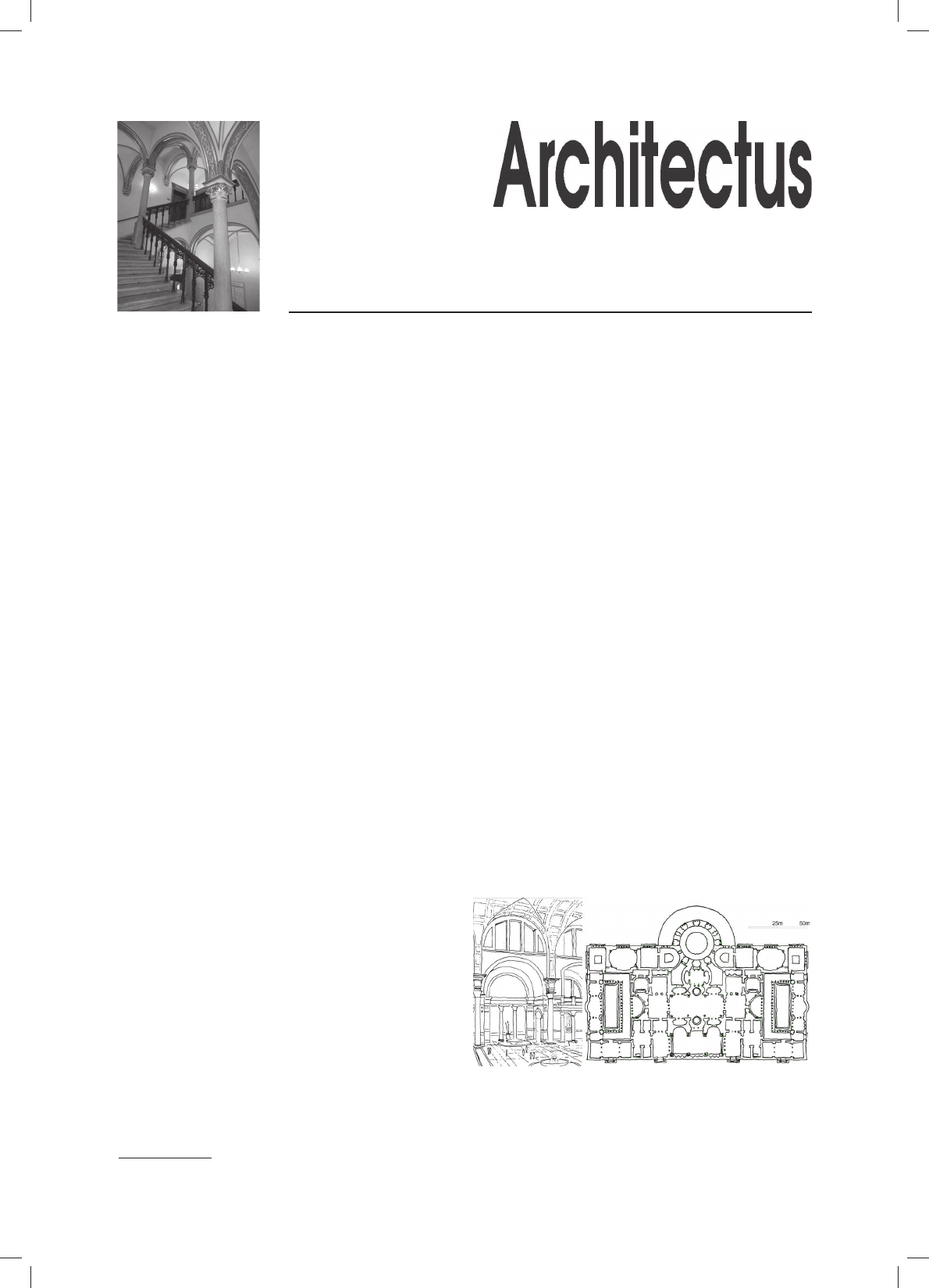
YLHZV>@)LJ
Later baths were public and few private Turkish baths
hamam) or Arab baths popular in Islamic countries. The
Barbara Uherek-Bradecka*, Tomasz Bradecki*
Cultural aspects of sauna and SPA architecture in the city
– examples of design and execution
Introduction
)DFXOW\RI$UFKLWHFWXUH6LOHVLDQ8QLYHUVLW\RI7HFKQRORJ\
)LJ7KH%DWKVRI&DUDFDOODLQ5RPH±$QDWWHPSW
DWUHFRQVWUXFWLRQOHIWDQGÀRRUSODQULJKW6RXUFH>@
KDQGVNHWFKHVE\7%UDGHFNL%8KHUHN%UDGHFND
,O7HUP\.DUDNDOOLZ5]\PLH±UQH3UyEDUHNRQVWUXNFML
SROHZHMRUD]G\VSR]\FMDSU]HVWU]HQQDU]XWXSRSUDZHMħUyGáR>@
V]NLFHRGUĊF]QH7%UDGHFNL%8KHUHN%UDGHFND
2012
No. 2(32)
DOI: 10.5277/arc120215

%DUEDUD8KHUHN%UDGHFND7RPDV]%UDGHFNL
greatest of them included numerous baths constructed later
during the Ottoman Empire also in the conquered territo-
ULHVWKHPRVWIDPRXVLQFOXGHWKH7XUNLVKEDWK5XGDVLQ
Budapest from the 16
th
FHQWXU\7KH¿UVWPHQWLRQVRIWKH
EDWKVLQ(XURSHFRPHIURPWKHWXUQRIWKH
th
and 11
th
cen-
WXULHVWKH\ZHUHWKHQVPDOOZRRGHQVWUXFWXUHVZKHUHDSDUW
from the vestibule there was the main room with a stove
on which water was poured to get a lot of steam [4, pp.
6–7], [2]. Later European baths were in general privately
owned by the rulers; they were also built in monasteries,
DQGSXEOLFEDWKVZHUHPRUHUDUH>SS±@
Contemporary Sauna Structures
The evident growth in interest in hot baths could be
REVHUYHGLQWKH
th
century, mainly due to the more popu-
lar knowledge of their therapeutic properties. The termi-
QRORJ\FRQQHFWHGZLWKEDWKLQJIDFLOLWLHVLVZRUWKQRWLQJ
originally thermae meant a complex of buildings used for
hot baths, entertainment, and relaxation; baths were often
parts of thermae – rooms used for taking hot baths in wa-
ter, water vapor or air. Sauna, on the other hand, is a more
SRSXODUWHUPWRGD\PHDQLQJDVSHFLDONLQGRIEDWKDFFWR
WKHSRSXODU(QF\FORSHGLDLWLVD)LQQLVKEDWK6RLWFDQ
be claimed that the terms sauna and bath can be used in-
WHUFKDQJHDEO\LQVRPHVLWXDWLRQVEHFDXVHWKHLUIXQFWLRQV
are very similar, whereas at present we can talk about an
evident disappearance of bathing for hygienic purposes
and that is why the term sauna is more popular. At present
)LQODQGLVFRQVLGHUHGWREHWKHSODFHRIRULJLQRIVDXQDV
– places designed for hot baths. Saunas are very popular
WKHUHZKLFKLVUHÀHFWHGLQWKHLUQXPHURXVGHVLJQVLQSXEOLF
buildings and private apartments. The architecture of sau-
na structures is usually traditional – they are made of wood
WRDVVHSDUDWHEXLOGLQJVRUWREH¿WWHGLQVLGHRWKHUEXLOG-
ings. A typical functional and spatial design would include
a vestibule to undress and a sauna room with benches and
a stove. In most cases the space in front of a sauna is used
IRUFRROLQJERWKLQWKHSDVWDQGDWSUHVHQWDEXFNHWZLWK
cold water, a river, lake or snow and ice can serve the cool-
ing function.
At present one can notice a broad diversity and special-
ization of spaces designed to serve the functions connected
with the SPA. Some of them are dedicated exclusively for
WKHUDSHXWLFSUDFWLFHVPDVVDJHVWKHUDS\YDULRXVNLQGVRI
special baths. Others include sauna structures designed for
rituals connected with building bodily strength in saunas.
The rest of the article discusses the huge sauna facilities.
At present one can notice the process of specialization of
saunas due to different temperatures, air humidity or acces-
VRULHVVXFKDVVFHQWVRUOLJKW7KHPRVWSRSXODULQFOXGH
± )LQQLVK VDXQDV RIWHQ GHVFULEHG DV GU\ VDXQDV ±
&DQGKXPLGLW\XSWR
± ZHWVDXQDVWHPSHUDWXUH±&DQGKXPLGLW\XSWR
± VPRNH VDXQDV WHPSHUDWXUH ± & DQG KXPLGLW\
±
± DURPDWLF VDXQDV WHPSHUDWXUH ± & KXPLGLW\
±IUDJUDQWRLOVDUHSRXUHGRQKRWURFNV
± VDOWVDXQDVVDXQDVZLWKHOHPHQWVPDGHRIVDOWEORFNV
that create a sea and salty microclimate),
± VDXQDVZLWKFRORUWKHUDS\VDXQDVHTXLSSHGZLWKVSH-
cial lamps emitting light in six colors of the prism, pro-
viding a unique ambiance as well as healing treatment
– bioenergetic),
± EUHDG RYHQ VDXQDV VDXQDV ZLWK EUHDG RYHQV ZKHUH
bread is baked and eaten and where the aroma is also
used as an element of sauna ritual – these saunas are
in a sense an analogy to the historical bread ovens that
were used as saunas when there was no more bread).
$OO WKRVH GH¿QLWLRQV DQG SDUDPHWHUV DUH SDUWO\ FRQYHQ-
tional; at present experiments are done with different
sauna types and attractions as well as different auxil-
iary functions, including cooling spaces – necessary to
XVHULJKWDIWHUOHDYLQJWKHVDXQDFROGVKRZHUVEXFN-
ets with cold water, cold water swimming pools, caves
with ice rub as well as snow and ice caves) and lounges
VSDFHVIRUUHVWDIWHUVDXQDVHVVLRQV
The most famous sauna structures in Europe include
Mediterana in Bergisch Gladbach in Germany with
a very extensive complex of more than a dozen saunas,
baths and numerous other auxiliary spaces dedicated
WR WKHP 7KH FRPSOH[ KDV HJ DURPDWLF VDOW )LQQLVK
Moorish and other saunas – all interiors are decorated
ZLWKDUFKLWHFWXUDOPRWLIVDOOXGLQJWRVSHFL¿FWKHPHV$Q-
other example of a typical sauna complex is Bad Ben-
theim in Germany with seven external thematic saunas
KRW)LQQLVKHXFDO\SWXVKHUEDODQGPDQ\RWKHUDX[LOLD-
U\IXQFWLRQVVXFKDVWHFDOGDULXPYDSRULXPKRWURRPV
as well as a complex of recreational swimming pools and
a group of SPA and wellness amenities. Therme Erding,
one of the largest thermal bath complexes in Europe,
ZLWKLWVWKHPDWLFVDXQDVLVMXVWDSDUWRIDKXJHIXQF-
tional program including swimming pools, slides, sports
and recreation areas.
Rarely do the sauna structures provide only one func-
tion – most often this is a supplementary function of
a greater SPA complex connected with swimming pools
XVXDOO\DZDWHUSDUNRUVRPHRWKHUUHFUHDWLRQFRPSOH[
$VLJQL¿FDQWJURZWKLQWKHQXPEHURISXEOLFO\DFFHVVLEOH
VDXQDVLQ3RODQGEHJDQLQWKHSHULRGDIWHUWKHVDQGLW
has continued until now. It is also worth noting that most
RI WKHP RSHUDWH LQ XUEDQL]HG DUHDV LQ DOUHDG\ H[LVWLQJ
buildings) or near them.
The biggest sauna complexes that have been opened so
IDULQ3RODQGLQFOXGHWKHIROORZLQJ
± FRPSOH[RIVDXQDVLQ:URFáDZ:DWHU3DUN
± FRPSOH[RIVDXQDVLQµ%DQ\D¶LQ%LDáND7DWU]DĔVND
± FRPSOH[RIVDXQDVLQµ7HUP\0DOWDĔVNLH¶LQ3R]QDĔ
± VDXQDFRPSOH[µ6DWXUQ¶V3DODFH¶LQ&]HODGĨ
± VDXQDFRPSOH[LQZDWHUSDUN1HPRLQ'ąEURZD*yU-
nicza.
The criteria of the selection included the existence of
al least four saunas of different types and auxiliary spaces
such as relaxation rooms, extensive cooling sections, baths
DVZHOODVVFDOHLHWKHVL]HRIVSHFL¿FVDXQDVLQUHVSHFWRI

Cultural aspects of sauna and SPA architecture in the city – examples of design and execution 91
volume or area. Table 1 presents the characteristic features
of the buildings.
It can be claimed on the basis of collected data
1
, the
most important of which are presented in the Table, that
the number of publicly accessible saunas, including espe-
cially those next to large water recreation centers has been
growing over the last years. However, only in some cases
do the sauna spaces provide the possibility of rituals for
many participants; most of them rather complement the
offer of the main building. Apart from numerous interior
saunas and baths which can be considered contemporary
reinterpretation of ancient thermae, external saunas are be-
coming more and more popular.
Table 1. Characteristic features of selected sauna complexes; on the basis of information
SXEOLVKHGE\WKHIDFLOLWLHVHGE\7%UDGHFNL%8KHUHN%UDGHFND
7DE&KDUDNWHU\VW\NDZ\EUDQ\FKNRPSOHNVyZVDXQRZ\FKQDSRGVWDZLHLQIRUPDFML
SXEOLNRZDQ\FKSU]H]Z\EUDQHRĞURGNLRSUDF7%UDGHFNL%8KHUHN%UDGHFND
Location Year
of
establishment
Number
of
saunas,
baths
and
other
Number
of
baths
and
other
Number
of
indoor
saunas
Number
of
outdoor
saunas
Rituals
for
many
participants
Space
for SPA
practices
Separate space
for consumption
next to saunas
Other function
:URFáDZ:DWHU
3DUN:URFáDZ
5 2 2 1 + + + water recreation
complex
$TXD3DUNµ)DOD
àyGĨ
5 4 1 - + - water recreation
complex
Terma Bania,
%LDáND7DWU]DĔVND
6 2 2+1 1 - + - water recreation
complex
Water Park,
.UDNyZ
4 1 3 - - - water recreation
complex
7HUP\0DOWDĔVNLH
3R]QDĔ
11 5 4 2 + + - geothermal
recreation complex
Saturn’s Palace,
&]HODGĨ
9 5 3 1 + + + hotel, conference
center
Water Park Nemo,
'ąEURZD*yUQLF]D
1 1 4 1 + - - water recreation
complex
Examples of Original Sauna Designs
External saunas for many users, which so far have not
EHFRPHVRSRSXODULQ3RODQGWKHUHDUHRQO\DIHZVXFK
designs), can be considered rather important in the func-
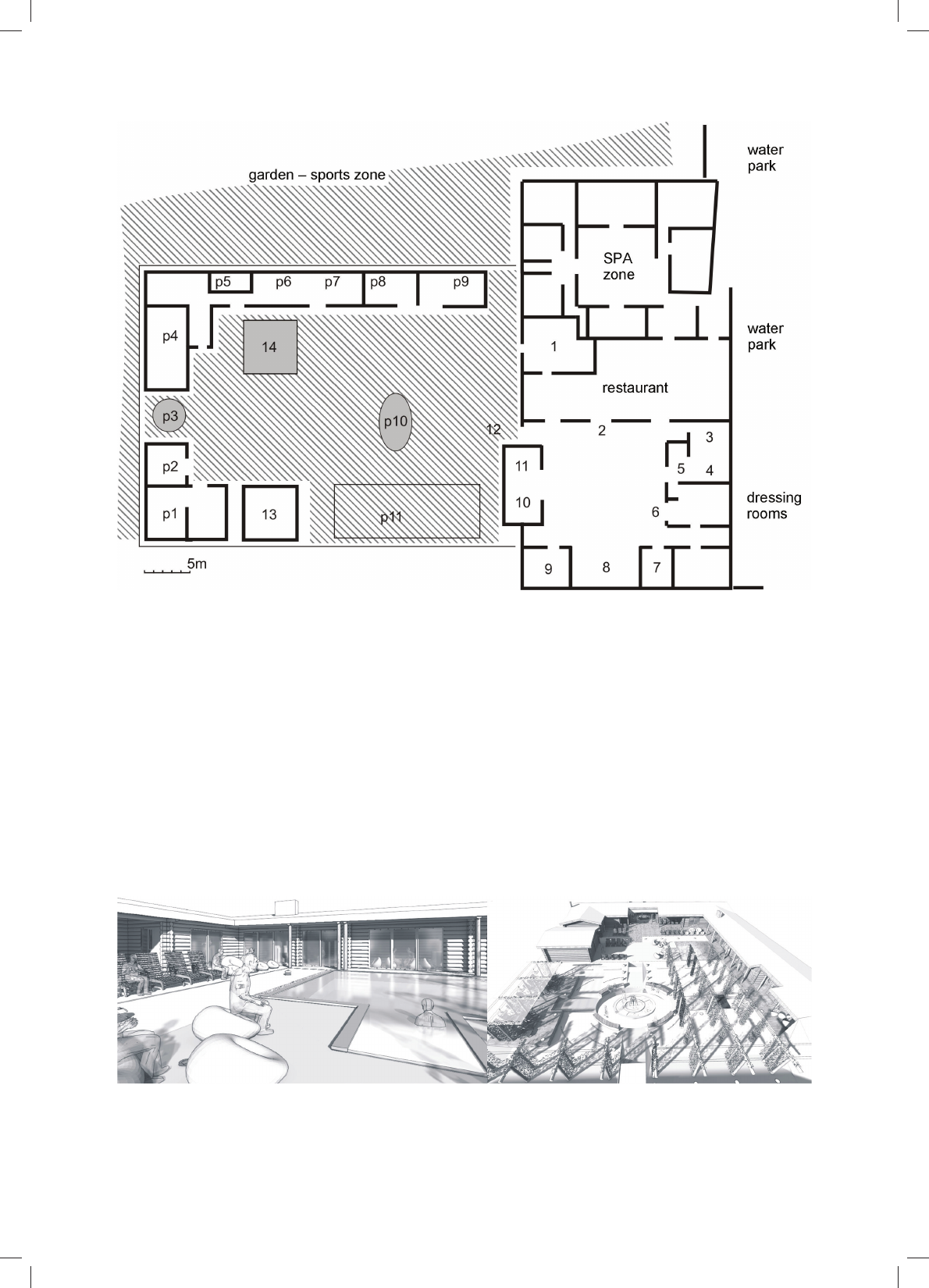
tional and space program of sauna complexes. The article
presents the original design of an external complex of
WKHPDWLFVDXQDVDW:URFáDZ:DWHU3DUNZKLFKFRPSOH-
ments the offer of the existing saunarium. The main as-
sumption of the design was the creation of an original
complex of saunas with varied size and themes, and so
WKHSURMHFWIHDWXUHVDPXOWLPHGLDVDXQDZLWKDQDXGLR
YLVXDOV\VWHPLQWHJUDWHGZLWKLQWHULRUOLJKWLQJDIRUPRI
FRORU WKHUDS\DVDOWJUDGXDWLRQ WRZHU ZLWK VDOWZDWHU
running down on the walls for a better and more health-
IXOPLFURFOLPDWHDVDXQDIRUDVPDQ\DVWRSHRSOH
and a bread stove sauna and a sauna partly submerged
in the ground, similarly to the original Russian sauna so
called banya.) The whole complex shall be located in
WKHH[LVWLQJJDUGHQLQWKHVDXQDVHFWLRQDW:URFáDZ:D-
ter Park with a separate entrance and exit to any of the
attractions. The design also includes a large relaxation
ORXQJHZLWKD¿UHSODFHDQGDFRQVXPSWLRQDUHD$OOVDX-
QDVVKDOOEHORFDWHGLQRQHJURXQGÀRRUEXLOGLQJPDGHRI
wood so that it would blend into the existing garden and
WKH)LQQLVKVDXQD)LJ
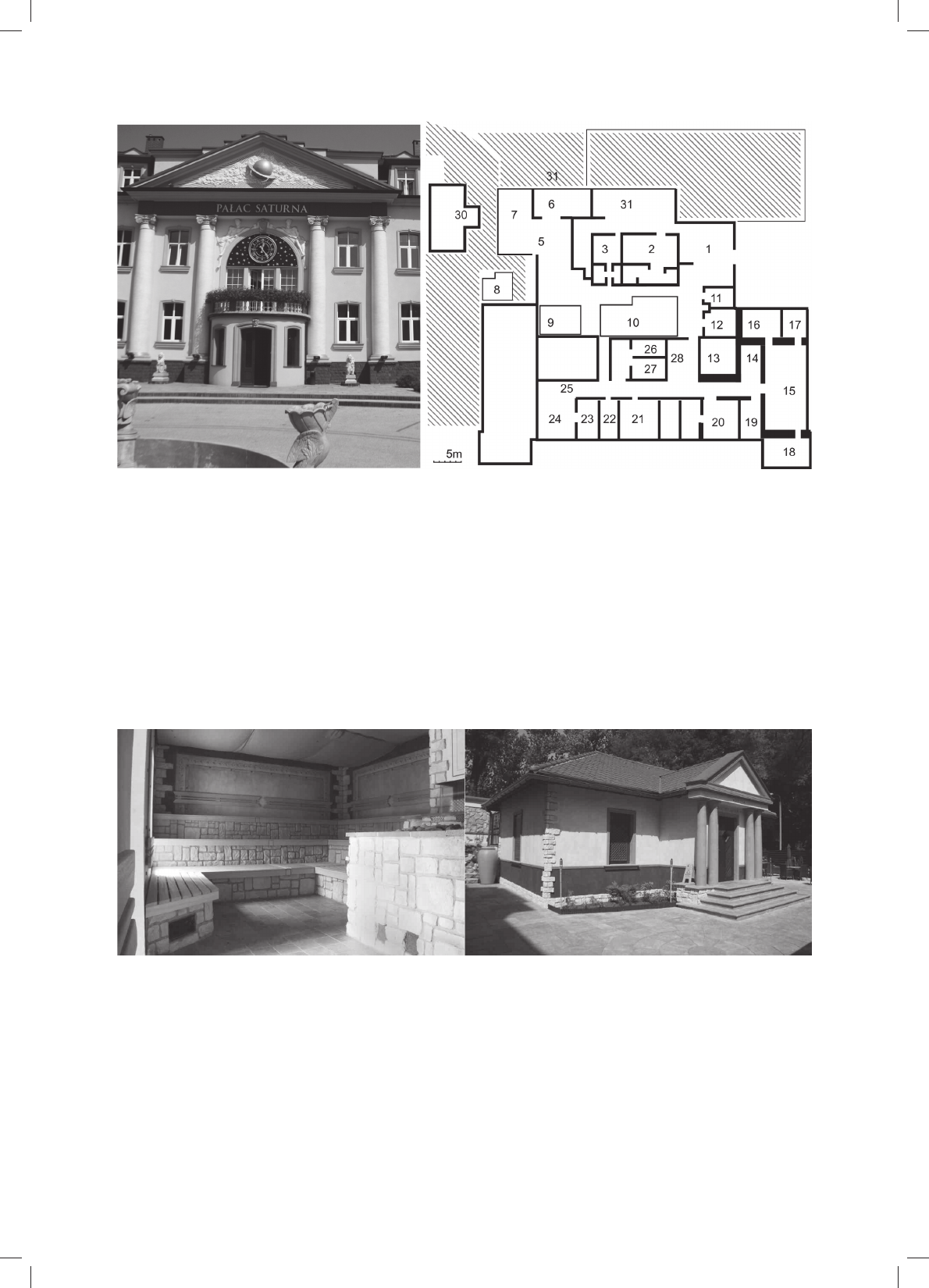
$WSUHVHQWWKHFRPSOH[ RI7HUP\5]\PVNLH5RPDQ
7KHUPDHDWWKH6DWXUQ¶V3DODFHLQ&]HODGĨLVRQHRIWKH
most famous buildings dedicated exclusively to SPA in
Poland. The main motif of the style of the complex is
worth noting; it is supposed to resemble the ancient ther-
mae in Pompeii. The saunas are located in the basements
of the converted Saturn’s palace from the beginning of the
th
century that once housed the headquarters of Saturn
FRDO PLQH )LJ ,W LV RQHRI IHZ H[DPSOHVRI GHVLJQ
where the recreation function does not dominate – the SPA
FRPSOH[ LQ &]HODGĨ FRPSOHPHQWV WKH KRWHO DQG FRQIHU-
ence functions that are located in the remaining part of the
building. The functional program offers a number of sau-
nas and baths which allude with their themes to antiquity,
which was expressed primarily in the interior decorations
)LJ7KHFRPSOH[LQFOXGHVDODUJHH[WHUQDOVDXQDFD
îP7KHPDLQREMHFWLYHRIWKHSURMHFWZDVWRGHVLJQ
a sauna for a number of users with benches on three levels
for as many as 49 people sitting around the center for the
person conducting the ceremony.
1
7KHGDWDSUHVHQWHGGRQRWUHÀHFWWKHTXDOLWDWLYHIHDWXUHVRILQGL-
YLGXDOFHQWHUV7KLVDSSOLHVERWKWRVDXQDVDQGEDWKVWKHGLVWLQFWLRQFDQ
EHFRQYHQWLRQDODVZHOODVWRWKHUHOD[DWLRQDQGFRROLQJVHFWLRQVQRW
included in the table which affect the architecture of the complex) and
WKHVSDFHSURYLGHGIRU63$SUDFWLFHVLQWKLVFDVHLWLVGLI¿FXOWWRGHVFULEH
WKHPEULHÀ\ZLWKRXWTXDOLWDWLYHIHDWXUHV
92 %DUEDUD8KHUHN%UDGHFND7RPDV]%UDGHFNL
)LJ7KHIXQFWLRQDOSODQRIWKHH[LVWLQJDQGSODQQHGVDXQDVHFWLRQDQG63$DW:URFáDZ:DWHU3DUNWKHH[LVWLQJVDXQDVHFWLRQ
1 – relaxation room, 2 – stands for warming up hands, 3 – solaria, 4 – steam bath, 5 – swimming pool for Kneipp hydrotherapy,
±LFHIRXQWDLQ±VWRQHEDWK±7KHODVVRVZLPPLQJSRROZLWKVDOWZDWHU±FROGZDWHUURRP±)LQQLVKVDXQD±ELRVDXQD
±JDUGHQ±H[WHUQDO)LQQLVKVDXQD±H[WHUQDOVZLPPLQJSRROZLWKFROGZDWHUSODQQHGVHFWLRQS±PXOWLPHGLDVDXQD
S±VDOWJUDGXDWLRQWRZHUSMDFX]]LZLWKDFRROLQJVZLPPLQJSRROLQWKHURFNVDOWFDYHS±VDXQDIRUPDQ\SHRSOH
S±EUHDGVWRYHVDXQDS±EDUS±UHQWDOS±LFHFDYHS±HDUWKVDXQDS±H[WHUQDO.QHLSSZDWHUPDVVDJH
p11 – recreation pergola with deckchairs; hatched external section, garden
HGE\7%UDGHFNL%8KHUHN%UDGHFND
,O8NáDGIXQNFMRQDOQ\LVWQLHMąFHMRUD]SURMHNWRZDQHMVWUHI\VDXQRZHMLVSDZH:URFáDZVNLP3DUNX:RGQ\PF]ĊĞüVDXQRZDVWDQLVWQLHMąF\
±SRNyMUHODNVDF\MQ\±VWDQRZLVNDGRUR]JU]HZDQLDUąN±VRODULD±áDĨQLDSDURZD±EDVHQGRK\GURWHUDSLL.QHLSSD
±IRQWDQQDORGRZD±áDĨQLDNDPLHQQD±EDVHQ7KHODVVR]VRODQNą±VDOD]LPQHMZRG\±VDXQD¿ĔVNDELRVDXQD±RJUyG
±VDXQD¿ĔVND]HZQĊWU]QD±]HZQĊWU]Q\EDVHQ]]LPQąZRGąF]ĊĞüSURMHNWRZDQDS±VDXQDPXOWLPHGLDOQDS±WĊĪQLDVRODQNRZD
SMDFX]LLRUD]EDVHQVFKáDG]DMąF\ZJURFLHVNDOQHMS±VDXQDZLHORRVRERZDS±VDXQDFKOHERZDS±EDUS±Z\SRF]\ZDOQLD
S±JURWDORGRZDS±VDXQD]LHPQDS±]HZQĊWU]Q\PDVDĪZRGQ\.QHLSSDS±SHUJRODZ\SRF]\QNRZD]OHĪDNDPL
NUHVNRZDQLHPR]QDF]RQRF]ĊĞü]HZQĊWU]QąRJURGRZąNUHVNRZDQLHPR]QDF]RQRSU]HVWU]HQLH]HZQĊWU]QHRJURGX
RSUDF7%UDGHFNL%8KHUHN%UDGHFND
)LJ3HUVSHFWLYHYLHZRIWKHSODQQHGFRPSOH[RIWKHPDWLFVDXQDVYLHZIURPDERYHRQWKHULJKWSHUVSHFWLYHYLHZRQWKHOHIW
±WKHH[LVWLQJVZLPPLQJSRROIRUFRROLQJDQGWKHQHZO\GHVLJQHGEXLOGLQJHGE\7%UDGHFNL%8KHUHN%UDGHFND
,O:LGRNLSHUVSHNW\ZLF]QHSURMHNWRZDQHJRNRPSOHNVXVDXQWHPDW\F]Q\FKSRSUDZHMZLGRN]JyU\SROHZHMSHUVSHNW\ZD
±LVWQLHMąF\EDVHQGRVFKáDG]DQLDRUD]QRZRSURMHNWRZDQ\EXG\QHNRSUDF7%UDGHFNL%8KHUHN%UDGHFND
Cultural aspects of sauna and SPA architecture in the city – examples of design and execution 93
The architecture of sauna complexes and consequently
WKHZD\LQZKLFKVDXQDVDUHXVHGLVUDWKHUVLJQL¿FDQWDV-
pect connected with sauna structures. The historical Ro-
man baths located in the centers of large cities had two
EDVLFIXQFWLRQVXWLOLW\IXQFWLRQ±WKH\ZHUHXVHGWRPHHW
the real needs of people in respect of hygiene and recrea-
tion as well as the social function – the rituals which were
performed there and the space provided opportunities for
meetings and discussions. The typical contemporary spe-
FL¿FVDXQDULWXDOVLQFOXGHZDVKLQJXSHQWHULQJWKHVDXQD
ZDUPLQJXSVWHDPLQJXSOHDYLQJDQGFRROLQJ$WSUHVHQW
such group sauna rituals as pouring fragrant oils on hot
stones, fanning the users with hot air or other attractions
are more and more popular. Silence is recommended dur-
)LJ&RPSOH[RI5RPDQ7KHUPDHLQ6DWXUQ¶V3DODFHLQ&]HODGĨRQWKHOHIW±PDLQHQWUDQFHRQWKHULJKWIXQFWLRQDOSURJUDP±5HFHSWLRQPDLQ
entrance, 2 – Apodyterion men’s dressing rooms, toilet, shower, 3 – Apodyterion women’s dressing rooms, toilet, shower, 4 – nudist beach,
±UHVWDXUDQW±UHQWDO±UHFUHDWLRQGHFN±H[WHUQDOVZLPPLQJSRRO±VZLPPLQJSRROZLWKPDVVDJHFKDLUV±VZLPPLQJSRROZLWK
ZDWHUVWUHDP±7HPSOHRI6XQVRODULXP±7HPSOHRI&OHRSDWUDEDWKDQGPDVVDJH±7HPSOHRIZDWHU±)ULJLGDULXPFROGZDWHUZHOO
VKRZHU±DWULXPZLWKLFHIRXQWDLQ±6DXQDRI&OHRSDWUD±ELRVDXQD±6DXQDRI&HVDU±/DFRQLXPGU\EDWK±7HSLGDULXP
UHQWDO±&DOLGDULXPWKHUPDOFDYH±*UDGXDWLRQ7RZHUWKHUPDOVDOWEDWK±5DVXO±+DPDP±5HFHSWLRQ±&DOGDULDKHUEDOEDWK
±&DOGDULDÀRZHUEDWK±9,3$SRG\WHULRQGUHVVLQJURRPVWRLOHWVKRZHU±%HDFK±7HPSOHRI6DWXUQ±'HFNV
6RXUFH>@HGE\7%UDGHFNL%8KHUHN%UDGHFND
,O.RPSOHNV7HUP\U]\PVNLHZ3DáDFX6DWXUQDZ&]HODG]LSROHZHM±ZHMĞFLHJáyZQHSRSUDZHMSURJUDPIXQNFMRQDOQ\±UHFHSFMDZHMĞFLH
JáyZQH±$SRG\WHULRQV]DWQLHPĊVNLH:&SU\V]QLF±$SRG\WHULRQV]DWQLHGDPVNLH:&SU\V]QLF±SODĪDQDWXU\VW\F]QD±UHVWDXUDFMD
±Z\SRF]\ZDOQLD±WDUDVZ\SRF]\QNRZ\±EDVHQ]HZQĊWU]Q\±EDVHQ]OHĪDQNDPLPDVXMąF\PL±EDVHQ]SU]HFLZSUąGHP
±ĝZLąW\QLD6áRĔFDVRODULXP±ĝZLąW\QLD.OHRSDWU\NąSLHOLPDVDĪ±ĝZLąW\QLD:RG\SU\V]QLFHZUDĪHĔ±)ULJLGDULXPVWXGQLD]LP-
QHMZRG\QDWU\VN±$WULXP]IRQWDQQąORGRZą±6DXQD.OHRSDWU\±ELRVDXQDVDXQDZUDĪHĔ±6DXQD&H]DUD±/DFRQLXPáDĨQLD
VXFKD±7HSLGDULXPZ\SRF]\ZDOQLD±&DOLGDULXPJURWDWHUPDOQD±7ĊĪQLDWHUPDOQDáDĨQLDVROQD±5DVXO±+DPDP
±UHFHSFMD±&DOGDULDáDĨQLD]LRáRZD±&DOGDULDáDĨQLDNZLDWRZD±9,3$SRG\WHULRQV]DWQLH:&SU\V]QLF±SODĪD
±ĝZLąW\QLD6DWXUQD±WDUDV\ħUyGáR>@RSUDF7%UDGHFNL%8KHUHN%UDGHFND
)LJ([WHUQDOVDXQDIRUPDQ\XVHUVDWWKH6DWXUQ¶V3DODFHFRPSOH[LQ&]HODGĨSKRWRE\7RPDV]%UDGHFNL
,O=HZQĊWU]QDVDXQDZLHORRVRERZDZNRPSOHNVLH3DáDF6DWXUQDZ&]HODG]LIRW7RPDV]%UDGHFNL
Cultural and Spatial Aspects of Sauna Structures

94 %DUEDUD8KHUHN%UDGHFND7RPDV]%UDGHFNL
ing sauna sessions, the users are, however, willing to ‘re-
ceive’ information and not to ‘transmit’ it, which is similar
during cultural events. Such group sauna rituals require
VSDFHVELJHQRXJKWRDFFRPPRGDWHDWOHDVW±SHR-
SOH6XFKUHTXLUHPHQWVFDXVHVSHFL¿FVSDFHGHVLJQLWLV
necessary to design a building that can accommodate the
XVHUVRQEHQFKHVDXGLWRULXPZLWKXQREVWUXFWHGYLHZRU
access to the center with a stove and a place for the person
SHUIRUPLQJWKHULWXDORIIDQQLQJWKHKHDWVWDJH,WLVDOVR
QHFHVVDU\WRSURYLGHDVXI¿FLHQWO\ELJVSDFHLQIURQWRIWKH
HQWUDQFHIR\HULHWKHFRROLQJDUHDZLWKYDULRXVHTXLS-
PHQWXVHGE\DQXPEHURISHRSOHDWWKHVDPHWLPHVKRZ-
ers, buckets of cold water, cold water swimming pools, ice
GLVSHQVHUVRUVQRZFDYHV$URPDWLFVpDQFHVVSHFWDFOHV
HJZLWKRGRUVDUHRUJDQL]HGZLWKIUDJUDQWRLOVSRXUHG
on the stones in saunas or thematic evenings with con-
sumption. Such events attract as many as several dozen of
people, which also creates opportunities for interpersonal
contacts. A separate space for consumption in sauna sec-
WLRQVLVDUDWKHUVLJQL¿FDQWVSDWLDOHOHPHQWEXWIHZFRP-
plexes offer it. That function enables the participants to
stay longer in the SPA and sauna facilities, which can in-
crease the culture forming role of the whole complexes.
The contemporary sauna architecture is contemporary
only in some cases; usually it reinterprets or sometimes im-
itates ancient patterns. Despite imitating the classical aes-
WKHWLFVWKHPRGHORIXVLQJWKLVW\SHRIVSDFHKDVFKDQJHG
in ancient times the baths took a lot of space and were
monumental and their individual functions were directly
connected with one another, whereas at present those func-
tions are separate. When comparing the scale of the whole
complexes it can be claimed that contemporary Aquaparks
correspond to ancient thermae, however, the main func-
tion of baths was assumed by sauna, SPA, and wellness
VHFWLRQV±LWLVHVSHFLDOO\HYLGHQWLQWKHQXPEHURIXVHUV
the biggest contemporary complexes can take as many as
WKRXVDQGSHRSOHHJ:URFáDZ:DWHU3DUNZKHUHDVHJ
WKH%DWKVRI&DUDFDOODFRXOGDFFRPPRGDWHDERXWXV-
HUV7KHSURSRUWLRQVRIVSDFHKDYHDOVRFKDQJHGWKHODUJ-
est space is occupied by swimming pools and other water
attractions, whereas the other spaces such as saunas have
become cozy and much smaller. In some cases the space
development has also changed; originally it was a large,
monumental building with its facilities inside, whereas at
SUHVHQW%DG%HQWKHLPWKHSODQQHGVDXQDVLQ:URFáDZ
it can operate as small, separate facilities located outside.
7KHELJJHUWKHEXLOGLQJVWKHPRUH¿WWLQJWKH\DUHIRUFRO-
lective behaviors typical of cultural events – the water rec-
reation spaces are in some cases so big that they can be
used as venues for cultural events – examples can include
WKHSHUIRUPDQFHRIWKH3XSSHW7KHDWHULQ:URFáDZ:DWHU
3DUNµ6KDUNVLQWKH6ZLPPLQJ3RRO¶RUFRQFHUWVDQGPX-
VLFSHUIRUPDQFHVLQ7KHUPH(UGLQJWKHVZLPPLQJSRRO
provided space for the audience). The growing number of
such cultural events taking place in this type of buildings
in a way forces their location. After leaving their locations,
ZKLFKFDQEHREVHUYHGDWWKHEHJLQQLQJRIWKH
th
century,
sauna structures go back to the urban space and become
important culture forming elements more and more often
used by the inhabitants of big cities.
The contemporary expectations of the SPA and sauna
spaces are bigger and bigger, and consequently there is
a need to create new buildings that will meet those ex-
SHFWDWLRQV2QHFDQWDONDERXWDWUHQGHYLGHQWHVSHFLDOO\
among people living in large agglomerations) to often use
saunas with many other people at the same time, which
FDXVHVVSHFL¿FEHKDYLRUFXOWXUHLQVDXQDVDQGXQGRXEW-
edly affects the space development in those buildings. The
contemporary architecture of sauna structures, especially
those located in the cities or around them, obviously dem-
onstrates some cultural aspects. The question remains if
SPA is and will be only a fad or will it become a timeless
function permanently connected with the life of city dwell-
ers with its own contemporary patterns of both human be-
KDYLRUFXOWXUDOQRWRQO\LQWKHFXOWXUHRIXVLQJ63$DQG
also in architecture.
Translated by
7DGHXV]6]DáDPDFKD
References
[1] Butters Ch., Housing and timber construction in Norway: status
trends and perspectives for sustainability>,Q@Eco – House North,
..XLVPDQHQHG2XOXSS±
[2] Cieniawa T., 6DXQD Z GRPX L ]DNáDG]LH SUDF\, IWZZ Warszawa
[3] Wagner A., Historia powstania sauny ³6DXQD ± 2JyOQRSROVNL
.ZDUWDOQLN=ZLą]NX6DXQRZHJR´1RSS±
[4] Wagner A., Koper K., Historia powstania sauny³6DXQD±2JyOQR-
SROVNL.ZDUWDOQLN=ZLą]NX6DXQRZHJR´1RSS±
[5] Watkin D., Historia architektury zachodniej, Wydawnictwo Arka-
G\:DUV]DZD
[6] Widera B., Architektura obiektów SPA³$UFKLYROWD´, 1R
pp. 66–71.
>@ ZZZPHGLWHUDQDGHDFFHVV
>@ ZZZSDUNZRGQ\ZURFSODFFHVV
>@ ZZZVDXQDSDUNHSHGHDFFHVV
>@ ZZZWHUP\U]\PVNLHHXDFFHVV
>@ ZZZWKHUPHHUGLQJGHDFFHVV
$UFKLWHNWXUDRELHNWyZVDXQRZ\FKRUD]63$ZNRQWHNĞFLHNXOWXU\PLDVWDQDSU]\NáDG]LHSURMHNWyZLUHDOL]DFML
3U]HGVWDZLRQR SUREOHPDW\NĊ ZVSyáF]HVQ\FK RELHNWyZ VDXQRZ\FK
RUD] 63$ :DUW\NXOH ]DSUH]HQWRZDQR ZVSyáF]HVQH NLHUXQNL ZJ NWy-
U\FK UHDOL]XMH VLĊ WHJR W\SX SU]HVWU]HQLH RUD] SU]HSURZDG]RQR DQDOL]Ċ
SRUyZQDZF]ąVSUDZG]RQRF]\LZMDNLVSRVyEREHFQHWHUP\áDĨQLHF]\
VDXQ\SU]\SRPLQDMąLFKRGSRZLHGQLNL]QDQH]KLVWRULL3U]HSURZDG]RQR
UyZQLHĪG\VNXVMĊZMDNLVSRVyEWHJRW\SXRELHNW\RGG]LDá\ZDá\NLHG\Ğ
LZVSyáF]HĞQLHQDNXOWXUĊPLDVWD6NDODLSURJUDPIXQNFMRQDOQ\ZVSyáF]H-
VQ\FKNRPSOHNVyZUHNUHDF\MQ\FKSPASR]ZDODMąQDKLSRWH]ĊĪHSRPL-
PRVZRMHMUHNUHDF\MQHMIXQNFMLRELHNWPRĪHNV]WDáWRZDüVW\OĪ\FLDDZLĊF
UyZQLHĪNXOWXUĊZPLHĞFLH-DNRSU]\NáDGZVSyáF]HVQ\FKWHQGHQFMLZWHM
G]LHG]LQLHDXWRU]\DUW\NXáXSUH]HQWXMąDXWRUVNLSURMHNWNRPSOHNVXVDXQ
WHPDW\F]Q\FKSU]\:URFáDZVNLP3DUNX:RGQ\P=DSUH]HQWRZDQRDNWX-
DOQąZLHG]ĊQDWHQWHPDWRUD]RSLVDQRUROĊMDNąPRJąSHáQLüWHJRURG]DMX
RELHNW\ZNV]WDáWRZDQLXNXOWXU\PLDVWD
6áRZDNOXF]RZH obiekty SPAVDXQ\SU]HVWU]HQLHUHNUHDFML.H\ZRUGVSPA structures, saunas, recreation spaces