2010
Nr 2(28)
Development of theoretical conceptualization of the
phenomena and events in the history of architecture fre-
quently leads to revaluation of their importance, a more
precise denition or even their complete transformation.
An example of this is the fate of the term “historicism”
that relatively recently got implanted in the Ukrainian sci-
entic use. Only in 1990s has it nally “forced out” the
traditional eclecticism from our architectural science and
outlined the period of development of architecture of the
2
nd
half of the 19
th
century. However, formation of the
new views on the problem of historicism as the funda-
mental world outlook category opens up absolutely new
perspectives for the research. The term “historicism” used
in this article is not the name of a concrete trend in the
practice of architecture of a certain period but a tendency
that goes through many periods of development of archi-
tecture. Historicism is interpreted as a direction of creative
thinking fed on historical consciousness. The author relies
on the denition of historicism suggested by N. Pevzner:
Svitlana Linda*
Historicism in the architecture of Lviv: tendency across centuries
*
State Polytechnic University of Lviv.
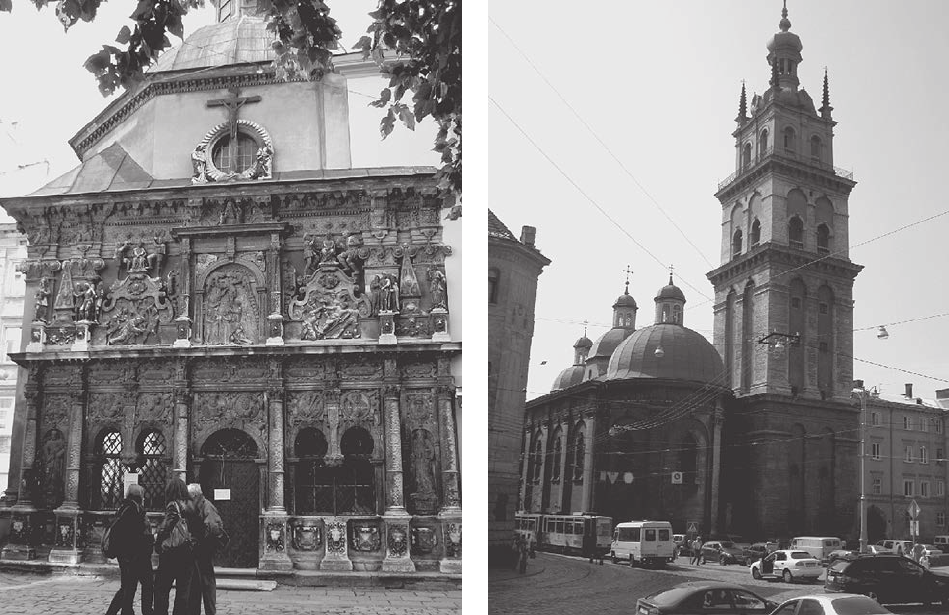
Fig. 1. The Bandinelli house in Market Square 2 (around 1593) Fig. 2. The Black house in Market Square 4
46 Svitlana Linda
Historicism is a trend in which study and application of
history is more important than discovery and development
of a new system, new forms of its time [3, p. 271].
It becomes clear in such a context that historicism as
a characteristic feature of many architectural epochs for
the appeal to historical memory through historical pro-
totypes was the foundation of creative thinking of archi-
tects. This article analyzes principal stages of develop-
ment of architecture of Lviv in the 17–19
th
centuries from
the standpoint of representation of historicism in archi-
tecture.
The stage of development of architecture of Lviv for
the rst time connected with historical thinking began af-
ter the tragic event – a great re of 1527. The city devas-
tated to the foundations was rebuilt in the new style – the
Renaissance. The architects invited from Italy, Germany,
the Netherlands, France brought to the Ukrainian archi-
tecture their experience of the west-European Renais-
sance – the epoch whose very name demonstrated a desire
to synthesize the new values appealing to the heritage of
the past. New understanding of history and the new place
of man in history as its maker gave rise in the day of the
Renaissance to the wave of retrospectives.
Architectural Renaissance arrived in Lviv with some
delay, having brought with it the stylized pluralism of the
late Italian Renaissance. At that time, the Italian Renais-
sance has come over the apex of its development in the
works of D. Bramante, after which there was nothing else
left except trying to modify again and again the familiar
themes or disclaim the achieved. The latter alternative al-
lowed to respond to the new aesthetic needs and opened
up the way to the development of numerous stylistic ten-
dencies. Two lines among the lines of style creation were
clearly dened. One was based on the assumption of the
end in itself of art and its own values. The word “manner”
became the key notion. The other line suggested a new
interpretation of the classical theme in synthesis with the
local achievements of architecture of the previous epochs
[6, p. 15–18].
The classical order in compositions of mannerists that
had acquired a symbolical meaning – a projection on the
structure of human measure – had already become an ordi-
nary canonized foundation. However, above all deviation
from the standard was lled with important meaningful
content, as this signied domination of personal over the
ideal, i.e. anthropomorphism of the order acquired indi-
vidual characteristics as a peculiar analog of individuality
of each human [2]. The nearest to its Roman prototypes
appeared to be the Bandinelli house in Market Square 2
built in around 1593 (Fig. 1). The architecture of the small
building interprets the forms of Farneze palazzo supple-
menting them with lush decor and sculpture. Composition
of the façade includes the anthropomorphic element – or-
der, but in a somewhat reduced form: smooth plastered
walls of the three-storied building are divided by belts and
decorated Doric friezes, corner rustic joints became the
only vertical elements [5, pp. 27, 106].
The Black house in Market Square 4 (Fig. 2) offers
a different interpretation of the palazzo theme. The façade
is devoid of the order decoration, yet its division upwardly
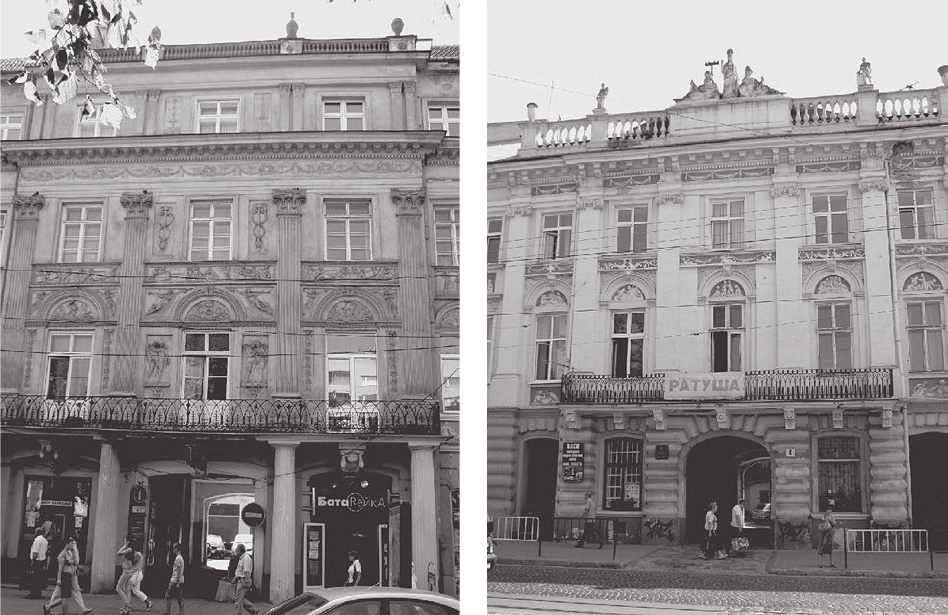
Fig. 3. The Boim Chapel in Cathedral Square
(A. Boemer, 1609–1616)
Fig. 4. The ensemble of the Assumption Church (1591–1629)
Historicism in the architecture of Lviv: tendency across centuries 47
is subordinate to triplicity that originates from the classi-
cal order tradition. Proportions of the façade are reduced
to the rational system on the basis of multiple ratios and
elemental contours of diamond rustics. The forms of the
building are not a direct replica of some classical exam-
ples, but bear the spirit of a Florentine palazzo of Quat-
trocento period [5, pp. 27, 107].
The Boim Chapel in Cathedral Square built, prob-
ably, by A. Boemer in 1609–1616 is one of the pearls
of Lviv Renaissance, the peak of its mannerist searches
(Fig. 3). Historicism in architecture of the chapel denite-
ly departed from representation of the ideal and presented
a dynamic, multidimensional sight. The architect built
composition of the façade on dramatic effects. Behind
their overworked building up, one can trace position of
the craftsmen intended not only for understanding the plot
and for empathy but also for capturing the viewer with
mastery and technical perfection [1, pp. 96–97].
The new interpretation of classical themes in combina-
tion with ancient Rus traditions started the tendency that
has preserved its topicality till present day: it is the search
for the Ukrainian style, its differentiation in the stream of
general European styles. This tendency has shown itself
most powerfully the in religious architecture, whose ty-
pology has always been closely connected with the canon.
The apex of the synthesis of the European and national
became the ensemble of the Assumption Church (1591–
1629) (Fig. 4). Architecture of the church has organically
combined the traditional volumetric-spatial type of the
Ukrainian three-domed temple and the late-Renaissance
aesthetics. The order has retained its importance that
connected it with the myth of antiquity. Its proportions
and details were rather precise, yet their tectonic content
had been changed: the order transformed into a motif of
decoration of the plane. Volumetric-spatial design of the
Chapel of the Three Saints – the crypt of the Korniakt
family in Lviv – reminds of the triple-crib wooden Car-
pathian churches. The chapel was built in 1578–1591 by
A. Pidlisnyy and P. Krasovskyy [5, pp. 27, 91–92].
The new stage of architectural development of the
city closely connected with recapitulation of the lessons
of history began in the end of the 18
th
century and was
predetermined by political events when Lviv was granted
the status of the capital of the newly established province
of the Austrian monarchy in 1772 [7]. Historicism was
imported to Lviv from Austria in the form of the “second
classicism” (or neoclassicism) that developed in Europe
in the period between 1760 and 1830. The special fea-
ture of the “second classicism” became the keynote ap-
peal to the indigenous local sources that distinguished the
national school within the general boundaries of the style
system of classicism [6, pp. 63–65; 4].
Adaptation of classical forms to the local context (of
both, city planning and creative potential context) had led
to the development of the phenomenon – of the type of
a Lviv city building squeezed into the ordinary built-up
neighborhoods but lavishly decorated. The plane of the
front façade on the level of the second and third oors
came to be the center of focusing of the order and lavish
sculptural decoration. The order compositions were com-
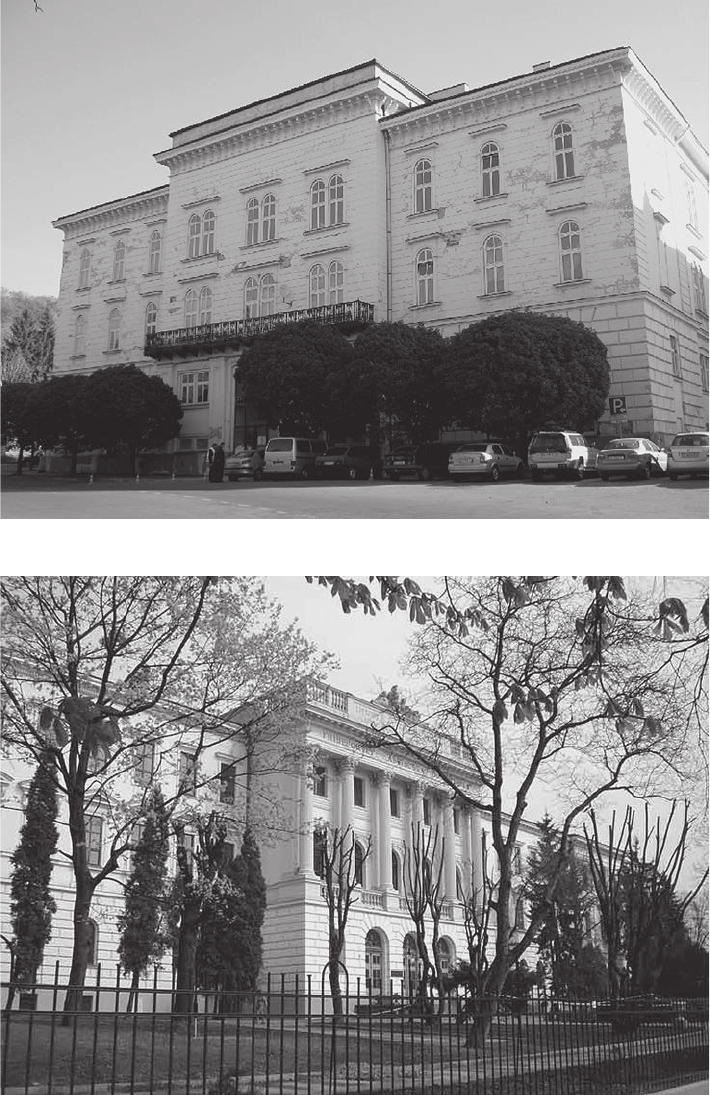
Fig. 5. The Hausner house in prospect Svobody 1–3
(1810–1811, 1829–1822)
Fig. 6. The Piller house in Vynnychenka street 8
(F. Tomek, 1839)
48 Svitlana Linda
bined with forthright combinations of the “Renaissance
classicism” and brought in even greater pluralism into
rather decanonized classical pattern. The Hausner house in
prospect Svobody 1–3 (1810–1811, 1829–1822) (Fig. 5)
and the Piller house in Vynnychenka street 8 (F. Tomek,
1839) (Fig. 6) became the best examples of this [4; 10].
Romantic outlook on life reached Lviv in the 1920s:
the romantic Neo-Gothic appeared in Lviv to express the
ideas of individualism and romanticism. The trend of ro-
mantic Neo-Gothic envisaged a free use and synthesizing
of the “Gothic” forms for the establishment of the new
image that had been characteristic of the early romantic
phase of the European Neo-Gothic. Neo-Gothic existed
in the outskirts of development of Lviv architecture of the
1930s, though it appeared to be a specic “enzyme” that
accelerated the process of collapse of the classical sys-
tem [10].
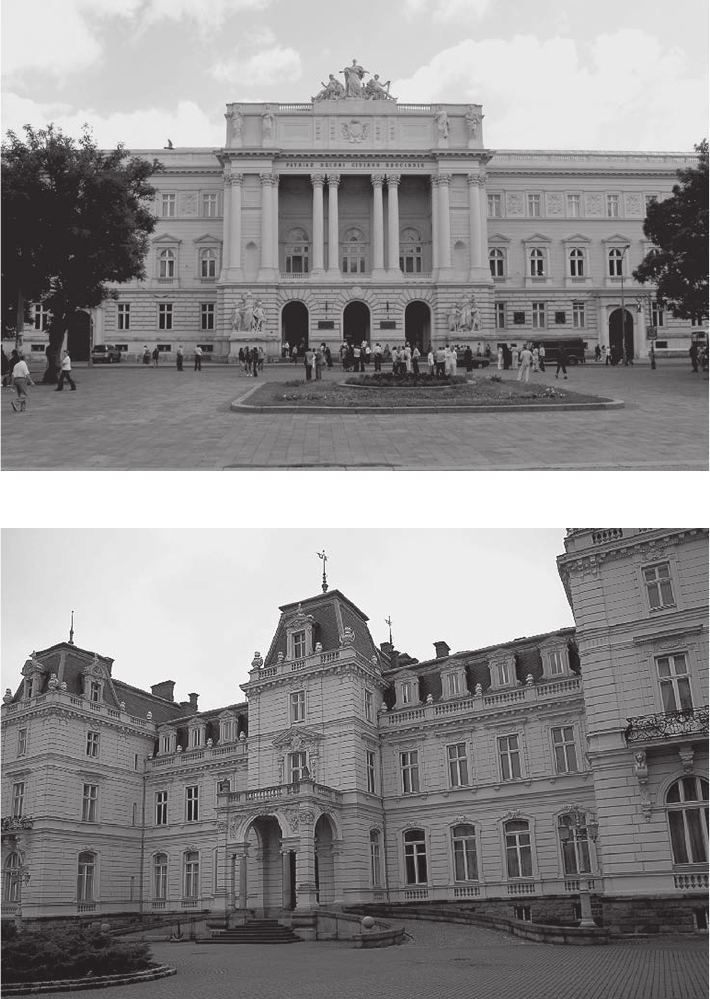
The building that demonstrated the nal downfall
of classicism in architecture of Lviv became the Palace
of Roman Catholic Archbishops in Vynnychenka Street
(J. Salzman, 1846–1847) (Fig. 7). this is where the Ren-
aissance, Classical and Romanesque motifs were mixed
up in a motley collection. The system of classicism was
irrevocably shaken, but a new system came to replace it
Fig. 7. The Palace
of Roman Catholic Archbishops
in Vynnychenka street
(J. Salzman, 1846–1847)
Fig. 8. The Polytechnical School
(J. Zachariewicz, 1872–1876)
Historicism in the architecture of Lviv: tendency across centuries 49
whose ideological inspirer appeared to be the romantic
outlook on life. Total historicism of thinking that legiti-
mized the appeal to the heritage of all previous architec-
tural periods and innitely expanded the range of sources
for interpretations appeared to be the fundamental charac-
teristic of the new system [1, p. 211].
Decentralization of the Empire in 1867 shifted the
reigns of governing Galicia from Vienna to Lviv, and
starting from 1869 Lviv became the capital of the autono-
mous province of the Austrian-Hungarian Empire. One
of the most important strategic guidelines of the Polish
administration in Galicia was to prove absolute ability of
the region to resolve independently any issues without
any patronage on the part of Vienna administration. Ar-
chitecture under such conditions became one of the tools
for validation of such policy, and the status of Lviv as
the capital city determined the representative character of
development of the city [7; 9].
Starting from the 1850s, historicism unstoppably con-
tinued to win its positions in the architecture of Lviv, and in
1870-1880s reached its peak in the construction of public
buildings that have become symbols of both, the city and
the epoch in general. One of such projects was the build-
ing of the Polytechnical School (1872–1876) designed
by J. Zachariewicz – a graduate of Vienna Polytechnic
(Fig. 8). This was the rst large-scale implementation of
the concepts of the Viennese Neo-Renaissance in Galicia.
Spatial composition and decor of the façades rests on the
balanced Renaissance-Classical variations [8].
The Seym of Galicia (J. Gochberger, 1877–1881)
(Fig. 9) was conceived as the building-symbol. The pre-
tentious architecture of the building formed as a result of
Fig. 9. The building
of the Seym of Galicia
(J. Gochberger, 1877–1881)
Fig. 10. The Potocki’s Palace
(L. d’Overnier, 1888–1890)
50 Svitlana Linda
a large international contest was to become not just a trib-
ute to fashion, but a metaphor of prosperity and well-being
of the autonomous province of Galicia: historicism in the
architecture of Seym stepped forward as a part of the of-
cial ideology. Its façade is amazing with resplendence and
diversity of architectural-compositional and interesting
techniques. The central axis is accentuated by the loggia-
risalita that develops the theme of “Michelangelian” large
order [1, pp. 271–273; 4].
The 2
nd
half of the 19
th
century put forward the need
for construction in the “splendid and rened” style. The
“Second Empire style” associated with the fashion that
was formed in France during the rule of Napoleon III cor-
responded with the need. It was readily used in house-
building and, especially, in palace construction. The Po-
tocki’s Palace (1888–1890) was erected by J. Cybulski
and L.-B. Ramult from the design of the Frenchman (!)
L. d’Overnier (Fig. 10). The architect has rationally elabo-
rated volumetric-spatial structure of the building proceed-
ing from the classical experience and the new functional
requirements. Façades are decorated with the features of
“Frenchness”: tall French roofs with lucarne windows that
complete the central and side risalitas, massive chimneys,
rustic pilasters [1, pp. 362–363].
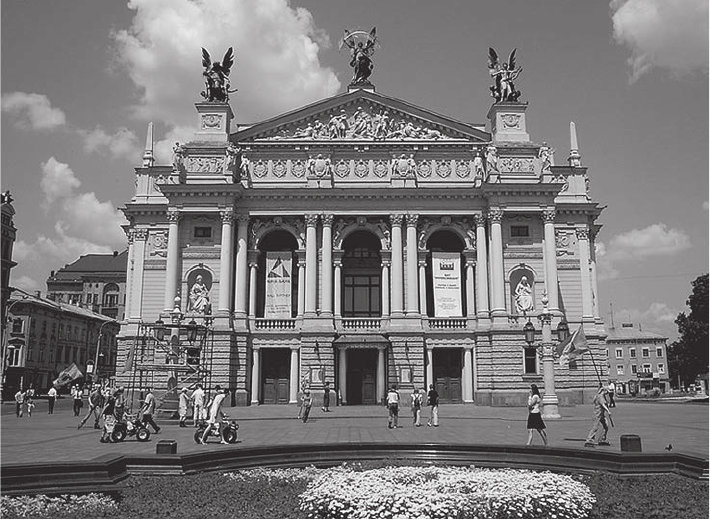
The apex of the epoch of architecture of choice and the
project that has logically completed one of the most bril-
liant periods of Lviv architecture became the building of
the City Theater (Z. Gorgolewski, 1897–1900) (Fig. 11).
The theater occupied the key location in the ensemble
of the newly created avenue of the city and became the
main plastic accent of the promenade boulevard nally
determining it as the city center. The author of the project
openly followed the type of the Opera in Paris that has
become the paradigm of theater building for centuries.
However, Z. Gorgolewski managed to nd a reasonable
accommodation between the ostentatious splendor of the
opera building and clarity of the composition pattern re-
duced to the classical hierarchy and logical subordination
of meanings [1, pp. 311–313].
Another form of self-expression of the period of the
2
nd
half of the 19
th
century was the variant of medieval
architecture, rst of all, Gothic architecture. Philosoph-
ical-symbolical world outlook of the 2
nd
half of the 19
th
century linked the Neo-Gothic architecture with the re-
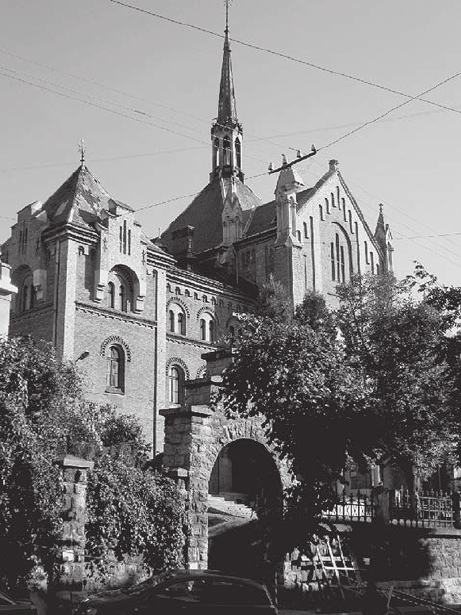
vival of ideas of Catholicism. The rst of the large imple-
mentations of the romantic trend was the convent and the
Roman-Catholic Church of the Franciscans (1877–1889)
designed by J. Zachariewicz (Fig. 12). Modest decor of
the façades rests on the design of elements from the style
glossary of Early Gothic and Romanesque architecture.
Volumetric-spatial and stylistic pattern of this structure
became the landmark for further development of Roman-
Catholic construction in Lviv and were repeated in vari-
ous interpretations [1, p. 305; 12].
Aspirations to national consolidation and strengthen-
ing of self-consciousness of the nations gained momentum
in the 2
nd
half of the 19
th
century in many countries. This
was associated with the national-romantic versions of his-
toricism in architecture that accentuated the specic char-
acter of the national past. The scrappy architecture of the
national Industrial exhibition of 1896 visualized for the
rst time the beginnings of the searches for the Ukrainian
style in Galicia. They were declared in the projects de-
signed by J. Zachariewicz: the boykys’ church in which
exhibits of the ethnographic pavilion were displayed and
the Ukrainian pavilion that had the shape of the traditional
homestead structure [8].
Under the circumstances of division of Poland by the
neighboring states, it was of special importance how to
deal with the issue of national singularity of the Polish
culture. Awareness of cultural and political revival was
connected with re-conceptualization of the heritage of
Fig. 11. The building
of the City Theater
(Z. Gorgolewski, 1897–1900)
Historicism in the architecture of Lviv: tendency across centuries 51
folk construction and the rise of patriotic sentiments was
manifested in architecture through the formation of “Za-
kopane style” whose ideological inspirer was Stanislaw
Witkiewicz. S. Witkiewicz tried to attach to the “Zako-
pane style” a social meaning: it had to serve the goals of
consolidation of the Polish nation, “make possible for the
upper classes to return home on the one hand and to merge
with common people into a true monolithic nation on the
other hand” [11]. Representations of historicism in the 2
nd
half of the 19
th
century became exceptionally multidimen-
sional and multilingual.
Thus, architecture that can be dened as historicism
manifested through the principle of choice of the proto-
type for the new creative work and through the principle
of synthesis of the elements from different architectural
primary sources appeared for the rst time in Lviv in the
17
th
century. An important feature of such architecture is
symbolism of the use of a specic prototype. Architectur-
al heritage of Lviv of Renaissance period created a model
of use of historical heritage: from precise reproduction of
a historical prototype to re-combination and deliberate de-
parture from the canon.
The next stage of representation of historicism in the
architecture of Lviv is connected with the “second clas-
sicism”. Architecture of Lviv of the late 17
th
– rst half
of the 19
th
century represented a typical European variant
of the “second classicism” marked by the traits of plural-
ism and the opportunity of choice: the principle of choice
of the style dominated over loyalty to the “epoch’s style”
opening the road to its undisguised culmination in the 2
nd
half of the 19
th
century. This is when historicism for the
rst time came forward as an effective means of not only
cultural (as in the day of Renaissance), but also ideologi-
cal expansion symbolizing rst of all political and admin-
istrative appurtenance of Lviv to the Austrian monarchy.
Expansion of historicism in the 2
nd
half of the 19
th
century in architecture of Lviv was determined by further
political and cultural integration in the European context.
Historicism at that time came forward as the means of
legitimization of the Habsburg rule, and starting from the
1870s as a part of the ofcial ideology of authorities of
the autonomous province. The main feature of the 2
nd
half
of the 19
th
century was the total historicism of thought
that was reected in architecture in the form of boundless
stylistic pluralism. The style of a building was selected
depending on the associations it caused which gave an
architectural project special meanings. National-romantic
idea that facilitated national consolidation became espe-
cially remarkable among the various representations of
historicism in the 2
nd
half of the 19
th
century.
Further development of historicism was continued in
the architecture of the city in the interwar period, under
the totalitarian regime and in the architecture of post-So-
viet Lviv.
Fig. 12. The convent and the Roman-Catholic Church
of the Franciscans (J. Zachariewicz,1877–1889)
References
[1] Архітектура Львова. Час і стилі: ХІІІ–ХХІ ст, Упор. і наук. ред.
Ю.О. Бірюльов,. Центр Європи, Львів 2008.
[2] Білінська О.М., Особливості застосування ордерних членувань у
порталах споруд Львова кін. ХVІ – ХVІІ ст,.Вісник Національного
університету “Львівська політехніка”, 2004, № 505, pp. 159–163.
[3] Борисова Е.А., Русская архитектура второй половины ХІХ века,
М.: Наука, 1979.
[4] Вансца Е., Огдяд архітектури Відня ХІХ і першої половини ХХ
ст. Архітектура Галичини ХІХ–ХХ ст, Під редакцією Б. Черкеса,
М. Кубеліка, Е. Гофер, Львів 1996, pp. 199–208.
[5] Вуйцик В.С., Липка Р.М., Зустріч зі Львовом. Путівник, Каменяр,
Львів 1987.
[6] Иконников А. В., Историзм в архитектуре, М., Стройиздат, 1997.
[7] Bialynia-Chołodecki J., Lwów w XIX stuleciu, nakładem autora, Lwów
1928.
[8] Czerkies B., Danczak I., Architekt Julian Zachariewicz w ukraiń-
skiej i polskiej kulturze. Ochrona wspólnego dziedzictwa kultu ro-
wego. Stowarzyszenie Konserwatorow Zabytkow, Polski Ko mi tet
Narodowy ICOMOS, Warszawa 1993, pp. 72–85.
[9] Grzybowski K., Galicja 1848–1914. Historia ustroju politycznego
na tle historii ustroju Austrii, Kraków–Wrocław–Warszawa 1959,
pp. 86–98, 278–289.
[10] Mańkowski T., Początki nowożytnego Lwowa w architekturze,
nakładem gminy król. stol. miasta Lwowa, Lwów 1923, p. 51.
[11] Pawlikowski J., O stylu zakopiańskim, Wydawnictwo kasy im.
Mianowskiego, Warszawa 1931, p. 17.
[12] Zachariewicz J., Klasztor i kościól oo. Franciszkanek, Dźwignia,
rocznik III – 1879, pp. 43–44.
52 Svitlana Linda
Historyzm w architekturze Lwowa
W artykule podjęto temat historyzmu w architekturze, który jest
traktowany nie jako nazwa konkretnego kierunku w architekturze, ale
jako skierowanie myślenia twórczego, które żywi się świadomością
historyczną. Na przykładzie architektury Lwowa pokazano, jak system
form związanych z wydarzeniami i doświadczaniem historii stale służy
do tworzenia nowych języków formalnych, wyrażających treści specy-
czne dla swojej epoki. Problem wykorzystania tradycji do rozwiązy-
wania „zadań wpółczesnych“ architektury został prześledzony od epoki
Renesansu do początku XXI wieku. W niniejszym kontekście staje się
zrozumiałe, że historyzm we Lwowie jest właściwy epokom Renesan-
su, klasycyzmu; możemy także spostrzec go zarówno w modernizmie,
w wariacjach neoklasycystycznych reżimu totalitarnego, jak i we
współczesnej architekturze, dlatego że podstawą myślenia twórczego
architektów było i jest odwołanie do pamięci historycznej przez proto-
typy historyczne.
Key words: Lviv, historicism Słowa kluczowe: Lwów, historyzm