2018
4(56)
DOI: 10.5277/arc180404
Ewa Święcka*
W pogoni za oryginałem – palimpsest w malarstwie ściennym.
Eksponowanie odkrywek
In pursuit of the original – palimpsest in wall painting.
Exhibiting exposures
Wprowadzenie
Podstawową metodą badania powierzchni architek-
tonicznych jest ustalanie stratygrai historycznych na-
warstwień [1, s. 68, 69]. W dawnych budowlach kolejne
pokolenia malarzy nakładały na pierwotnych dekoracjach
nowe tynki, pobiały, grunty, wreszcie same malowidła.
Gdy na ścianach, sklepieniach, elementach konstrukcji
i detalach występują powłoki barwne, badania obiektu
powinni prowadzić specjaliści z dziedziny konserwacji
[2, s. 29, 30]. W krajach, gdzie zgodnie z tradycją syste-
matycznie pobiela się i zdobi zarówno ściany zewnętrzne,
jak i wnętrza, po upływie wieków wtórne wykończenia
powierzchni murów miewają grubość kilku, a pokryte no-
wymi tynkami – nawet kilkunastu centymetrów. Nierzad-
ko dekoracje najciekawsze artystycznie można odnaleźć
pomiędzy licznymi pobieleniami. W języku rosyjskim
stratygraczne warstwy malarstwa określane są mianem
„słojów”. Ten termin słusznie kojarzy się z botaniką i do-
skonale ilustruje proces narastania z czasem kolejnych
opracowań powierzchni coraz grubszych murów, podob-
nie jak to się dzieje na pniu drzewa. Zdarza się, że na tej
samej powierzchni występuje kilka dobrze zachowanych,
kolejnych interesujących wymalowań pochodzących
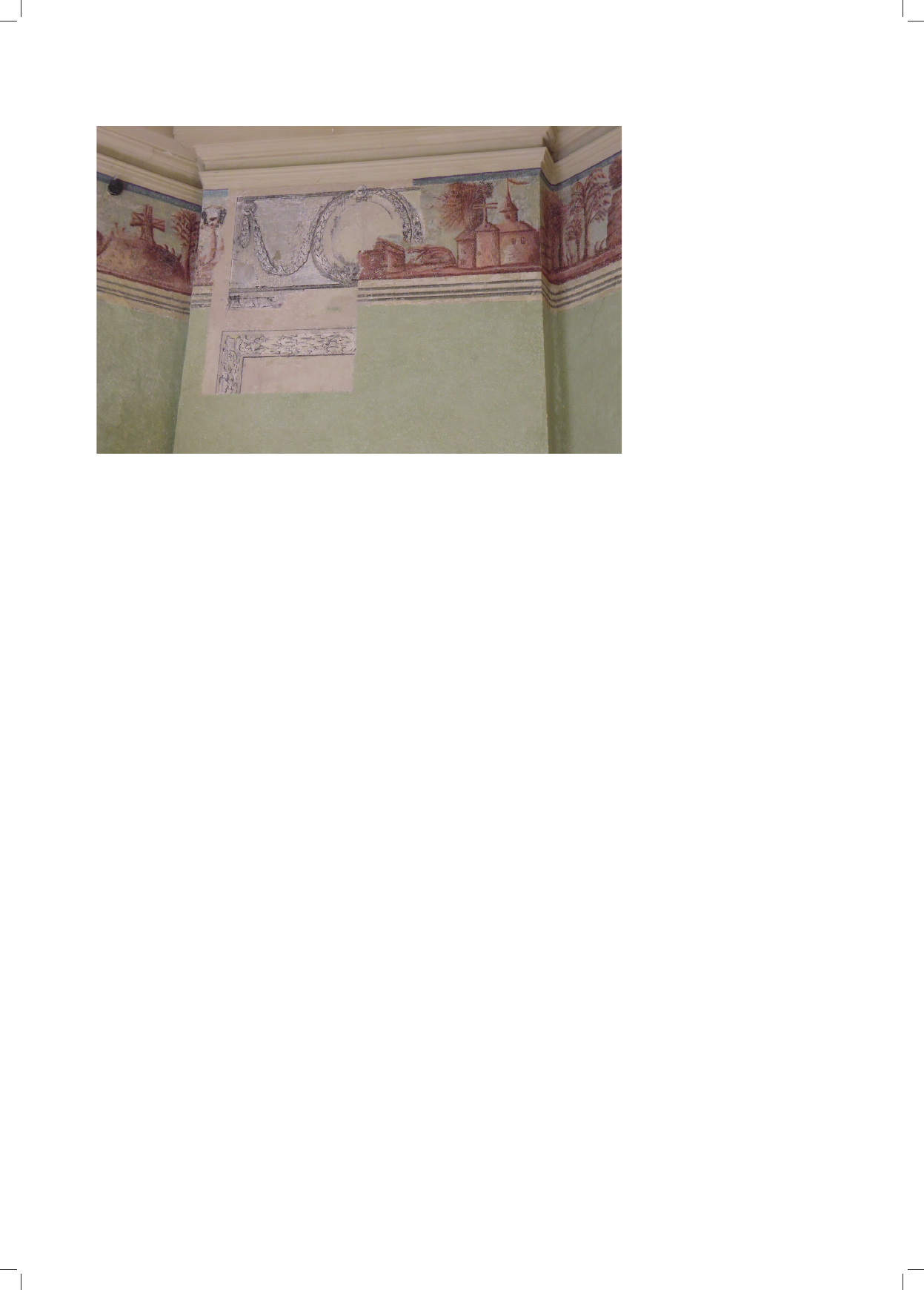
z róż nych epok (il. 1). Odsłanianie malowideł starszych
wiąże się z niszczeniem późniejszych. Tymczasem każ-
da z zachowanych dekoracji stanowi dokument swoich
Introduction
The basic method of studying architectural surfaces
is to determine the stratigraphy of historical layers [1,
pp. 68, 69]. In old buildings, successive generations of
painters applied new plasters, whitewashes, undercoats,
and nally paintings on primal decorations. If there are
colour coatings on walls, vaults, structure elements and
details, the object research should be carried out by ex-
perts in the eld of restoration [2, pp. 29, 30]. In countries
where, according to tradition, both exterior and interior
walls are systematically whitewashed and decorated, after
centuries of these treatments secondary wall surface n-
ishes have a thickness of a few – and covered with new
plasters – even a dozen of centimetres. Often, the most
interesting decorations in terms of art can be found in be-
tween numerous whitewashings. In the Russian language,
stratigraphic layers of painting are referred to as “growth
rings”. This term is rightly associated with botany and
perfectly illustrates the process of growing over time sub-
sequent developments of surfaces of increasingly thicker
walls, similar to what happens on the horizontal cross
sections cut through the trunk of a tree. It happens that
on the same surface there are a few subsequent and well-
preserved interesting paintings which come from different
epochs (Fig. 1). Revealing older paintings is connected
with the destruction of later ones. But in fact, each of the
preserved decorations is a document of their times and it
is often an artistic work as well. When planning the exhi-
bition of discovered or remaining fragments, we should
always look for a compromise so as not to lose any of
* Konserwator dzieł sztuki/Conservator of art objects.
44 Ewa Święcka
czasów, jest też niejednokrotnie dziełem artystycznym.
W przypadku planowania ekspozycji odkrytych czy po-
zostawionych fragmentów należy zawsze szukać kom-
promisu, aby nie zatracić żadnego z zachowanych przeka-
zów. Choć niejednokrotnie ostateczne decyzje podejmują
gremia specjalistów, to główna odpowiedzialność za roz-
strzygnięcie tego dylematu i wykonawstwo prac spoczy-
wa w rękach konserwatorów praktyków.
Malowidła ścienne jako palimpsest
Palimpsest to zapisany pergamin wykorzystany po-
nownie po wyskrobaniu pierwotnego tekstu. Z malowidła-
mi ściennymi postępowano podobnie: przed wykonaniem
nowej dekoracji dawną zdrapywano, a nawet skuwano
wraz z tynkiem do muru, jego architektonicznego podło-
ża. W odróżnieniu od pergaminu, na którym zachowały
się choćby „cienie” dawnych inskrypcji, na ścianie nie ma
żadnej możliwości odczytania reliktów skutej dekoracji.
O obecności wcześniejszych malowideł dowiedzieć się
można jedynie ze źródeł pisanych, odrysów, a w now-
szych czasach z fotograi. Ślady malarstwa mogły pozo-
stać jedynie na skutek niezbyt starannego usunięcia samej
warstwy barwnej. Czasem nowe malowidło wykonywa-
no bezpośrednio na powierzchni starszego albo tylko na
warstwie świeżej pobiały lub gruntu, bez powtórnego
na kładania nowych tynków. Wówczas „międzywarstwa”
wtórnego podkładu mogła stanowić ochronę dawniejszej,
nietkniętej przez nowych twórców dekoracji. Rzadko
spotkać można malowidła ścienne, których nie przemalo-
wano; najczęściej konserwatorzy mają do czynienia z sy-
tuacją, gdy pokrywano je kolejnymi wymalowaniami. Nie-
stety, niejednokrotnie proces ten prowadził do zniszczeń.
Gładkie, starannie opracowane oryginalne powierzchnie
poddawano zabiegom mającym na celu uzyskanie szorst-
kiego podłoża, w celu zapewnienia lepszej przyczepności
nowej dekoracji. Zabiegi te wykonywano na kilka sposo-
bów. Od najdawniejszych czasów do najbardziej skutecz-
nych metod należało nasiekanie powierzchni malowidła
the preserved messages. Although nal decisions are of-
ten made by panels of experts, in practical terms the main
responsibility for resolving this dilemma and executing
the works lies in the hands of the conservator-restorer.
Wall paintings as a palimpsest
A palimpsest is a parchment manuscript page which is
reused after its original text has been scraped off. Wall
paintings were treated in a similar way, i.e. before a new
decoration was made, the former one was scratched off
and even removed along with plaster to the bare wall, i.e.
to its architectural support. In contrast to the parchment,
where at least some “shadows” of the old inscriptions
have been preserved, there is no possibility of reading the
relics of the removed decorations on the wall. The pres-
ence of earlier paintings can be inferred only from writ-
ten sources, drawings and nowadays from a photograph.
Traces of paintings could only remain due to the neglect-
ful removal of the colour layer itself. Sometimes a new
painting was made directly on the surface of an older one
or only on a fresh layer of whitewashing or primer without
re-applying new plasters. Then, the “in-between-layer” of
the secondary undercoat could have served as a protection
of the former decoration which was untouched by new art-
ists. Wall paintings that have not been repainted are rare;
most often conservators-restorers deal with a situation in
which they were covered with subsequent paintings. Un-
fortunately, this process often led to destruction. Smooth
and carefully designed original surfaces were subjected to
treatments aimed at obtaining a rough support in order to
ensure better adhesion of the new decoration. These treat-
ments were performed in several ways. From the earli-
est times, among the most effective methods was the one
where the surface of the painting was chopped off with
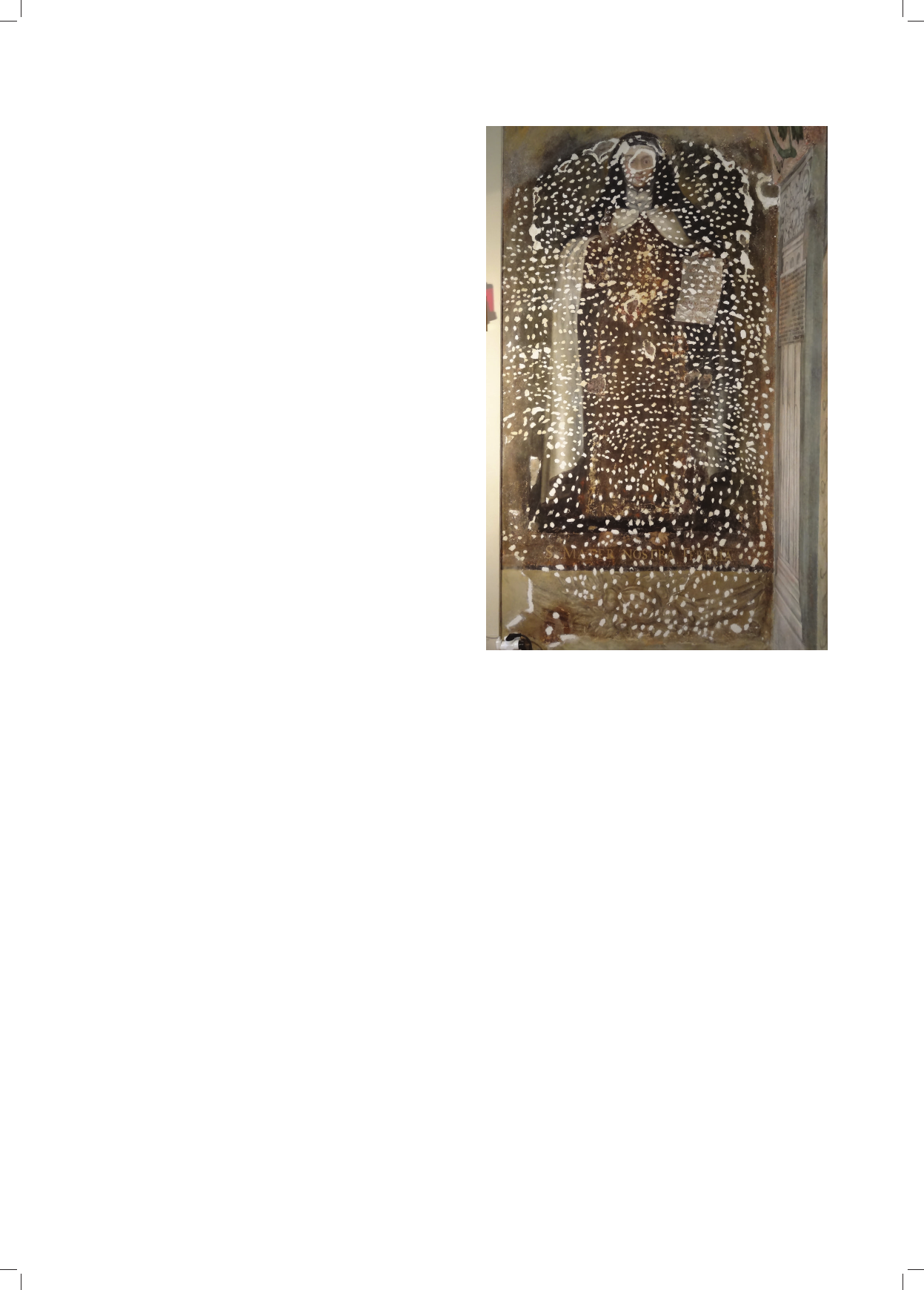
a sharp tool, i.e. a brick hammer or a chisel. Sometimes the
cuts have such a regular layout as if heavy snow was fall-
ing on the painting (Fig. 2). There are regular scratches on
surfaces which were made with a knife, chisel or another
Il. 1. Galeria Akademii Sztuk
Pięknych (dawniej pałac
Góreckich) w Wilnie
– jednoczesna ekspozycja
dwóch dekoracji malarskich
pochodzących z różnych okresów.
W odkrywce widoczne
dawniejsze malowidło
(fot. E. Święcka)
Fig. 1. Gallery of the Academy
of Fine Arts (formerly Górecki
Family Palace) in Vilnius
– simultaneous exhibition of
two painting decorations from
different periods. In the exposure
an older painting can be seen
(photo by E. Święcka)
W pogoni za oryginałem – palimpsest w malarstwie ściennym /In pursuit of the original – palimpsest in wall painting 45
ostrym narzędziem: murarskim młotkiem lub dłutem.
Czasem nasieki miewają tak regularny układ, jakby na
przedstawieniu malarskim padał gruby śnieg (il. 2). Zda-
rzają się regularne zadrapania powierzchni nożem, dłutem
lub innym spiczastym narzędziem. Liczne są też ślady
szorowania niechcianej dekoracji malarskiej metalowymi
szczotkami. Zazwyczaj tego typu częściowe zniszczenia
pozwalają jeszcze na odczytanie rysunku i kolorystyki
dawnych malowideł. Chociaż zachowują one wartość
historycznego dokumentu, to mechaniczne uszkodzenia
zwykle uniemożliwiają ekspozycję malowideł bez doko-
nania przynajmniej niewielkich uzupełnień. W przypadku
mniej skrupulatnie wykonanych zniszczeń udaje się nie-
raz odzyskać pokaźne powierzchnie dawnych kompozycji
– można wówczas mówić o podobieństwie do palimpse-
stu, tak fascynującego badaczy manuskryptów. Termin
ten używany jest obecnie także w literaturze dotyczącej
malarstwa ściennego [3, s. 108].
Palimpsest i badania konserwatorskie
Liczne odsłonięcia dawnych dekoracji malarskich spod
warstw pobiał przeprowadzono już w wieku XIX. Były to
najczęściej malowidła zdobiące ściany i sklepienia gotyc-
kich kościołów pobielone w czasach protestantyzmu. Ma-
lowidła odkryte przez naszych poprzedników sprzed pół-
tora wieku były restaurowane, uzupełniane i eksponowane
jako kompletne kompozycje [4, s. 35]. Wielu znalezisk do-
konywano przypadkowo podczas prowadzenia instalacji
elektrycznych, naprawy tynków czy prac budo wlanych.
Zamierzone badania nawarstwień malowideł i ekspono-
wanie fragmentów starych dekoracji mają znacznie krót-
szą metrykę. Odkrywanie malarstwa ściennego to zadanie
niezwykle atrakcyjne, ale także trudne i odpowiedzialne.
Wiele zabytkowych dzieł uszkodzono wskutek ich niefra-
sobliwego, pospiesznego odsłaniania [5, s. 337]. W pol-
skich warunkach odkrywki malowideł – w sposób zgodny
z zasadami współczesnej konserwacji – na szeroką skalę
prowadziły dopiero pracownie Państwowego Przedsię-
biorstwa Pracownie Konserwacji Zabytków. Kanon badań
stratygracznych obejmował wykonanie pionowych i po-
ziomych odkrywek, które tworzyły „siatki” o metrowych
oczkach; pasy odsłoniętych starszych dekoracji miały
szerokość 10 cm. Przebadanie wszystkich ścian umożli-
wiało dość precyzyjne ustalenie zakresu wy stępowania
historycznej dekoracji. Po rozpoznaniu stanu zabytku
można było sporządzić program prac oraz precyzyjny
kosztorys odsłaniania i konserwacji dawnych ma lowideł.
Warto przypomnieć, że badania stratygraczne były czyn -
nością doskonale wycenioną, a więc prowadzono je na-
der chętnie. Wyrywkowo wykonywano także sondaże
„schodkowe”, ukazujące kolejne nawarstwienia tynków
i powłok malarskich. Zdecydowanie preferowa no jednak
odsłanianie warstw najstarszych, najlepiej po chodzących
z gotyku. Dla przykładu: zamek krzyżacki w Malborku
należał w latach 70. XX w. do obiektów najdok ładniej
przebadanych na obecność pierwotnych polichromii.
Nie trzeba dodawać, że w owym czasie malowidła XIX-
-wieczne, które obecnie są tam przedmiotem wnikliwych
badań i prac konserwatorskich, nikogo wówczas nie
pointed tool. There are also numerous traces of scrubbing
unwanted artistic decorations with metal brushes. Usu-
ally this type of partial destruction allows us to interpret
the drawing and the colour scheme of the old paintings.
Although they retain the value of a historical document,
mechanical damages usually prevent the exposition of
paintings without making at least small supplements. In
the case of less scrupulous damages, it is sometimes pos-
sible to regain large surfaces of old compositions – then
we can talk about a degree of similarity to a palimpsest,
which fascinates researchers of manuscripts so much. At
present, this term is also used in literature on wall paint-
ings [3, p. 108].
Palimpsest and restoration studies
Numerous cases of uncovering old painting decorations
from under the layers of whitewashings were made as ear-
ly as in the 19
th
century. These were most often decorative
wall paintings and vaults of gothic churches, which were
whitewashed in the times of Protestantism. The paint-
ings, which were discovered by our predecessors from
Il. 2. Malowidło przedstawiające św. Teresę z Avilli w kaplicy dawnego
pałacu Kazanowskich w Warszawie gęsto nasiekane ostrym
narzędziem – widok po zakitowaniu ubytków (fot. B. Wołosz)
Fig. 2. A painting depicting St. Teresa of Ávila in the chapel
of the former Kazanowski Family Palace in Warsaw, densely chopped
with a sharp tool – a view after puttying cavities (photo by B. Wołosz)
46 Ewa Święcka
interesowały. Działo się tak nie tylko ze względu na kon-
tekst polityczny, ale głównie z powodu krótkiej historii
malowideł, ich artystycznej wtórności, a także rozziewu
czasowego pomiędzy powstaniem gotyckiej architektury
i tych prawie nowych wymalowań. Tylko dekoracje stwo-
rzone możliwie jednocześnie z powstaniem samej budow-
li zasługiwały na miano autentycznych.
Obecnie sondaże dawnych warstw stanowią część
pro cesu badawczego dotyczącego malowideł ściennych
i przeważnie płynnie przechodzą w pierwszy etap prac
konserwatorskich. Polegają one najczęściej na usunięciu
wszelkich warstw wtórnych. Niekiedy fragmentaryczne
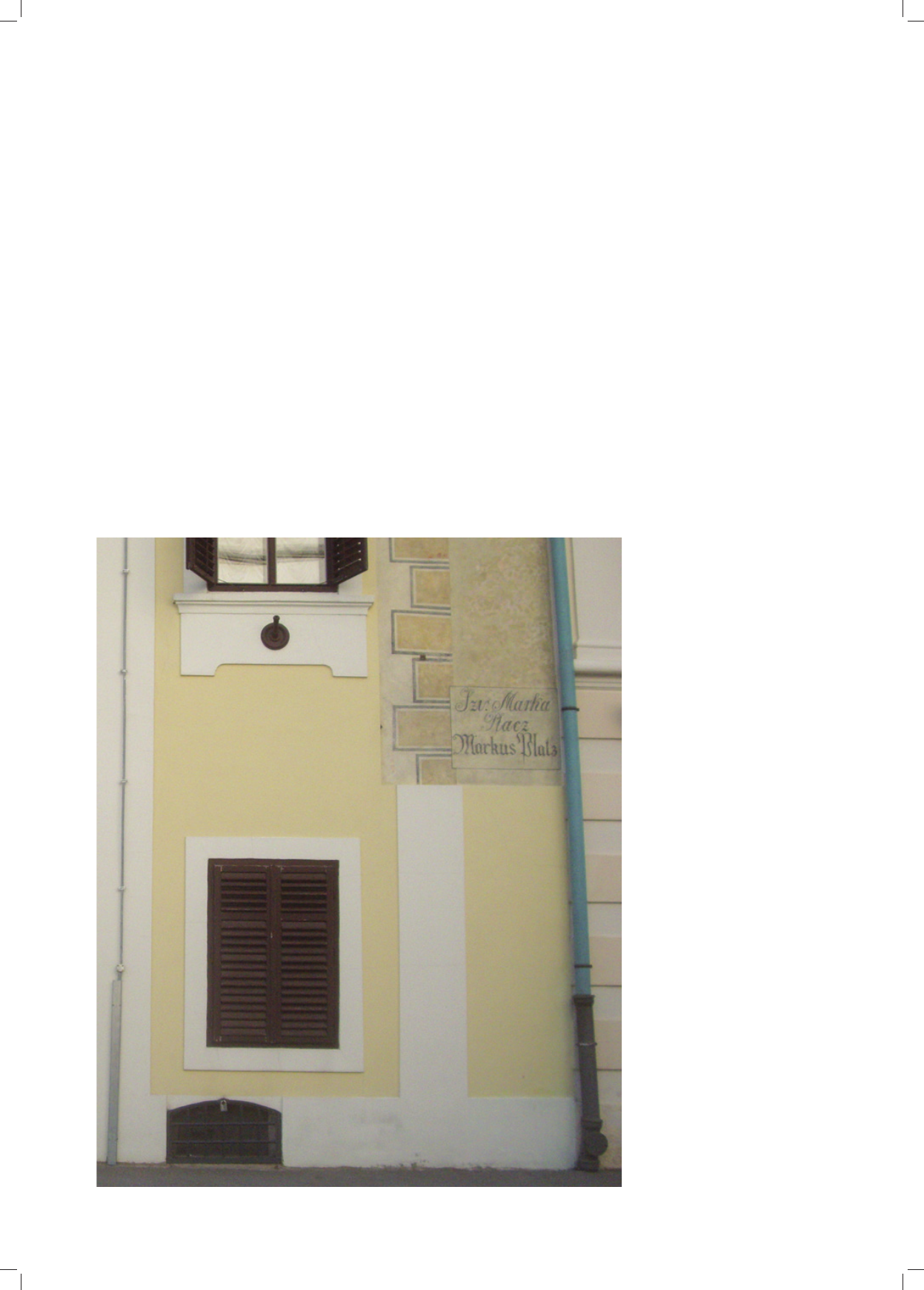
odkrywki są efektem zamierzonych działań, by stanowić
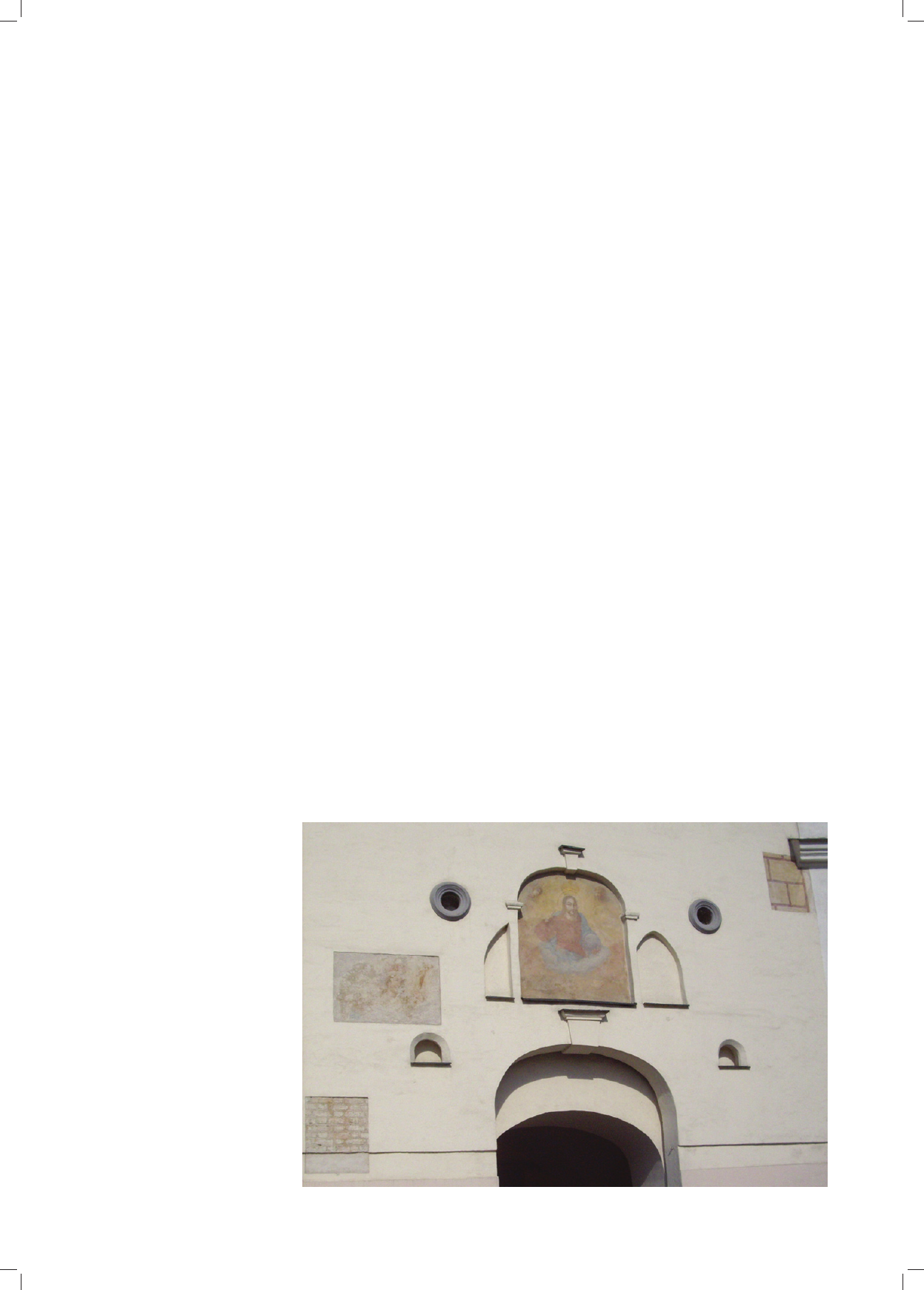
dokument historii budowli (il. 3). Czasami jednak po wy-
konaniu badań sondażowych prace nie są kontynuowane
i wyskrobane przez konserwatorów „okienka” pozostają
niezmienione przez długie lata, stanowiąc świadectwo
utraty zainteresowania obiektem albo też braku możli-
wości nansowania dalszych prac. Zaniechanie odsłania-
nia malowideł może też być wynikiem świadomej chęci
ich ocalenia, gdy pod wtórnymi warstwami ich trwanie
a century and a half ago, were restored, supplemented
and exhibited as complete compositions [4, p. 35]. Many
discoveries were made inadvertently while xing electri-
cal installations, repairing plasters or doing construction
works. Intended studies of layers of paintings and exhibi-
ting fragments of old decorations have a much shorter his-
tory. Discovering wall paintings is an extremely attrac-
tive task, but also difcult and responsible. Many antique
works were damaged due to the carefree and hasty un-
covering [5, p. 337]. In Polish conditions, discoveries of
wall paintings – in a manner consistent with the principles
of modern restoration – were only carried out on a large
scale by the studios of the State Restoration Ofce. The
canon of stratigraphic research included the construction
of vertical and horizontal exposures, which formed one
metre mesh “nets”; the belts of uncovered older decora-
tions were 10 cm wide. Examination of all walls made it
possible to determine the extent of the occurrence of the
historical decoration in a fairly precise way. After recog-
nizing the condition of the monument, it was possible to
draw up a schedule of works and a precise cost estimate
Il. 3. Dawne, malowane na tynku
nazwy ulic na starym mieście
w Zagrzebiu (fot. E. Święcka)
Fig. 3. Old street names
in the old town of Zagreb
painted on plaster
(photo by E. Święcka)
W pogoni za oryginałem – palimpsest w malarstwie ściennym /In pursuit of the original – palimpsest in wall painting 47
wydaje się bezpieczniejsze ze względu na panujące wa-
runki atmosferyczne lub sposób użytkowania budynku.
Należy przy tym jednak pamiętać, że pozostawienie nie-
odkrytych polichromii może też przyczynić się czasami
do ich nieświadomego zniszczenia [5, s. 338, 339]. Dla-
tego jeśli widoczne są „okienka” odkrywek historycznej
dekoracji, nie zawsze będzie to zamierzone i ostateczne
rozwiązanie estetyczne. Bywa, że pomiędzy badaniami
stratygracznymi malowideł a wykonaniem konserwa-
cji upływają całe dziesięciolecia. Nadal zdarzają się też
odkrycia przypadkowe. Dawne warstwy malarskie odnaj-
dywane są nie tylko podczas prowadzenia prac remon-
towych, ale nawet przy gaszeniu pożaru, gdy strumienie
wody ze strażackich węży odsłaniają freski ukryte pod
warstwą farby klejowej [6, s. 36, 37].
Ekspozycja odkrywek malarstwa
na powierzchniach architektonicznych
Chęć pokazania świadectw dawniejszych dekoracji
podyktowana jest szacunkiem do historii architektonicz-
nego zabytku. Zamierzona prezentacja „wglądówek”
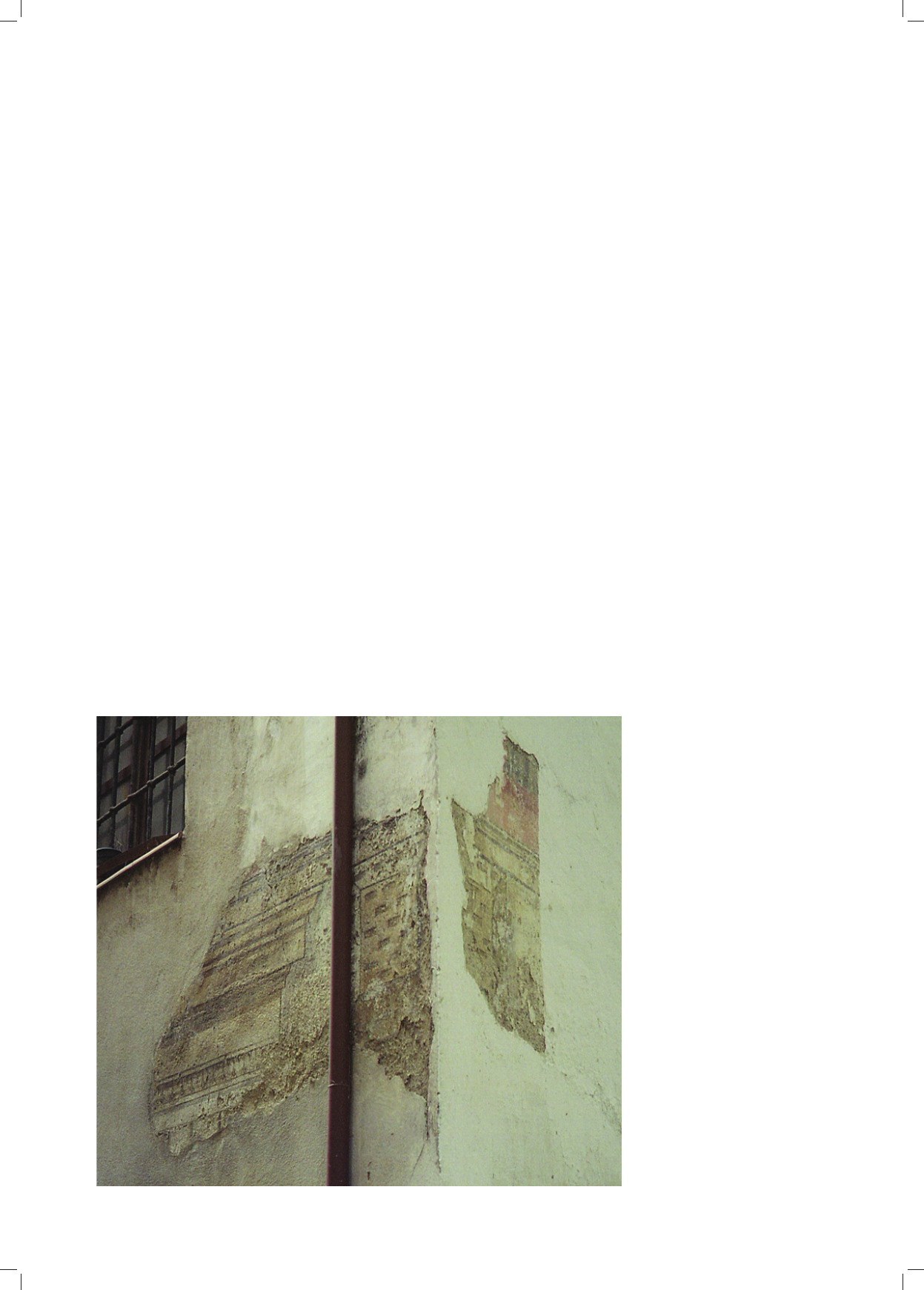
i wyrywkowych sondaży (il. 4) budzi jednak czasem wąt-
pliwości natury estetycznej. Fragmenty dekoracji pocho-
dzących z wcześniejszych epok niż większość aktualnie
widocznego malowidła eksponowane są zwykle w formie
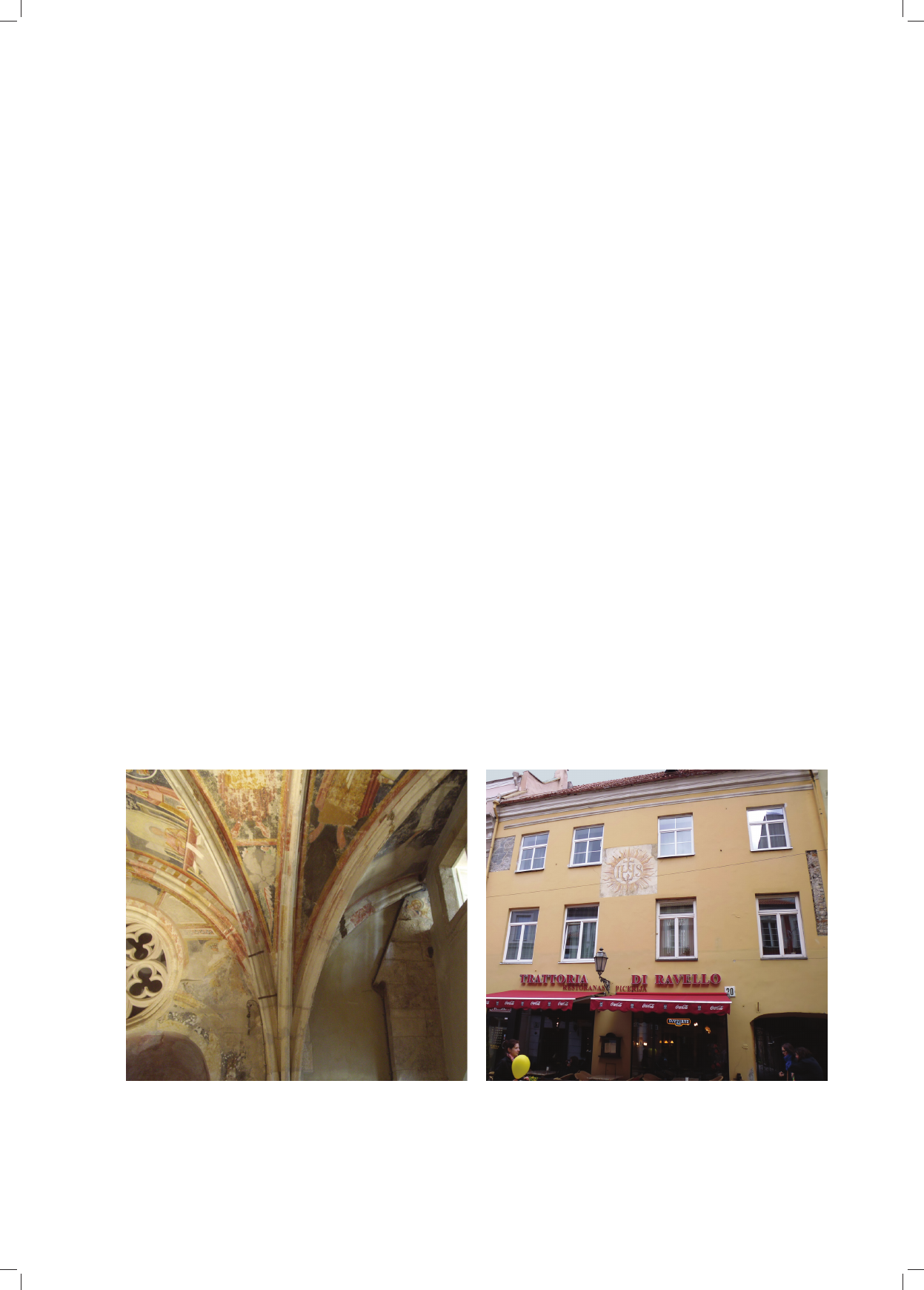
regularnych gur geometrycznych, rzadziej nieregular-
nych plam (il. 5) odpowiadających kształtem śladom za-
chowanych reliktów. Ten typ prezentacji dotyczy przede
wszystkim zmian dokonywanych w samej architektu-
rze. Każdy ma w pamięci ceglane czy kamienne ściany,
na których wyeksponowano zarysy portali, ślady daw-
nych otworów okiennych, przejść, starannie zaznaczone
zmiany wysokości budowli (il. 6). Czasem taki wykład
o historii budynku bywa fascynujący. Zdarza się jednak,
że pozostawione elementy robią wrażenie przypadko-
wych, a zamysł konserwatorów trudno zinterpretować.
of uncovering and preserving old paintings. It is worth
recalling that the stratigraphic research was a perfectly
priced activity, and therefore it was carried out really ea-
gerly. Random “stair” surveys were also carried out, which
showed successive layering of plasters and paint coatings.
However, it was denitely preferable to uncover the oldest
layers, preferably those of the Gothic style. For example,
in the 1970s the Castle of the Teutonic Order in Malbork
belonged to the objects most accurately researched to nd
any signs of original polychrome. Needless to say that at
that time, the 19
th
-century paintings, which at present are
the objects of in-depth research and restoration works,
were of no interest at all. This happened not only due
to the political context, but mainly due to the short his-
tory of paintings, their secondary artistic value, and the
time gap between the occurrence of Gothic architecture
and these almost new paintings. Only the decorations cre-
ated at the same time as the building itself deserved to be
called authentic.
At present, surveys of old layers are part of the research
process on wall paintings and they usually pass smoothly
into the rst phase of restoration works. They most of-
ten consist in removing all secondary layers. Sometimes
fragmentary exposures are the result of the intended ac-
tions in order to become a document of the history of
the building (Fig. 3). Sometimes, however, after the sur-
vey research is carried out, the works are not continued
and the “windows”, which were scraped out by conserva -
tors-restorers remain unchanged for many years, consti-
tuting the evidence of the loss of interest in the object or
the lack of nancing for further works. A failure to re-
veal the paintings may also result from a conscious de-
sire to save them, when under the secondary layers their
duration seems safer due to the prevailing weather condi-
tions or the way the building is used. It should be remem-
bered, however, that leaving undiscovered polychromes
can also sometimes lead to their unconscious destruction
Il. 4. Odkrywki architektoniczne
i malarskie (Ostra Brama, Wilno)
(fot. E. Święcka)
Fig. 4. Architectural and painting
exposures (Sharp Gate, Vilnius)
(photo by E. Święcka)
48 Ewa Święcka
Z malarstwem bywa podobnie. Dobrze, gdy „świadek”
jest na tyle niewielki, że jego obecność nie zakłóca spójnego
obrazu głównej dekoracji wnętrza. Niekiedy jednak od-
krywki dawnego malarstwa przeplatają się ze śladami
wcześniejszych form murów samej budowli. Gorzej, gdy
zdecydowano się na jednoczesną prezentację dekoracji
z rozmaitych epok i całość jest dla odbiorców nieczytelna.
Zdarzają się nawet niezamierzone efekty komiczne. Gdy
w gotyckim kościele sklepienie zastąpił strop, głowy od-
nalezionych pod tynkiem monumentalnych postaci znala-
zły się na strychu. Rzadko efekt prac stanowi prezentację
kolejnych faz i przebudów, które ilustrują konsekwentnie,
w sposób liniowy historię dawnego obiektu. Zwykle na
wyeksponowanie liczyć mogą fragmenty najlepiej zacho-
wane, niekoniecznie powiązane kompozycyjnie. Czasem
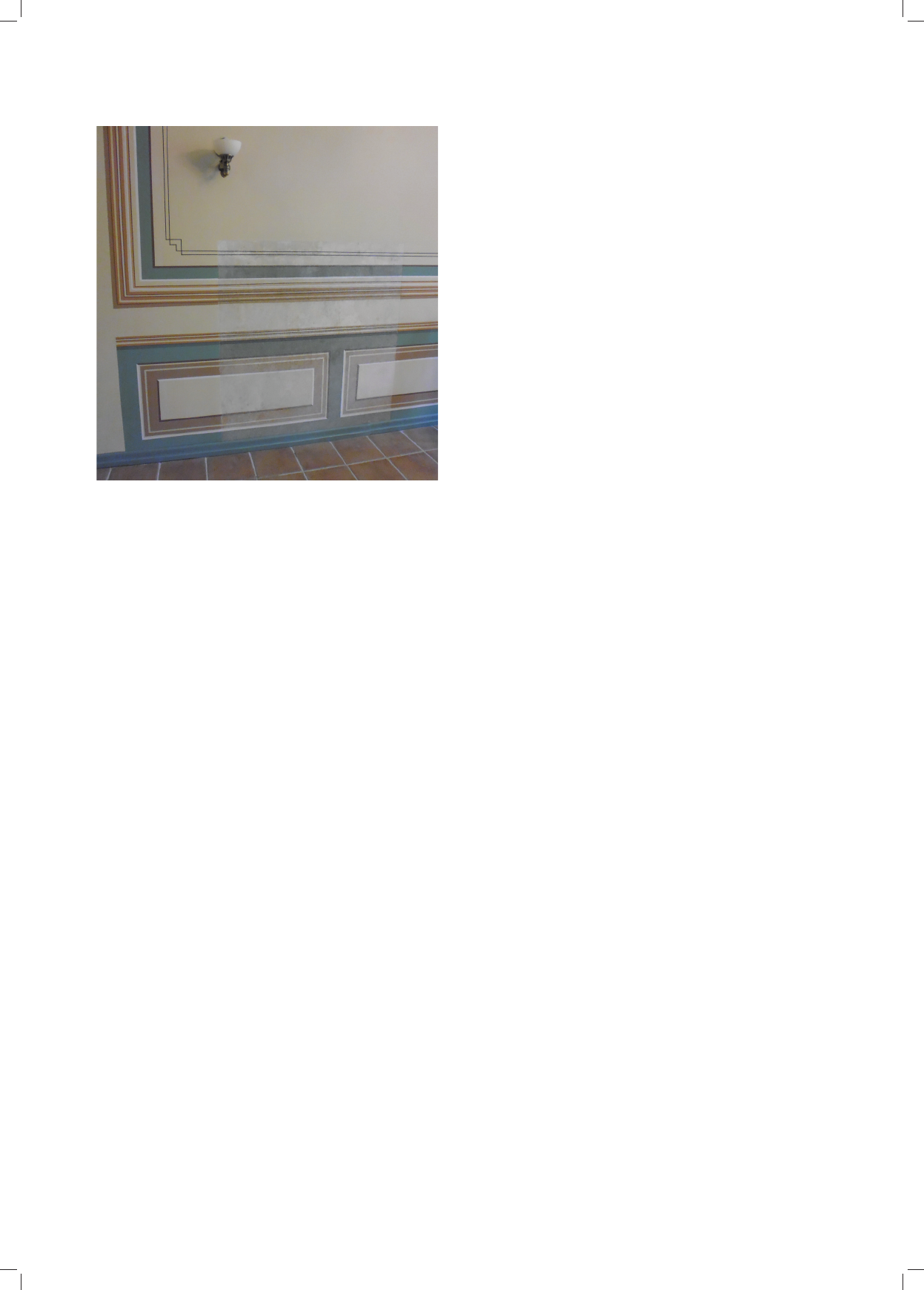
niewielkie odsłonięte fragmenty przypominają o zmianie
funkcji budynku i charakteru jego użytkowania (il. 7).
Można też znaleźć cenne przykłady rozdzielenia malo-
wideł, gdy udało się rozwarstwić dekoracje malarskie
pochodzące z dwóch różnych okresów historycznych,
a nawet wyeksponować wtórne dekoracje w sąsiednich
pomieszczeniach, gdzie dawniej malowideł nie było [7,
s. 151, przyp. 3].
Zgodnie z zasadami Karty Weneckiej, decyzji o wy-
borze historycznych nawarstwień nie może podejmować
sam wykonawca prac konserwatorskich [8, s. 331, art. 11].
Ostateczny wygląd zachowanych partii malowideł pocho-
dzących z różnego czasu jest wynikiem żmudnych i nie-
raz długotrwałych badań, przygotowania projektów, wielu
spotkań komisji. W jej skład wchodzą użytkownicy/wła-
ściciele obiektu – którzy nie zawsze są zleceniodawcami
[5, p. 338, 339]. Therefore, if the “windows” of the his-
torical decoration exposures are visible, it will not always
be an intentional and nal aesthetic solution. It sometimes
happens that the period between the stratigraphic stud-
ies of paintings and the performance of their restoration
lasts many decades. Also discoveries by accident still take
place. Former layers of paintings are found not only dur-
ing renovation works, but even when extinguishing a re
while streams of water from re hoses reveal frescoes hid-
den under a layer of distemper paint [6, pp. 36, 37].
Exhibition of painting exposures
on architectural surfaces
A desire to show the proofs of older decorations results
from the respect for the architectural history of a monu-
ment. The intended presentation of “insights” and random
surveys (Fig. 4) sometimes raises doubts of aesthetic na-
ture. Fragments of decorations which come from earlier
epochs than most of the currently visible paintings are
usually exposed in the form of regular geometric gures,
rather than in the form of less frequently irregular spots
(Fig. 5) corresponding to the shape of the preserved rel-
ics traces. This type of presentation is mainly concerned
with changes made in the architecture itself. Everyone
remembers brick or stone walls showing the outlines of
portals, traces of old window openings, passages, and
carefully marked changes in the height of the building
(Fig. 6). Sometimes this kind of lecture about the history
of the building can be fascinating. It happens, however,
that the elements left behind make an impression of being
Il. 5. Zachowany fragment
dawnej dekoracji
na narożu kamienicy (Granada)
(fot. E. Święcka)
Fig. 5. A preserved fragment
of old decoration on the corner
of a tenement house (Granada)
(photo by E. Święcka)
W pogoni za oryginałem – palimpsest w malarstwie ściennym /In pursuit of the original – palimpsest in wall painting 49
prac – eksperci i wykonawcy. Na ile efekty ich ustaleń
są akceptowalne dla późniejszych odbiorców, można się
przekonać, odwiedzając liczne dekorowane wnętrza. Pre-
zentacja odkrywek malowideł związana jest także z cha-
rakterem zabytkowego obiektu. Do koniktów dochodzi
czasem w obiektach sakralnych, gdzie wizje badaczy
trudno pogodzić z estetyką wymaganą w miejscach kultu.
Odkrywki podnoszą atrakcyjność wnętrz muzealnych i hi-
storycznych budowli; stanowią cenną ilustrację do histo-
rycznych dziejów. Stanowią też cenną atrakcję turystycz-
ną. Warto tu zwrócić uwagę na szczególne zainteresowanie
dawnymi reliktami malarstwa w hotelach urządzanych
obecnie w dawnych budynkach [7]. W odróżnieniu od
sformatowanych, nowoczesnych wnętrz, udokumentowa-
na „dawność” daje gościom poczucie unikatowych wra-
żeń. Historyczne miasto można nie tylko podziwiać, ale
na czas pobytu stać się jego częścią. Tam, gdzie zabrakło
odkrywek czy autentycznych śladów zniszczeń, bywa, że
są one nawet domalowywane [7, s. 155, przyp. 9], two-
rząc reżyserowany obraz dawności.
Odkrywki sondażowe malowideł ściennych mogą tak-
że stanowić materiał wyjściowy do tworzenia odwzoro-
wań i rekonstrukcji (il. 8). Prace związane z odsłanianiem
malarstwa są długotrwałe i kosztowne, więc wyłączają
zabytkowe wnętrza z użytkowania albo bardzo je utrud-
niają. W przypadku prostych wymalowań: powtarzal-
nych podziałów lub szablonowych motywów wystarczy
odnaleźć fragment, by odtworzyć na nowo całość deko-
racji. Istnieje też dziś możliwość przygotowania na pod-
stawie odkrywek i sondaży rekonstrukcji cyfrowych. To
cenne narzędzie badawcze pozwala w sposób nieinwazyj-
ny dla samego zachowanego dzieła zobrazować dawne
dekoracje. Jeśli jednak nie jest to prosty ornament, trze-
ba wykonać bardzo wiele odkrywek, a więc dostarczyć
accidental and it is difcult to interpret the restorers’
intention.
Painting is sometimes similar. It is good when a “wit-
ness” is so small that its presence does not disturb the
consistent image of the main decoration of the interior.
Sometimes, however, excavations of old paintings alter-
nate with the traces of earlier forms of the walls of the
building itself. It may be worse when a simultaneous pre-
sentation of decorations from different epochs takes place
and then the whole is not understood by recipients. There
are even unintentional comic effects. When the vault was
replaced by the ceiling in the gothic church, the heads of
monumental gures found under the plaster were placed
in the attic. Rarely does the effect of works constitute the
presentation of subsequent phases and rebuilds, which
consistently illustrate the history of the former object in
a linear manner. Usually, fragments that are best preserved
and which are not necessarily related in composition can
count on being exhibited. Sometimes, small uncovered
fragments bring to mind the change in the building’s func-
tion and the nature of its use (Fig. 7). We can also nd
valuable examples of separating the paintings when it was
possible to delaminate painting decorations which were
from two different historical periods, and even to expose
secondary decorations in the neighboring rooms, where
there were no paintings before [7, p. 151, footnote 3].
According to the principles of the Venice Charter, the
decision on the selection of historical layers cannot be
made by the contractor himself who performs restora-
tion works [8, p. 331, art. 11]. The nal appearance of
the preserved parts of paintings from different periods is
the result of tedious and sometimes long-lasting research,
preparation of projects, and many meetings of the com-
mission. The panel consists of users/owners of the object
Il. 7. Odkrywki muru i dekoracji malarskich kamienicy w Wilnie,
dawniej należącej do Kolegium Jezuitów
(fot. E. Święcka)
Fig. 7. Exposures of the wall and painting decorations of
a tenement house in Vilnius, formerly owned by the Jesuit College
(photo by E. Święcka)
Il. 6. Ekspozycja faz przebudowy i kilku warstw dekoracji malarskiej
pochodzących z różnych okresów w kaplicy w pałacu biskupim
w Zagrzebiu (fot. E. Święcka)
Fig. 6. Exposition of remodelling phases and several layers of painting
decoration from different periods in the chapel at the bishop’s palace
in Zagreb (photo by E. Święcka)
50 Ewa Święcka
dostatecznie dużo danych, by uzyskany obraz cyfrowy
miał pozory wiarygodności [9, s. 109, 110]. Wtedy jednak
nie można mówić, że jest to jeszcze proces nieniszczący.
Nie ma jednego, uniwersalnego przepisu na postępowa-
nie konserwatorskie ani wskazań dyktujących wybór eks-
ponowanej warstwy czy sposób prezentacji odkrywek daw-
nych malowideł. Istnieją jednak pewne podstawowe zasady.
1. Przed przystąpieniem do prac odkrywkowych trzeba
ocenić:
– na ile możliwe będzie przeprowadzenie badań całej
powierzchni ścian budowli, a w pomieszczeniach – za-
równo ścian, jak i sklepienia, by potwierdzić zakres wy-
stępowania dawnych malowideł,
– jakie są możliwości i warunki nansowania prac kon-
serwatorskich przy ewentualnie odkrytych dekoracjach,
– czy ramy czasowe zagwarantowane przez właści-
ciela/użytkownika obiektu pozwolą na dokończenie ba-
dań w sytuacji znacznego stopnia ich skomplikowania;
przerwanie prac może przyczynić się do postępowania
zniszczeń lub podjęcia przez właścicieli decyzji o skuciu
tynków,
– czy skład osobowy i kompetencje zespołu dają gwa-
rancję rzetelnego przebadania obiektu.
2. Zawsze należy dokładnie przebadać kolejne war-
stwy, biorąc pod uwagę:
– zakres występowania i stan zachowania dekoracji
malarskiej,
– walory estetyczne, z uwzględnieniem ewentualnej
ekspozycji w powiązaniu z charakterem obiektu,
– who are not always customers of the works – experts
and contractors. To see the extent to which the effects of
their arrangements are acceptable for later recipients, we
must visit numerous decorated interiors. The presentation
of exposures of paintings is also connected with the char-
acter of the historical object. Conicts sometimes occur in
sacred buildings, where visions of researchers are difcult
to reconcile with the aesthetics which is required in places
of worship. Exposures increase the attractiveness of mu-
seum interiors and historical buildings; they are a valuable
illustration of the historical past. They are also a valuable
tourist attraction. It is worth paying attention to the special
interest in ancient relics of paintings in hotels which now-
adays are situated in old buildings [7]. In contrast to the
formatted and modern interiors, documented “antiquity”
gives the guests a sense of unique impressions. We can
not only admire a historical city, but also become part of it
during our stay. Where there are no exposures or authentic
traces of destruction, it happens that they are even painted
as an addition [7, p. 155, footnote 9], creating an arranged
image of past times.
Survey exposures of wall paintings may also form the
starting material for creating projections and reconstruc-
tions (Fig. 8). The works which are connected with un-
covering paintings are long-lasting and costly, therefore
they exclude antique interiors from use or make it very
difcult. In the case of simple paintings, i.e. repetitive di-
visions or template motifs, it is enough to nd a fragment
to reconstruct the whole decoration again. Today, there is
also a possibility to prepare digital reconstruction surveys
on the basis of exposures. This valuable research tool
allows us to illustrate old decorations in a non-invasive
way for the preserved work itself. If, however, it is not
a simple ornament, it is necessary to make plenty of ex-
posures and thus provide enough data so that the digital
image obtained would have semblance of credibility [9,
pp. 109, 110]. But then we cannot say that it is still a non-
destructive process.
There is no single, universal recipe for restoration
works or indications imposing the choice of the exposed
layer or the way the exposures of old paintings are pre-
sented. However, there are some fundamental rules.
1. Before commencing the excavation works, it is nec-
essary to evaluate the following:
– to what extent it will be possible to carry out the re-
search of the whole surface of the building walls and in
the rooms – both walls and vaults in order to conrm the
range of old paintings occurrence,
– what are the possibilities and conditions for nancing
restoration works in the case of any decorations uncovered,
– will the time limits which are guaranteed by the own-
er/user of the object make it possible to complete the re-
search in the case of a considerable level of its complexity;
discontinuation of works may contribute to the progress
of destruction or the owners may take a decision to re-
move plasters,
– do the members and their competences guarantee
a reliable examination of the object.
2. Subsequent layers should always be studied care-
fully by taking into account the following:
Il. 8. Dwór w Syłgudyszkach (Litwa) – rekonstrukcja oryginalnej
dekoracji na podstawie odkrywki. Nie odsłaniano pierwotnej warstwy
w całym pomieszczeniu, malowidło odtworzono na wtórnej powierzchni
(fot. E. Święcka)
Fig. 8. Manor in Saldutiškis (Lithuania) – reconstruction of the original
decoration on the basis of an exposure. The original layer was not
revealed in the whole room and the painting was reconstructed
on the secondary surface
(photo by E. Święcka)

W pogoni za oryginałem – palimpsest w malarstwie ściennym /In pursuit of the original – palimpsest in wall painting 51
– range of occurrence and condition of painting decora-
tion,
– aesthetic values, including possible exposure in con-
nection with the nature of the object,
– potential threats: changing climatic conditions and
the effects of making the site available to the public, if
possi ble,
– the need to develop a methodology for securing dis-
coveries and re-covering them with a removable protec-
tive layer in the absence of aesthetic values or a collision
of the character of the decoration with the current/planned
use of the interior.
3. As far as possible, it is necessary to document the
discovery of paintings in the form of photographs, draw-
ings and descriptions in detail.
4. Any actions taken should not limit future interven-
tions and restoration choices.
Summary
The Venice Charter includes an indication of respect
for the contribution of successive epochs to the construc-
tion of an architectural monument [8, p. 331, art. 11].
These tendencies are becoming more and more popular
also in the restoration of works of art [7, p. 154, foot-
note 8]. However, in the case of several consecutively ap-
plied painting decorations, their intact is not always pos-
sible and justied. It happened that outstanding works of
art were “renewed” or repainted by untrained craftsmen.
The effects of their actions have no artistic value and they
only certify the lack of skills and a naive approach to res-
toration works. It is difcult to consider them as a wealth
of historical layers and they are willingly removed. This
refers primarily to movable objects, especially museum
exhibits, where restoration works are mainly aimed at re-
gaining an authentic work of art, which corresponds to
the original in the best way. The removal of secondary
coatings makes it possible to shift its dating even several
centuries back [10, p. 245]! We can understand the joy of
museum staff and collectors, when the monument sudden-
ly not only regained its artistic value, but also its market
value increased signicantly. At the same time, numerous
repaints – even if inefcient – prove that over the centu-
ries the object was important to the community, surround-
ed by care, and worth repeated “renewing”. This message
after the removal of secondary layers is irretrievably lost.
Can we treat painted interior decorations like museum
exhibits taken out of the context? Painting – both the most
valuable one and a simple inscription – is an integral part
of architecture. It describes the history of interiors, it is
a component of social history to a much greater extent
than a sculpture or picture which has been moved many
times. Historical changes are responsible for the next lay-
ered decorations. Paintings constitute a reection of the
fate of owners and users of a building. More and more
often, attention is also paid to the need to protect even pre-
viously carried out restorations [11, p. 25], whose traces
were eliminated so far almost automatically by contractors
of subsequent works. Secondary decoration layers, which
were irreversibly scraped off, will never be researched or
– potencjalne zagrożenia: zmienne warunki klimatycz-
ne oraz skutki ewentualnego udostępniania obiektu pu-
bliczności,
– konieczność opracowania metodyki zabezpiecze-
nia odkryć i ponownego zakrycia ich usuwalną warstwą
ochronną w przypadku braku walorów estetycznych lub
kolizji charakteru dekoracji ze sposobem aktualnego/pla-
nowanego użytkowania wnętrza.
3. Na ile to możliwe, trzeba szczegółowo zadokumen-
tować odkrycia malowideł w postaci fotograi, rysunków
i opisów.
4. Wszelkie wykonane działania nie powinny ograni-
czać przyszłych interwencji i wyborów konserwatorskich.
Zakończenie
W Karcie Weneckiej znajduje się wskazanie poszano-
wania wkładu kolejnych epok w budowę zabytku archi-
tektury [8, s. 331, art. 11]. Takie tendencje stają się coraz
bardziej popularne także i w konserwacji dzieł sztuki [7,
s. 154, przyp. 8]. Jednak w przypadku kilku kolejno na-
kładanych dekoracji malarskich ich nienaruszanie nie za-
wsze jest możliwe i uzasadnione. Zdarzało się, że wybitne
dzieła sztuki „odnawiali” czy przemalowywali niewpraw-
ni rzemieślnicy. Efekty ich działań nie mają walorów ar-
tystycznych, poświadczają jedynie brak umiejętności i na-
iwne podejście do prac restauratorskich. Trudno uznać je
za bogactwo historycznych nawarstwień i chętnie bywają
zdejmowane. Dotyczy to głównie obiektów ruchomych,
a zwłaszcza eksponatów muzealnych, gdzie prace konser-
watorskie nakierowane są głównie na odzyskanie auten-
tycznego dzieła sztuki, jak najbardziej odpowiadającego
pierwowzorowi. Usunięcie wtórnych powłok pozwala
przesunąć jego datowanie nawet o kilka wieków wstecz
[10, s. 245]! Można zrozumieć radość muzealników i ko-
lekcjonerów, gdy zabytek nagle nie tylko odzyskał walo-
ry artystyczne, ale także jego wartość rynkowa znacznie
wzrosła. Jednocześnie liczne przemalowania – choćby
nieudolne – świadczą, że obiekt w ciągu wieków był dla
społeczności ważny, otoczony troską, wart kilkakrotnego
„odnawiania”. Ten przekaz po zdjęciu wtórnych nawar-
stwień zostaje bezpowrotnie utracony.
Czy malowane dekoracje wnętrza można traktować
podobnie jak wyrwane z kontekstu muzealne eksponaty?
Wymalowanie – zarówno to najcenniejsze, jak i prosta in-
skrypcja – stanowi integralną część architektury. Opisuje
dzieje wnętrz, jest składową historii społecznej w o wie-
le większym stopniu niż po wielekroć przemieszczana
rzeźba czy obraz. Kolejnym nawarstwionym dekoracjom
odpowiadają przemiany historyczne. Malowidła są od-
biciem losu właścicieli i użytkowników budowli. Coraz
częściej zwraca się także uwagę na potrzebę ochrony na-
wet dawniej przeprowadzonych konserwacji [11, s. 25],
których ślady eliminowane były, jak dotąd, nieomal auto-
matycznie przez wykonawców kolejnych prac. Wtórnych
warstw dekoracji, które nieodwracalnie zdrapano, już ni-
gdy nie będzie można przebadać ani zinterpretować, jak
to się dzieje w przypadku pergaminowych palimpsestów.
W każdym zabytkowym budynku, który poddano kon-
serwacji, powinny pozostać świadectwa historycznych

52 Ewa Święcka
Streszczenie
W artykule przedstawiono problemy związane z należącym do procesu badań powierzchni architektonicznych odsłanianiem malowideł ściennych.
Omówiono też sposób przygotowywania w przeszłości wtórnych powłok przed nanoszeniem kolejnych dekoracji oraz podstawowe zasady postępo-
wania konserwatorskiego.
Warstwy stratygraczne malarstwa ściennego stanowią: murowane podłoże, tynki, pobiały i warstwy barwne. Nie zawsze zdejmowane są wszystkie
wtórne nawarstwienia z całej powierzchni oryginalnej dekoracji, czasami wykonuje się jedynie niewielkie odkrywki. Zdejmowanie przemalowań jest
prowadzone w ramach prac konserwatorskich, dlatego duża część rozstrzygnięć należy do specjalistów z tej dziedziny. W przeszłości konserwatorzy
odsłaniali zwykle w całości zachowaną warstwę najstarszą; późniejsze były po prostu tracone. Dziś istnieje wiele metod konserwacji i sposobów
ekspozycji, aby ocalić malowidła pochodzące z kilku okresów historycznych, stworzone na tej samej ścianie. Różne sposoby i formy ich ekspozycji
pokazano w artykule na fotograach. Należy podkreślić, że jednoczesna prezentacja malowideł pochodzących z kilku okresów to głównie kwestia
estetyczna. Nie wolno też zapominać, że dekoracja malarska nie tylko jest dziełem sztuki, ale stanowi dokument losów historycznej budowli.
Słowa kluczowe: malarstwo ścienne, konserwacja, autentyzm, stratygraa, palimpsest
Abstract
The article presents problems of revealing of mural paintings which is an integral part of architectural surfaces investigation. The paper also describes
different kinds of preparatory layers used in the past as a support for new decorations and general rules of its conservation proceedings.
The stratigraphic layers of mural painting are the following: the wall, plasters and renderings, strata of whitewash and polychromes. In some cases
only limited parts of authentic paint are presented without removing of all layers added later on the whole decorated surface. Overpaintings are re-
moved in conservation treatment, that is why the conservator is the one to make the most important decisions. In the past conservators used to reveal
the oldest existing paint layer; overlapping layers were simply lost. Today there are many solutions and methods of conservation allowing to preserve
and expose paintings created on the same wall in different historical periods. The photographs included in the article illustrate different systems and
forms of presentation. It should be stressed that parallel presentation of paintings coming from several periods is mainly an aesthetical problem. One
should also remember that painted decoration is not only a work of art but also a document of history of the building.
Key words: wall painting, conservation, authenticity, stratigraphy, palimpsest
Bibliografia /References
[1] Brykowska M., Metody pomiarów i badań zabytków architektury,
Ocyna Wydawnicza PW, Warszawa 2003.
[2] Tomaszewski A., Historia architektury – badanie zabytku architek-
tury – konserwacja, [w:] A. Tomaszewski, Ku nowej lozoi dzie-
dzictwa, E. Święcka (wyb. i oprac.), Międzynarodowe Centrum
Kultury, Kraków 2012, 19–35.
[3] EwaGlos – European Illustrated Glossary of Conservation terms for
Wall Paintings and Architectural Surfaces, A. Weyer, P. Roig Picazo,
D. Pop et al. (ed.), Michael Imhof, Petersberg 2015.
[4] Święcka E., Konserwacja malarstwa ściennego w 1. połowie XX w.
i kwestie autentyzmu, „Architectus” 2015, Nr 4(44), 33–42.
[5] Zalewski W., Odkrywanie malowideł ściennych, [w:] B. Soldenhoff
(red.), Księga pamiątkowa oarowana profesorowi Wiesławowi Do-
masłowskiemu, Wydawnictwo UMK, Toruń 2002, 337–351.
[6] Święcka E., Kościół i klasztor w Holszanach: początek odrodzenia?
Konserwacja malowidła ołtarzowego, [w:] W. Walczak, J. Łopatec-
ki (red.), Stan badań nad wielokulturowym dziedzictwem dawnej
Rzeczpospolitej, T. 4, Instytut Badań nad Dziedzictwem Kulturo-
wym Europy, Białystok 2013, 35–68.
[7] Stec M., Artystyczna kreacja w pracach konserwatorskich i restau ra
torskich na przykładzie Hotelu „Stary” w Krakowie, [w:] E. Szmit-
-Naud, B. Rouba, J. Arszyńska (red.), Wokół estetyki zabytku po
konserwacji i restauracji, Narodowy Instytut Dziedzictwa, Stowa-
rzyszenie Przyjaciół Zakładu Konserwacji Malarstwa i Rzeźby Po-
lichromowanej Toruńskiej Szkoły Konserwacji, Warszawa–Toruń
2012, 149–161.
[8] Międzynarodowa Karta Konserwacji i Restauracji Zabytków Ar-
chitektury i Miejsc Historycznych (Karta Wenecka), [w:] W. Bu-
kowska, J. Krawczyk (red.), Karta Wenecka 1964–2014, Wydział
Sztuk Pięknych UMK w Toruniu, Toruń 2015, 329–332.
[9] Zapłata R., Autentyzm zabytkowej architektury i palimpsest w prze-
strzeni historycznej – nowe media a prezentacja dziedzictwa kultu-
rowego, „Architectus” 2016, Nr 1(45), 97–114.
[10] Kapalski M., Znaczenie konserwacji w kreacji eksponatu muzeal-
nego na przykładzie kamiennej rzeźby Madonny ze Starego Targu
w Cieszynie, [w:] L. Staniek (red.), VII Międzynarodowa Konfe-
rencja Konserwatorska, Szreniawa, 12–14 października 2016, Mu-
zeum Narodowe Rolnictwa i Przemysłu Rolniczego w Szreniawie,
Szreniawa 2017, 241–247.
[11] Zalewski W., Rola konserwatora w XXI wieku przy pracach doty-
czących malowideł ściennych, „Biuletyn Informacyjny Konserwa-
torów Dzieł Sztuki” 2016, T. 21, Nr (80), 24–35.
interpreted as it is in the case of parchment palimpsests.
In every historical building which was restored, there
should be evidence of historical layers. Whether they will
be small and exposed fragments of the oldest, or frag-
ments of later painting left unnished – a decision must
be made for each individual object after taking into con-
sideration all the circumstances.
Translated by
Bogusław Setkowicz
nawarstwień. Czy będą to niewielkie, odsłonięte frag-
menty tego, co najdawniejsze, czy pozostawione nie do
końca usunięte fragmenty późniejszego malarstwa – de-
cyzję trzeba podjąć dla każdego obiektu po uwzględnie-
niu wszelkich okoliczności.