
In today’s economic development of the cities and
their urban transformation the city planners are looking
for new convenient means of transportation in order to
accommodate the mobility of people. The availability
of affordable and high quality transportation solutions
JUHDWO\ FRQWULEXWHV WR WKH XQREVWUXFWHG ÀRZ RI SHRSOH
SURGXFWVDQGVHUYLFHVDVZHOODVWRWKHLPSURYHPHQWRI
social and economic cohesion and the market competi-
WLYHQHVV7KH QHFHVVLW\WR¿QG DQGGHYHORSQHZPHDQV
of transportation is driven by the problems connected
with the congestion in and around the cities. Increasing
PRELOLW\DQGDWWKHVDPHWLPHGHFUHDVLQJWUDI¿FFRQJHV-
WLRQ WKH QXPEHURI URDG DFFLGHQWV DQGSROOXWLRQ LVWKH
real challenge for all large cities. Their inhabitants more
than anybody else experience the negative effects of their
RZQPRELOLW\¿UVWKDQGDQGWKDWLVZK\WKH\DUHRSHQWR
innovative solutions aimed at sustainable transportation.
One of such solutions includes a network of bikeways
enabling people to get around the city comfortably and
safely on their own bicycles.
$OHNVDQGUDàXNDV]HZLF]
The comparative analysis of selected cycling solutions
IURP&RSHQKDJHQDQGWKHFXUUHQWSURF\FOLQJDFWLRQVLQ:URFáDZ
Introduction
*
)DFXOW\RI$UFKLWHFWXUH:URFáDZ8QLYHUVLW\RI7HFKQRORJ\
Tab. 1. The growth of the number of cyclists in Copenhagen
at the turn the 19
th
and 20
th
FHQWXULHVVRXUFH>@
Tab. 1. Przyrost liczby rowerzystów w Kopenhadze
QDSU]HáRPLH;,;L;;ZĨUyGáR>@
Year Number of cyclists
1890 3000
1900 30000
1907 80000
1934 400000
+RZ&RSHQKDJHQEHFDPHDELF\FOHIULHQGO\FLW\
Copenhagen is not much different than other European
cities but it has always had a special affection toward its
transportation system. This is why Copenhagen is a city
whose inhabitants have been using an alternative means of
transportation that is a bicycle for over a century.
%LF\FOHV ¿UVW DSSHDUHG LQ 'HQPDUN LQ WKH V$W
that time the upper social classes suffered from “the incur-
DEOHELF\FOHIHYHU´DVHYHU\ERG\ZDQWHGWREHWKH¿UVWSHU-
son to be seen on a bicycle which then was just a wooden
construction with no pedals and no possibility to turn with
the handlebars. It was then a luxury product and only the
wealthiest could afford it. The attractive size of the city
ZKHUH\RXFRXOGHDVLO\JHWDURXQGE\ELF\FOHDQGLWVÀDW
area proved ideal for the development of bicycles. Their
PDVVSURGXFWLRQEHJDQWKHLUSULFHVIHOODQGWKHLUSRSXODU-
LW\JUHZYHU\IDVWZKLFKLVSUHVHQWHGLQ7DEOH,QWKH
last decade of the 19
th
FHQWXU\WKHQXPEHURIF\FOLVWVJUHZ
from 3000 to 30000 and bicycles dominated the streets.
Such a dramatic growth of the number of cyclists
ZRXOGQRWKDYHEHHQSRVVLEOHZLWKRXWWKH'DQLVK&\FOLVWV
)HGHUDWLRQ '&) HVWDEOLVKHG LQ ZKLFK SOD\HG D
VLJQL¿FDQWUROHLQEXLOGLQJWKHF\FOLQJLQIUDVWUXFWXUHDQG
SURYLGLQJWKHULJKWFRQGLWLRQVIRUJURZWK,Q&RSHQ-
KDJHQKDGNPRIELNHODQHV7KHELF\FOHZDVVORZO\
EHFRPLQJDSDUW RI XUEDQ FXOWXUH 'XULQJ:RUOG:DU,,
2012
No. 2(32)
DOI: 10.5277/arc120204
20 $OHNVDQGUDàXNDV]HZLF]
GHVSLWH¿QDQFLDOSUREOHPVWKHJRYHUQPHQWIXQGHGWKHFRQ-
struction of bike and recreation ways around the city to
enable people to commute to work and reduce unemploy-
PHQW,QWKH\HDUV±WKHFLW\ZDVXQGHU*HUPDQ
occupation. As a result of the ubiquitous shortage of gas
and spare parts the bicycle saved the inhabitants of Co-
penhagen. The bicycles which were home-made replaced
WD[LVDQGWKHFRUNDVZHOODVVWUDZZHUHXVHGLQVWHDGRI
UXEEHUWLUHV$IWHUWKHZDUWKHEDQRQFDULPSRUWUHVXOWHG
LQHYHQJUHDWHUSRSXODULW\RIELF\FOHV>@
The drastic drop in the use of bicycles occurred in the
\HDUV±ZKHQDORWRISHRSOHPRYHGWRWKHFLW\
VXEXUEV$WWKDWWLPHWKHLUQXPEHUIHOOIURPWKRXVDQG
WRWKRXVDQG,WZDVFOHDUO\YLVLEOHRQWKHFLW\VWUHHWV
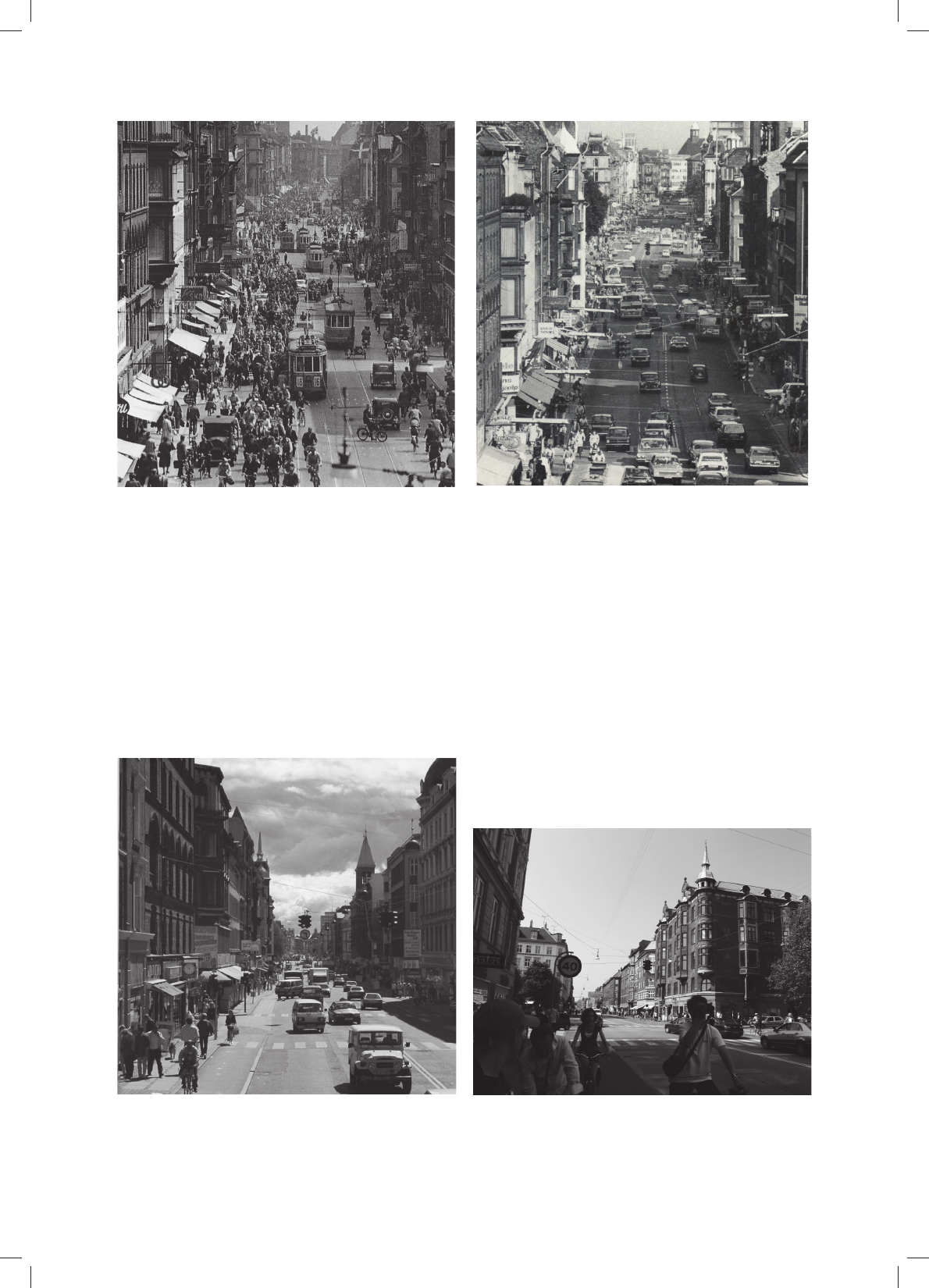
Figures 1–4 show the view of Nørrebrogade street over
the years and the changes in transportation trends. They
VKRZWKHJUHDWVLJQL¿FDQFHRIELF\FOHWUDQVSRUWDWLRQXQWLO
WKHV
,Q WKH V &RSHQKDJHQ ZLWQHVVHG WKH DXWRPRELOH
UHYROXWLRQ +RZHYHU LW ZDV QRW DV LQWHQVLYH DV LQ RWKHU
)LJ1¡UUHEURJDGH6WUHHWLQ&RSHQKDJHQ6RXUFH>@
,O8OLFD1¡UUHEURJDGHZ.RSHQKDG]HURNħUyGáR>@
)LJ1¡UUHEURJDGH6WUHHWLQ&RSHQKDJHQ6RXUFH>@
,O8OLFD1¡UUHEURJDGHZ.RSHQKDG]HURN>@
)LJ1¡UUHEURJDGH6WUHHWLQ&RSHQKDJHQ
6RXUFH>@
,O8OLFD1¡UUHEURJDGHZ.RSHQKDG]HURN
ħUyGáR>@
Fig. 4. Nørrebrogade Street in Copenhagen
SKRWRE\$àXNDV]HZLF]
,O8OLFD1¡UUHEURJDGHZ.RSHQKDG]H
IRW$àXNDV]HZLF]

7KHFRPSDUDWLYHDQDO\VLVRIVHOHFWHGF\FOLQJVROXWLRQVIURP&RSHQKDJHQDQGWKHFXUUHQWSURF\FOLQJDFWLRQVLQ:URFáDZ 21
countries. Not everybody could afford a car and not every-
body knew how to use it. The motorization lobby was not
as strong either. The tax on car sale and car prices were
YHU\KLJK+RZHYHUEHFDXVHRIWKHOD\RXWRIWKHGLVWULFWV
it was necessary to use the car and public transportation
system.
,QWKHVWKHFLW\DXWKRULWLHVEHJDQWKHVWUHHWOD\RXW
reconstruction process to accommodate the needs of the
growing number of cars and developed a plan of highway
network. That decade became famous for the removal of
DVLJQL¿FDQWSDUWRIF\FOLQJLQIUDVWUXFWXUHGXULQJWKDWSURF-
ess. The development of road infrastructure cost a lot of
time and money.
,QWKHVWKHGHYHORSPHQWRIWKHKLJKZD\QHWZRUN
FDXVHGDORWRIODUJHVFDOHSURWHVWV'XULQJWKH¿UVWHQHUJ\
FULVLVLQ LWEHFDPH FOHDUWKDWWKHVRFLHW\EDVHG RQ
fuel consumption is not sustainable and many groups of
SURWHVWRUVFURSSHGXS7KHSURWHVWVUHÀHFWHGQRWRQO\WKH
care for the environment but also the deterioration of life-
VW\OHRIWKHFLW\GZHOOHUV7KHODFNRISXEOLFVSDFHVFDUV
SDUNHGRQVLGHZDONVREVWUXFWLQJSHGHVWULDQWUDI¿FDQGFDU
accidents were only some of the problems caused by the
advance of the car era. The 1970s were also marked by
recession and huge congestion which also contributed to
mass pro-cycling demonstrations. Most of them were co-
RUGLQDWHGE\WKH'DQLVK&\FOLVWV)HGHUDWLRQ
$W WKH EHJLQQLQJ RI WKH V WKHUH ZDV D LQ-
FUHDVHLQELF\FOHWUDI¿FVLQFHLWVORZHVWOHYHOLQWKHVHFRQG
KDOIRIWKHV,WUHVXOWHGIURPWKHGHFLVLRQRIWKHJRY-
ernment which could lead in two different directions of
GHYHORSPHQWWKHH[SDQVLRQRIFDUVDQGDGMXVWLQJWKHFLWLHV
to their needs for space or search for other solutions to ac-
commodate comfortable mobility of the inhabitants. It was
decided to invest in the public transportation system and in
the development of cycling infrastructure. Beginning from
DODUJHSDUWRIWKHSXEOLFEXGJHWKDVEHHQSURYLGHG
for cycling improvement and modernization of existing
ELNHZD\V%HIRUHWKHFLW\EXLOWNPRIELNHZD\V
DQG JUHHQZD\V7RGD\ WKHUH DUH DERXW NP RI ELNH-
ZD\VLQFOXGLQJNPRIELNHSDWKVNPRIELNHODQHV
NPJUHHQZD\V>@)LJXUHVKRZV1¡UUHEURJDGHVWUHHW
in 2011. The picture was taken in the afternoon. It is clear
WKDWWKHFDUWUDI¿FLVVLJQL¿FDQWO\VPDOOHUWKDQSHGHVWULDQ
DQGF\FOLQJWUDI¿F
Current activities and cycling statistics
Copenhagen is greatly successful in promoting and
GHYHORSLQJ F\FOLQJ LQ WKH FLW\ ZKLFK LV UHÀHFWHG LQ WKH
statistics.
RIDOOSHRSOHZKRZRUNDQGVWXG\LQWKHFLW\ULGH
ELF\FOHVZKLFKWUDQVODWHVLQWRPLOOLRQNPFRYHUHGE\
bicycle daily (the data take into account the inhabitants
RIQHLJKERULQJFRPPXQHVRIDOOLQKDELWDQWVJRWR
ZRUNRUVFKRROE\ELF\FOHHYHU\GD\HYHQRXWVLGHWKHFLW\
Social research is conducted in order to evaluate the level
of satisfaction in getting around the city by bicycle. This
LVKRZZHNQRZWKDWRIWKHLQKDELWDQWVJRE\ELF\-
cle because it is fast and easy. It should be noted that the
DYHUDJHELF\FOHULGLQJVSHHGLVNPKZKHUHDVWKHFDU
ULGLQJVSHHGLVNPKZKLFKLVQRWVXFKDELJGLIIHUHQFH
RIWKHLQKDELWDQWVWKLQNWKDWELF\FOHULGLQJLVDYHU\
JRRGH[HUFLVHDQGRIWKHPWKLQNELF\FOHULGLQJLVLQ-
H[SHQVLYH$QRWKHUVLJQL¿FDQWIDFWRULQWKHSRSXODUXVHRI
ELF\FOHVLVVDIHW\RIWKHLQKDELWDQWVRI&RSHQKDJHQ
IHHOFRPIRUWDEOHDQGVDIHLQWKHFLW\WUDI¿F>@
'HVSLWHWKHXVHRIELF\FOHLQGDLO\WUDYHOLVKLJK&R-
penhagen conducts research and develops projects dedi-
FDWHGWRVSHFL¿FVRFLDOJURXSV7KLVZD\LWFRQGXFWVVHY-
HUDOFDPSDLJQVSURPRWLQJELF\FOHULGLQJDPRQJFKLOGUHQ
IRUHLJQHUVDQGHOGHUO\SHRSOH
,W LV LPSUHVVLYH KRZ VSHFL¿F SURMHFWV DUH ¿QDQFHG
The budget for the development of the bicycle network by
SURYLGHV'..PLOOLRQDERXW3/1PLOOLRQ
and includes the modernization of existing routes as well
DVFRQVWUXFWLRQ RIQHZ NP RIELNHZD\V$ERXW (85
PLOOLRQZDVVSHQWRQEXLOGLQJQHZELNHZD\VF\FOLQJ
SDWKVDQGELF\FOHSDUNLQJVWDQGVLQWKHEXGJHWVIRU
DQG,QWKH\HDUV±WKHPXQLFLSDOLW\RI&R-
SHQKDJHQVSHQWDERXW(85PLOOLRQRQYDULRXVELF\FOH
SURMHFWV>@7KLVLVDORWRIPRQH\ZKLFKJXDUDQWHHVWKH
effective development of the city and very good effects of
the bicycle use by the inhabitants.
Polish reality
/RRNLQJEDFNDWWKHKLVWRU\RIWKH
th
century of Po-
ODQGLWVHHPVFOHDUWKDWLWZDVYHU\GLI¿FXOW,JQRULQJWKH
IDFWRIKXJHZDUGDPDJHLQ3RODQGWKHSHULRGDIWHUWKHZDU
when socialism ruled did not positively affect the economic
development of the country. The transformations of those
WLPHVPDGHDVSHFLDOLPSULQWRQWKHFLW\IDEULFFKDQJLQJ
the urban structure of the city until today. The post-war
damage resulted in empty squares and spaces which were
TXLFNO\¿OOHGGXULQJWKHFRPPXQLVWPRGHUQLVP
6LPLODUO\KXPDQPHQWDOLW\FKDQJHGXQGHUWKHSUHVVXUH
of a number of regulations and the trouble purchasing vari-
RXVSURGXFWVLQFOXGLQJFDUV8QIRUWXQDWHO\WKHFDUUHYR-
OXWLRQFDPHWR3RODQGPXFKODWHUWKDQLQ:HVWHUQ(XURSH
$OWKRXJKWKHLQKDELWDQWVRI&RSHQKDJHQDQGRWKHU:HVW-
ern European countries “enjoyed” cars long enough until
WKH\EHFDPHDEXUGHQWKH\DUHVWLOODEHQFKPDUNRISURV-
perity and comfort for the Poles which everybody would
love to have.

22 $OHNVDQGUDàXNDV]HZLF]
7KHELF\FOHUHYROXWLRQEURNHRXWLQ:URFáDZZKHQWKH
¿UVW%LNH2I¿FHULQ3RODQG±'DQLHO&KRMQDFNLZRUNLQJ
LQ:URFáDZ &LW\2I¿FH± ZDVDSSRLQWHG LQ+H LV
in charge of coordinating road works so that construc-
tion projects include cycling infrastructure. He heads the
&\FOLQJ'HYHORSPHQW6HFWLRQZLWKWZRSHUVRQV,QFRP-
SDULVRQWKHPXQLFLSDOLW\RI&RSHQKDJHQKDVWKRXVDQG
LQKDELWDQWVDQGSHRSOHZRUNLQWKHFLW\RI¿FHELF\FOH
department which is responsible for strategic designing
RI XUEDQ LQIUDVWUXFWXUH 7KH PXQLFLSDOLW\ RI :URFáDZLV
bigger in respect of population by more than 90 thousand
inhabitants and the two-person team coordinating road de-
signs including cycling infrastructure is not able to coordi-
nate all investments in the city.
:URFáDZLVRQHRIWKHIHZ3ROLVKFLWLHVZKLFKGRPLQDWH
LQGHYHORSLQJWKHLUELF\FOHQHWZRUNV7KH¿UVWDGYDQFHG
ELF\FOHVWRSOLQHLQ3RODQGZDVXVHGLQ:URFáDZDQGEH-
FDXVHRI LWWKH F\FOLVWVFDQVWRSEHIRUH WUDI¿FOLJKWV DQG
they are visible to the car drivers. The success of the city
ELF\FOHUHQWDO³:URFáDZVNL 5RZHU 0LHMVNL´ ZDV JUHDWHU
than in Krakow where the bicycle rental has been oper-
ating since 2008. The statistics are self-evident. Over the
¿UVWWZRGD\VRILWVRSHUDWLRQWKHELF\FOHUHQWDOZDVXVHG
WLPHV6XFKDUHVXOWLVFORVHWRWKDWLQ/\RQZKLFK
KDV PRUH ELF\FOHV DERXW DQG WKH KLJKHVW ELF\FOH
UHQWDOUDWHLQWKHZRUOG>@
Another breakthrough in the development of the bicycle
SURPRWLRQSROLF\LQ:URFáDZZDVWKHDGRSWLRQRI:URFáDZ
%LF\FOH3ROLF\5HVROXWLRQQR/9RI:URFáDZ&LW\
&RXQFLOIURP2FWREHURQ:URFáDZELF\FOHSROLF\
It provided the directions and objectives of the development
of the urban cycling infrastructure. The main strategic ob-
MHFWLYHLVWRUHDFKE\WKHELF\FOHWUDI¿FVKDUHLQWKH
QRQSHGHVWULDQWUDI¿FUDWHE\DQGLWVIXUWKHUJURZWKXS
WRE\,QRUGHUWRDFKLHYHVXFKUHVXOWVDQXPEHU
of regular activaties are planned such as the development of
DXQL¿HGF\FOLQJQHWZRUNFKDQJHVLQURDGWUDI¿FRUJDQL]D-
WLRQWDNLQJLQWRDFFRXQWWKHQHHGVRIWKHF\FOLVWVLQFUHDVH
LQWKHQXPEHURIELF\FOHSDUNLQJVWDQGVEXLOGLQJVRFLDODF-
ceptance and support for utility cycling.
7UDI¿FUHVHDUFK LVWKHEDVLV IRUWDNLQJDFWLRQV LQWKH
countries where utility cycling is treated seriously. The
ELF\FOH UHVHDUFK FRQGXFWHG LQ :URFáDZ GHPRQVWUDWHG
a dynamic growth in the number of cyclists especially
those who commute every day to work or school. Table 2
shows the results of bicycle research which demonstrate
WKDW:URFáDZKDVDORWRIELF\FOHORYHUVDQGRYHUWKH\HDUV
the interest has not declined.
7DE7KHUHVXOWVRIELF\FOHUHVHDUFKLQ:URFáDZ
1
7DE=HVWDZLHQLHEDGDĔGRW\F]ąF\FKUXFKXURZHURZHJRZH:URFáDZLX
Time
Place
*UXQZDOG]NL%ULGJH -XQFWLRQRI6ZRERGQDDQG3RZVWDĔFyZĝOąVNLFK6WUHHWV
2008 2008
±DP 97 81 73
±DP 129
727$/ 240 181 198
±SP 171 194
±SP 120 139
727$/ 291 220
1
,QWHUYLHZZLWK'DQLHO&KRMQDFNLWKH&\FOLQJ'HYHORSPHQW6HFWLRQDW:URFáDZ&LW\2I¿FH
%LF\FOHUHYROXWLRQLQ:URFáDZ
Financing projects
The key to success in each project is the adequate budg-
HW(YHQWKHEHVWSURMHFWFDQIDLOZLWKLQVXI¿FLHQWIXQGV
The same principles apply to the execution of the plan of
EXLOGLQJWKHF\FOLQJLQIUDVWUXFWXUHLQ:URFáDZ:LWKLQVXI-
¿FLHQWIXQGVDORWRIPLVWDNHVFDQKDSSHQ7KHFRQFHSWRI
WKHEDVLFQHWZRUNRIF\FOLQJURXWHVLQ:URFáDZLVWKHYDOLG
document providing the principles for the development
RIWKHF\FOLQJV\VWHP)XUWKHUPRUHWKHVWXG\RIODQGXVH
FRQGLWLRQVDQGGLUHFWLRQVIRU:URFáDZSURYLGHVWKHJXLGH-
OLQHVIRUF\FOLQJURXWHVDQGWKHLUKLHUDUFK\+RZHYHUWKH
study is not a document only providing the directions for
DFWLRQV LWV JXLGHOLQHV DUH YHUL¿HG E\ JRRG ZLOO DQG WKH
HQJLQHHULQJVNLOOVRIWKHFLW\RI¿FLDOV&RQVHTXHQWO\WKH
execution of the bicycle policy and the bicycle network
design can and unfortunately is disturbed from two sides.
2QWKHRQHKDQGWKHUHLVQRWUDQVIHURILQIRUPDWLRQLQFOXG-
HGLQWKH6WXG\LQWRWKHORFDOGHYHORSPHQWSODQVDQGRQ
WKHRWKHUKDQGWKHEXGJHWIRUWKHGHYHORSPHQWRIF\FOLQJ
infrastructure does not guarantee the comprehensive com-
pletion of the assumptions. Actually this means the coin-
cidental character of constructed infrastructure for cyclists
DQGLWVLQFRKHUHQFHZKLFKDUHWKHEHVWFULWHULDLQGLFDWLQJ
the proper cycling structure.
7KHSURMHFWVRIF\FOLQJLQIUDVWUXFWXUHDUH¿QDQFHGIURP
DIHZVRXUFHV7KH&\FOLQJ'HYHORSPHQW6HFWLRQKDVLWV
own budget which grows year after year. The city’s cy-
FOLQJLQYHVWPHQWVVXFKDVFRQWUDÀRZELNHODQHVVHSDUDWHG
LQWKHURDGVRUELF\FOHSDUNLQJVWDQGVDUH¿QDQFHGIURP
7KHFRPSDUDWLYHDQDO\VLVRIVHOHFWHGF\FOLQJVROXWLRQVIURP&RSHQKDJHQDQGWKHFXUUHQWSURF\FOLQJDFWLRQVLQ:URFáDZ 23
WKH0XQLFLSDO5RDGDQG8UEDQ0DLQWHQDQFH2I¿FHEXGJHW
for road maintenance. These are investments which are
included in the cost of other investments connected with
road maintenance and their modernization.
The utility cycling is promoted mainly on the grass-
URRWVLQLWLDWLYHDQGLWLVXVXDOO\¿QDQFHGIURPWKHEXGJHWRI
WKH6SRUWV7RXULVPDQG5HFUHDWLRQ2I¿FH8QIRUWXQDWHO\
its budget is smaller and smaller every year. Over the pe-
ULRGRI¿YH\HDUV±WKHEXGJHWZDVGHFUHDVHG
IURP3/1PLOOLRQWR3/1WKRXVDQG7KH6SRUWV
7RXULVP DQG 5HFUHDWLRQ 2I¿FH ¿QDQFHG VXFK HYHQWV DV
:URFáDZE\%LNH$OWHUUDFH:URFáDZ%LF\FOH3LFQLFVRU
:URFáDZ&\FOLVW)HVWLYDO
2
.
The money dedicated to the development of cycling
LQIUDVWUXFWXUHLQ:URFáDZWRWKHPLQLPXPH[WHQWDOORZIRU
the effective development of cycling paths. This is why
instead of being implemented comprehensively in the
city the objectives included in the “Concept of the basic
QHWZRUNRIF\FOLQJURXWHVLQ:URFáDZ´DVZHOODVLQWKH
³:URFáDZ %LF\FOH 3ROLF\´ DUH LPSOHPHQWHG UDWKHU UDQ-
domly over a huge period of time.
7DEOHSUHVHQWVWKHEXGJHW RIWKH&\FOLQJ 'HYHORS-
ment Section for the construction of cycling paths in
:URFáDZ
The funds for bicycle investments in 2007 were not
IXOO\XVHGEHFDXVHWKHUHLVQRRI¿FHWKDWZRXOGEHUHVSRQ-
sible for spending the funds on cycling infrastructure. The
%LNH 2I¿FHU DSSRLQWHG LQ 'HFHPEHU GLG QRW KDYH
enough time to spend the money. The budget for 2008 was
GUDPDWLFDOO\VPDOO3/1DVWKLVLVWKHPRQH\WKDWZDV
spent only on the development of design documentation.
The works on new projects whose approval as well as the
development of documentation requires compliance with
RI¿FLDOSURFHGXUHVZKLFKXQIRUWXQDWHO\WDNHDYHU\ORQJ
WLPHEHJDQ2QDYHUDJHLWWDNHVDERXWWZR\HDUVIURPWKH
development of a new project to its implementation.
$V WKH SRVLWLRQ RI WKH %LNH 2I¿FHU FRRUGLQDWLQJ WKH
ELF\FOHSROLF\SURPRWLRQLQ:URFáDZLVUHODWLYHO\QHZWKH
EXGJHWIRU WKH &\FOLQJ 'HYHORSPHQW 6HFWLRQZDVDW WKH
EHJLQQLQJYHU\VPDOO2YHUWKH\HDUVWKHEXGJHWJUHZXS
WR3/1PLOOLRQLQ2YHUWKHQH[W\HDUVWKHIXQGV
VKDOOJURZXSWR3/1PLOOLRQLQ
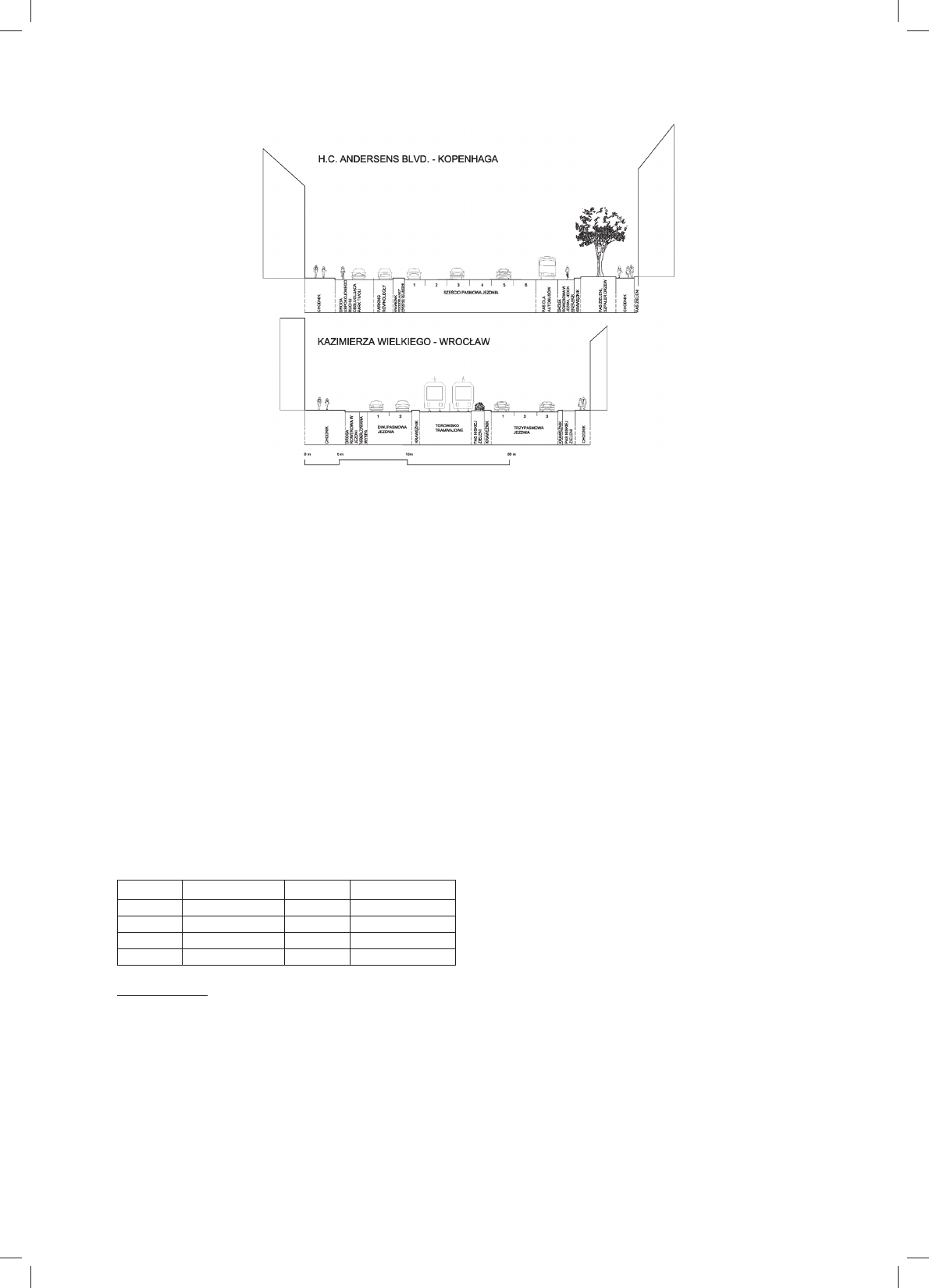
)LJ6HFWLRQVRI+DQV&$QGHUVHQ6WUHHWLQ&RSHQKDJHQDQG.:LHONLHJR6WUHHWLQ:URFáDZHGE\$àXNDV]HZLF]
,O3U]HNURMHXOLF+DQVD&$QGHUVHQDZ.RSHQKDG]HL.:LHONLHJRZH:URFáDZLXRSUDF$àXNDV]HZLF]
Tab. 3. Budget of the section for bicycle infrastructure for 2007–2014
3
7DE=HVWDZLHQLHEXGĪHWXVHNFMLQDLQIUDVWUXNWXUĊURZHURZą
w latach 2007–2014
Year %XGJHW>3/1@ Year %XGJHW>3/1@
2007 14.000 2011 2.100.000
2008 208 2012 2.200.000
2009 1.029.000 2013 2.100.000
2010 2014
2
,QWHUYLHZZLWK$UWXU:HVRáRZVNLWKH6SRUWV7RXULVPDQG5HFUH-
DWLRQ2I¿FH:URFáDZ&LW\2I¿FH
3
,QWHUYLHZZLWK'DQLHO&KRMQDFNLWKH&\FOLQJ'HYHORSPHQW6HF-
WLRQDW:URFáDZ&LW\2I¿FH
Preliminary analysis and conclusions
In order to be able to compare the examples of utility
cycling solutions applied in Copenhagen with the solutions
DSSOLHGFXUUHQWO\LQ:URFáDZRQWKHEDVLVRIXUEDQGHVLJQ
analyses similar streets were selected. As the analysis re-
gards the inner city center the streets used in the compari-
son are located downtown. Bearing in mind the differences

24 $OHNVDQGUDàXNDV]HZLF]
LQWKHGHYHORSPHQWSROLFLHVLQ&RSHQKDJHQDQG:URFáDZ
as well as the differences in approach to the general prin-
FLSOHVRIWUDI¿FRUJDQL]DWLRQWKHDQDO\VLVRIWKHVHFWLRQV
of the streets shall demonstrate the differences in the street
space management. In order to classify the streets the fol-
ORZLQJXUEDQGHVLJQFDWHJRULHVZHUHGH¿QHGZKLFKZHUH
XVHGLQIXUWKHUDQDO\VHVORFDWLRQ±FORVHSUR[LPLW\RIWKH
FHQWHUPDUNHWVTXDUHURDGFODVVLQWKHKLHUDUFK\RIURDG
QHWZRUN±PDLQURDGSUHVHQFHRIF\FOLQJLQIUDVWUXFWXUH
width. The comparison of similar street sections in the
centers of different cities is the introduction to the analysis
allowing for the detection of differences and similarities in
the structure of the cities and their urban design solutions
taking into account the cycling infrastructure. The main
streets located close to the center due to their representa-
tive and communication character were selected for this
purpose.
:LWKWKRVHDVVXPSWLRQV.D]LPLHU]D:LHONLHJR6WUHHW
in its section with the segregated bike lane was chosen
LQ:URFáDZ7KH VWUHHW PHHWLQJ WKRVH FULWHULD ZDV +DQV
Christian Andersen Boulevard which was chosen in Co-
penhagen.
The Andersen Boulevard ranks high among the streets
as it connects the very center with the south and north dis-
tricts as well as it goes right next to the market square with
WKH FLW\ KDOO7KH %RXOHYDUG LV DERXW P ZLGH WKDW LV
DERXWPZLGHUWKDQ.D]LPLHU]D:LHONLHJR6WUHHWE\WKH
Europeum Hotel. Copenhagen has a subway system which
LQWKHFLW\FHQWHUJRHVXQGHUJURXQGWKXVVDYLQJSUHFLRXV
area on the ground. The infrastructure of the street has six
ODQHVWKUHHHDFKGLUHFWLRQDVHSDUDWHODQHIRUEXVHVDQGD
wide bikeway.
The bus lane protects the cyclists against cars. On the
RWKHUVLGH RI WKHVWUHHWWKHUH LV7LYROL$PXVHPHQW 3DUN
WKDWKDVDWUDI¿FFDOPHGVHUYLFHODQHIRUERWKF\FOLVWVDQG
cars. It is separated from the roadway by a wide curb facil-
itating safe getting in the car. Additionally the service lane
provides a pull-over area for buses and a parking space
IRUFXUE SDUNLQJ,WV HQG PHUJHVWKHPDLQ WUDI¿FVWUHDP
DQGSURYLGHVDVDIHFRQQHFWLRQZLWKWKHELNHZD\)LJ
presents the street section.
7KHVWUHHW LQ:URFáDZLV VOLJKWO\GLIIHUHQW$OWKRXJK
cycling changes have been implemented relatively recent-
O\ WKH\VKRXOGJXDUDQWHHWKHPLQLPXPOHYHORI FRPIRUW
DQGVDIHW\7KHH[DPSOHRI.:LHONLHJR6WUHHWLVUDWKHU
controversial and the cycling infrastructure appeared when
the pedestrian crossing was built by the Museum Nation-
al. A bike lane was separated on the south section from
6ąGRZQLF]D6WUHHWWRĝZLGQLFND6WUHHWDWWKHH[SHQVHRI
one car lane. The bikeway was segregated from the high
VSHHGWUDI¿FE\DPHWHUZLGHSDLQWHGLVODQG7KLVLVDUDWK-
er effective solution and the drivers do not drive on it so
the cyclists are safe. More problems appear at the moment
when the bike lane ends and the cyclist must go onto the
car lane. This place is marked neither for cyclists nor for
car drivers. Cyclists either stop and wait for the cars to
drive by or go onto the lane parallel to the cars without
KDQGVLJQDOV)LJSUHVHQWVWKHVWUHHWVHFWLRQ
There is an advanced bicycle stop line at the pedestrian
crossing by the museum. This solution is very popular in
*UHDW%ULWDLQDQG,UHODQG7KHVWRSER[SURYLGHVDSODFH
WRVWRSIRUDQXPEHURIF\FOLVWVLQIURQWRIWUDI¿FOLJKWVVR
that drivers can see them. The problem with the stop box
LQ:URFáDZLVWKDWWKHF\FOLVWVGRQRWNQRZKRZWRXVHLW
7KHVWRSER[LVRIWHQFRQIXVHGZLWKWKHELNHFURVVLQJ8Q-
IRUWXQDWHO\WKDWLQYHVWPHQWGLGQRWWDNHLQWRDFFRXQWWKH
ELF\FOHWUDI¿FLQWKHRSSRVLWHGLUHFWLRQ
The analysis of that simple comparison of the street
sections connected with the information gathered during
on-site visits leads to a number of interesting conclusions.
The width of the streets is comparable. It cannot be said
WKDWLQ:URFáDZWKHUHLVQRURRPIRUF\FOLQJLQIUDVWUXFWXUH
RUWKDWWUDI¿FODQHVDUHWRRQDUURZ(YHU\WKLQJGHSHQGVRQ
JRRGZLOORIRI¿FLDOVDQGURDGHQJLQHHUV
:URFáDZKDVELJSODQVUHJDUGLQJEXLOGLQJDGHTXDWHSR-
VLWLRQRIWKHELF\FOHLQWKHWUDI¿FKLHUDUFK\7KHSUREOHPLV
LQUDLVLQJVXI¿FLHQWIXQGVIRUWKHLPSOHPHQWDWLRQRIWKRVH
plans. It is very good that the city is trying to improve its
cycling environment whenever it is possible. That invest-
ment would be much more effective and impressive for the
inhabitants if for instance it would have been made later
but on both sides of the street and all the way to the junc-
tion with Szewska Street.
This is the least invasive solution that does not disturb
the motorized space – hatched. The 1.8 m wide bikeway
was designed in the grass lane along the sidewalk. It is not
an important element due to the composition or aesthet-
LFVFKDUDFWHURIWKHSODFH7KHSHGHVWULDQWUDI¿FLVQRWWRR
heavy on the sidewalk itself as it attracts little activity and
few services. This is a self-contained solution – a compre-
KHQVLYHGHVLJQIRUWKDWVSHFL¿FURDGVHFWLRQ
:URFáDZDSSOLHVDORWRIF\FOLQJLPSURYHPHQWVKRZHY-
HUWKHNQRZOHGJHLQWKDWUHVSHFWOHDYHVPXFKWREHGHVLUHG
7KHF\FOLVWVRIWHQGRQRWNQRZWKHURDGWUDI¿FUHJXODWLRQV
DQG FDQQRW XVH WKH F\FOLQJ LQIUDVWUXFWXUH8QIRUWXQDWHO\
the city does not have funds for promotion campaigns.
Conclusion
The development of utility cycling in the city as an
important component of the city transportation system
is nothing new. Many European cities have started to de-
velop that alternative means of transportation a long time
ago. Each of the cities apply their own solutions to the
WHFKQLFDOSUREOHPVDGMXVWLQJWKHLUF\FOLQJLQIUDVWUXFWXUH
to the urban design. Some cities impose numerous restric-
tions on driving cars around the city centers by increas-
LQJWKHQXPEHURIVSHHGOLPLW]RQHVOD\LQJRXWRQHZD\
VWUHHWVDFFHVVLEOHWRF\FOLVWVGHFUHDVLQJWKHQXPEHURIFDU
SDUNLQJORWVRUE\VLJQL¿FDQWO\LQFUHDVLQJWKHFRVWRISDUN-
ing in the city center. Some cities have worked out a com-
promise including the solutions consisting in sharing the
VSDFHE\SHGHVWULDQVF\FOLVWVDQGFDUV6RPHFLWLHVRIIHU
their inhabitants such conditions that getting around by car
is simply unattractive and they choose the bicycle or pub-

7KHFRPSDUDWLYHDQDO\VLVRIVHOHFWHGF\FOLQJVROXWLRQVIURP&RSHQKDJHQDQGWKHFXUUHQWSURF\FOLQJDFWLRQVLQ:URFáDZ 25
lic transportation as it is faster, comfortable, and pleasant.
Such patterns should be followed and mistakes should not
EHUHSHDWHGLQRUGHUWRGHYHORSRXURZQPRVWHI¿FLHQWPX-
nicipal transportation system so that the inhabitants could
get around fast and comfortably.
,QVXI¿FLHQWIXQGVFUHDWHDVLJQL¿FDQWSUREOHPWKDWDS-
pears at each stage. The budget of the cycling section and
WKHEXGJHWRIWKH6SRUWV7RXULVPDQG5HFUHDWLRQ2I¿FH
which is smaller and smaller every year are evidently the
ELJJHVWSUREOHPVIRU:URFáDZRQLWVZD\WREHFRPHDEL-
cycle-friendly city. The example of Copenhagen clearly
demonstrates that the city spends huge funds on cycling
facilities which, however, in comparison with the costs of
road infrastructure or a subway system are still low. The
money spent translates into happy people, energy and time
saving as well as improved health.
:KDWLVUHDOO\VLJQL¿FDQWDERXW&RSHQKDJHQDQGHQYL-
able is that everybody there rides the bicycle, regardless
of social status, age or sex, including politicians, senior
citizens, businessmen, women with children and young
people, which is the most convincing proof of the bicycle
success.
Translated by
7DGHXV]6]DáDPDFKD
References
[1] City of Copenhagen, City of cyclists – Copenhagen bicycle life.
Environmental Administration, Copenhagen 2009.
[2] Copenhagen, City of Cyclists, Bicycle Account 2006, Copenhagen
2007.
[3] Copenhagen, City of Cyclists, Bicycle Account 2010, Copenhagen
2011.
[4] Jensen N., Larsen J.E., Cycling in Denmark – from the past into
the future, Road Directorate, Ministry of Transport, Municipality of
Copenhagen, 1989.
>@ àXNDV]HZLF]=LHOLĔVND$5RZHURZD.RSHQKDJD, Zielona Plane-
ta1R
>@ 3U]HJOąGĞUHGQLRRNUHVRZ\%LDáHM.VLĊJL.RPLVML(XURSHMVNLHMGR-
W\F]ąFHMWUDQVSRUWX]U8WU]\PDü(XURSĊZUXFKX±]UyZQR-
ZDĪRQDPRELOQRĞüGODQDV]HJRNRQW\QHQWX%UXNVHOD
>@ ZURFODZJD]HWDSOZURFODZ=DVNDNXMDF\BVXNFHVB
:URFODZVNLHJRB5RZHUXB0LHMVNLHJRKWPODFFHVV
>@ KWWSZZZNNGN%RUJHU%\2J7UD¿N&\NOHUQHV%\DVS[ DFFHVV
$QDOL]DSRUyZQDZF]DZ\EUDQ\FKURZHURZ\FKUR]ZLą]DĔ].RSHQKDJL
LDNWXDOQ\FKG]LDáDĔSURURZHURZ\FKZH:URFáDZLX
3RV]XNLZDQLHDOWHUQDW\ZQ\FKUR]ZLą]DĔWUDQVSRUWRZ\FKZPLHĞFLH
MHVWQLH]Z\NOHLVWRWQH]SXQNWXZLG]HQLDDNWXDOQHJRUR]ZRMXJRVSRGDU-
F]HJR PLDVW RUD] LFK XUEDQLVW\F]Q\FK SU]HPLDQ -HGQ\P ] UR]ZLą]DĔ
SUREOHPyZNRPXQLNDF\MQ\FKMDNLHGRW\NDMąPLDVWDDZV]F]HJyOQRĞFL
LFK]DWáRF]RQHFHQWUDMHVWUR]ZyMVLHFLURZHURZHM,VWQLHMHZLHOHPLDVW
Z(XURSLHNWyUH]DLQZHVWRZDá\ZNRPXQLNDFMĊURZHURZąLGRG]LĞ]DM-
PXMHRQLVWRWQHPLHMVFHZVWUXNWXU]HNRPXQLNDF\MQHMW\FKPLDVW:DUW\-
NXOHMDNRSU]\NáDGSU]HGVWDZLRQR.RSHQKDJĊPLDVWDZ]RUFRZHJRNWy-
UHSU]\VWRVRZDáRVLĊSU]HVWU]HQQLH GRNRPXQLNDFMLURZHURZHMZWDNLP
VWRSQLXĪHWHQĞURGHNWUDQVSRUWXSU]HMPXMHRNZV]\VWNLFKSRGUyĪ\
dziennie.
1DSRGVWDZLHDQDOL]\SRUyZQDZF]HMPLDVWLFKVSRVREyZNUHRZDQLD
SROLW\NLSU]HVWU]HQQHMLMHMHJ]HNZRZDQLDPRĪQDZ\FLąJQąüLQWHUHVXMąFH
ZQLRVNLNWyUHPRJąSU]\F]\QLüVLĊGRSRSUDZ\G]LDáDĔSU]HVWU]HQQ\FK
w polskich miastach.
: DUW\NXOH SU]HGVWDZLRQR UR]ZLą]DQLD LQIUDVWUXNWXU\ URZHURZHM
MDNLHZ\VWĊSXMąZ.RSHQKDG]HMHGQ\P]QDMEDUG]LHMURZHURZ\FKPLDVW
QDĞZLHFLH3U]\WRF]RQRUyZQLHĪRUD]SRUyZQDQRUR]ZLą]DQLDURZHURZH
MDNLHZRVWDWQLFKODWDFK]RVWDá\VWZRU]RQHZH:URFáDZLX
6áRZDNOXF]RZHrower, miasto, urbanistyka.H\ZRUGV bicycle, city, urban design