
Today we use the original name of Fontaine Vive
(Fontvive) for the abbey, as well as Grosbot. We are often
asked why there are two names, so I thought it would be
useful to set out the abbey’s early history.
First, this is a very old site. The existence of a pre-
historic dolmen in the abbey woods 500 meters away
shows this, as do the many silex that we have found in
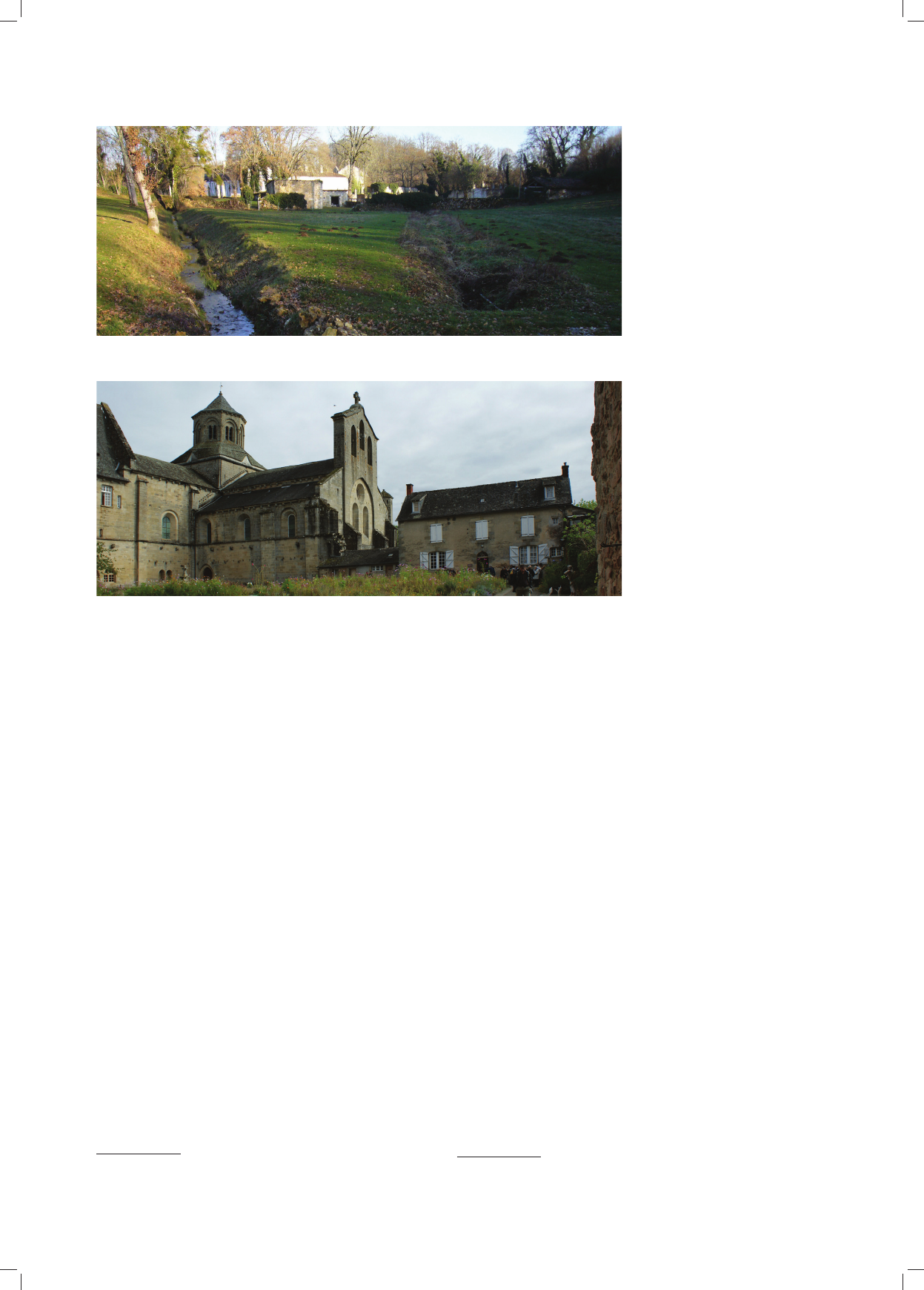
the grounds around the springs (Fig. 1). We believe it is
be cause of the existence of the springs, which rise in the
fi eld behind the abbey (marked on the cadastral plan as
Pre de la Fontaine), that an abbey was built here in the
fi rst place, and of course, the fi rst name of the abbey, in
latin, is Fontus Vivus. It should also be remembered that
in this part of South West France springs were very often
ancient places of worship that were later taken over by
Christians.
We know that in the middle of the 12
th
century the abbey
of Fontvive with its group of Benedictine or Augusti nian
canons became the Cistercian abbey of Grosbot. The usual
explanation, based on the few documents that do exist,
is that the abbey of Obazine near Tulle took over Font-
vive, made it into a daughter house, changed the name
to Gros bot and entered the Cistercian order at the same
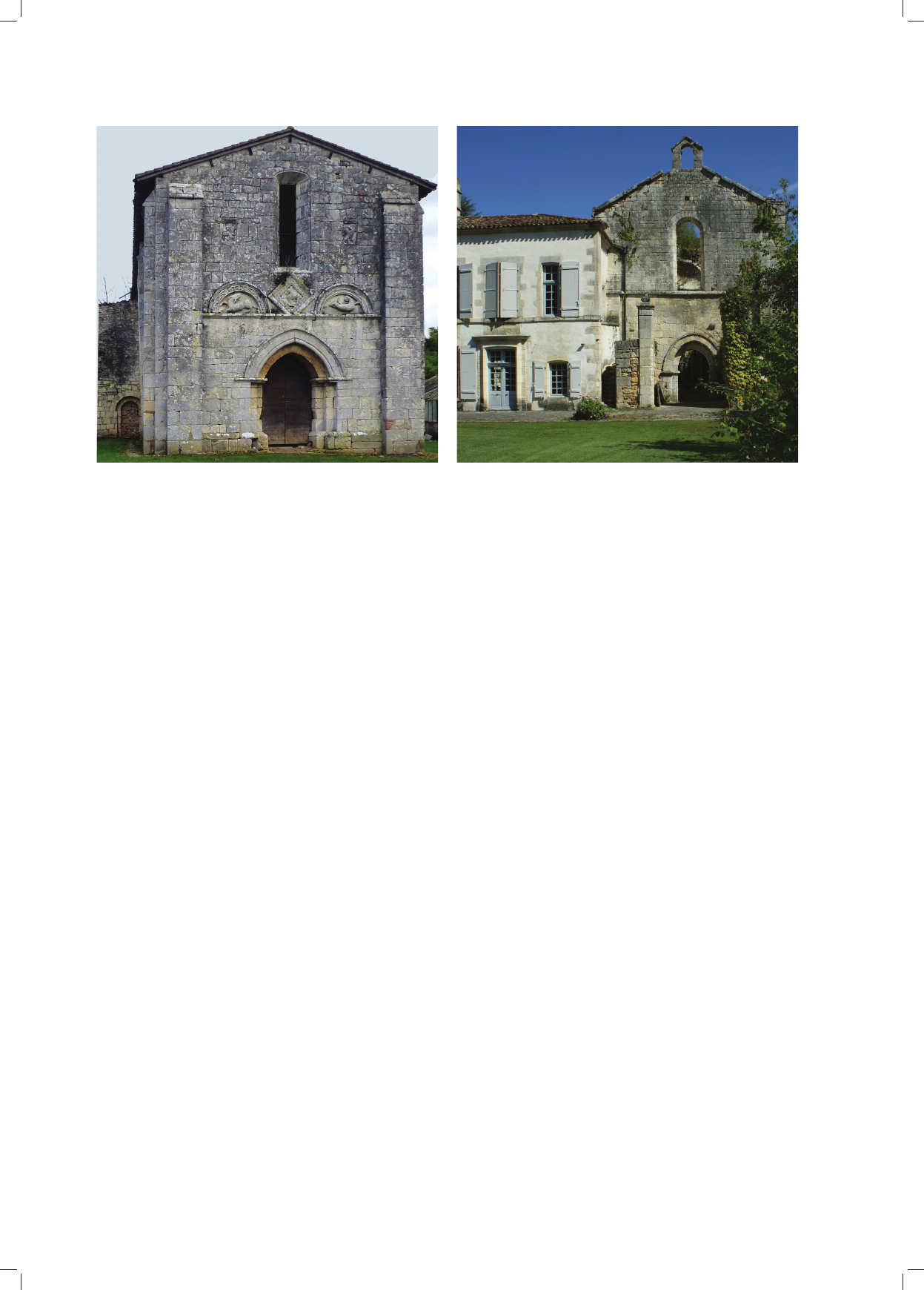
time as Obazine in 1147 (Fig. 2). However, all Cistercian
sources give 1166 [1] as the date of entry for Grosbot
into the or der. The Gallia Christiana [2], although it
says that a group of regular canons were here before the
Cistercians, lists the fi rst abbot as P., a monk from Oba -
zine, around 1150. How ever, Bernadette Barrière, who
was the Obazine expert, said that there is no mention of
Monk P. in the Oba zine archives [3]. Obazine also had
canons until they changed to monks in 1142 (hence the
date of 1142 some times being given for Grosbot becoming
2014
1(37)
DOI: 10.5277/arc140101
Ann Evans*
Początki opactwa Notre-Dame de Grosbot
The origins of the Abbey of Notre-Dame de Grosbot
W wielu opracowaniach opactwo Grosbot nazywane
jest również Fontaine Vive (Fontvive). Często więc poja-
wia się pytanie, dlaczego istnieją dwie nazwy. W artykule
tym podjęto próbę wyjaśnienia tej kwestii.
Grosbot to miejsce bardzo stare. Potwierdza to pre his-
toryczny dolmen w lesie należącym do opactwa, od da lo-
nym o 500 metrów, jak również duża liczba krze mie ni,
które zostały znalezione podczas wykopalisk ar cheo lo-
gicznych
w pobliżu źródeł (il. 1). Uważa się, że z powodu
źródła bijącego na polu za opactwem (zazna czo nego na
pierwszym planie katastralnym jako Pre de la Fontaine)
właśnie tutaj został zbudowany klasztor, a jego pierwsza
łacińska nazwa brzmiała Fontus Vivus. Należy również
pamiętać, że w tej południowo-zachodniej części Francji
źródła stanowiły starożytne miejsca kultu, które w póź-
niejszym czasie zostały przejęte przez chrześcijan.
Z dotychczasowych opracowań wynika, że w poło wie
XII w. opactwo Fontvive, zamieszkane przez bene dyk-
tynów bądź augustianów, stało się cysterskim Grosbot.
Na podstawie nielicznych istniejących dokumentów za -
zwy czaj wyjaśniane jest to w sposób następujący: opac-
two Oba zine w pobliżu Tulle przejęło zakon w Fontvive,
prze kształciło go w nową wspólnotę, a następnie zmie-
niło nazwę na Grosbot i w 1477 r. przyłączyło się do za -
konu cy stersów w tym samym czasie co Obazine (il. 2).
Jed nak że wszystkie cysterskie źródła podają rok 1166
jako datę wstąpienia zgromadzenia z Grosbot do zakonu.
Gallia Christiana [2], chociaż zawiera informację, że gru -
pa zakonników reguły augustianów była tam przed cy -
* Opactwo Fontaine Vive, Francja/Abbey of Fontaine Vive, France.
4 Ann Evans
Cistercian), so there is
no reason why an ex canon from
Obazine could not have become the abbot, but this does
not mean that Grosbot came under the jurisdiction of
Obazine at that time.
The documentary evidence for the existence of the
abbey of Fontvive is extremely sparse. According to the
historian Corlieu, the foundation took place in 975 [4]
but we do not know what proof he had of this. The fi rst
charter that does exist is dated 1121
1
when Giraud, bishop
of Angoulême, gives to Jean, abbe of Fontivive the right to
build an oratory at Luget, and also the dimes of the land
there that their sweat had already fertilized [...].
The fi rst mention of Grosbot is in the cartulary of
the abbey of Obazine [3]. There is a group of fi ve docu-
ments concerning the manse of Cordoz (near Vouzan,)
as follows:
400 1147–1148 Don par Robert de Marthon et ses
deux fi ls a l’abbe Etienne, du manse de Mas-Cordorz;
exemption de péage par les mêmes sur l’ensemble de leurs
terres, et, dans le bois de Grosbot (Grosso Bosco), don
d’un droit de pacage pour les porcs et de l’usage du bois
tant pour le chauffage que pour les autres besoins.
401 A partir de 1147–1148? Don par Robert de Gaus,
à titre de dot monastique pour sa fi lle, de tous ses broits
sur le manse de Mas_Coudour avec confi rmation par ses
deux frères et par Itier et Aiz Vigier, et d’une éminée de
terre sise près du moulin Bozoneg.
1
Charter reproduced in the “Bulletin de la Société Historique et
Archéologique de la Charente” in 1846 [5].
ster sa mi, określa pierwszego opata jako P. – Mnicha
z Oba zine około 1150 r. Warto też wspomnieć, że Ber-
na dette Barrière – znany ekspert od Obazine – twier dzi,
iż w archiwach nie istnieją żadne wzmianki dotyczące
Mni
cha P. [3]. W Obazine do roku 1142 przebywali rów-
nież księża reguły augustiańskiej. W roku tym nastąpiła ich
zmiana na zakonników (stąd data 1142 jest czasami po da-
wana jako rok, w którym Grosbot stało się cysterskie), dla -
tego też nie ma powodu, dla którego eks-ksiądz z Oba zine
nie mógłby zostać opatem. Nie znaczy to jednak, że Gros-
bot zaczęło podlegać jurysdykcji Obazine w tym czasie.
Dokumenty świadczące o istnieniu opactwa Fontvive są
wyjątkowo ubogie w informacje. Według historyka Corlieu,
do założenia klasztoru doszło w 975 r. [4], jed nakże autor
ten nie podaje żadnego dowodu na po twier dzenie powyższej
tezy. Pierwszy znany dokument dato wa ny jest na rok 1121
1
,
gdy Giraud, biskup Angoulême nada je Jeanowi, opatowi
Fontvive prawo budowy orato rium w Lu get, jak również
dziesięcinę gruntu, który już został uży źniony ich potem […].
Kolejne wzmianki dotyczące Grosbot znajdują się
w kar tulariuszu opactwa Obazine [3]. Jest tam pięć na-
stę pu jących dokumentów dotyczących plebanii Cordoz
(w po bliżu Vouzan):
400 1147–1148 Don par Robert de Marthon et ses
deux fi ls a l’abbe Etienne, du manse de Mas-Cordorz;
exemption de péage par les mêmes sur l’ensemble de leurs
terres, et, dans le bois de Grosbot (Grosso Bosco), don
1
Wydrukowano w „Bulletin de la Société Historique et Archéo lo-
gique de la Charente” w 1846 r. [5].
Il. 2. Kościół i relikty
budynku klauzury opactwa
w Obazine, 2012
(fot. E. Łużyniecka)
Fig. 2. Church and relics
of the enclosed building
of the Abbey in Obazine, 2012
(photo by E. Łużyniecka)
Il. 1. Kanały przy źródłach
w opactwie Grosbot, 2011
(fot. E. Łużyniecka)
Fig. 1. Channels at springs
in Grosbot abbey, 2011
(photo by E. Łużyniecka)

Początki opactwa Notre-Dame de Grosbot /The origins of the Abbey of Notre-Dame de Grosbot 5
402 Vers 1161–1162 Don par Ramnulfe de Vouzan et
Pétronille sa mère à l’abbé Gérauld I de tous leurs droits
sur la dime du manse de Cordoz (a titre de dot monastique)
pour Arnauld cousin de Ramnulfe.
403 Entre 1149 et Mars 1159 Don par Landric de
Vilhonneur et ses trois fi ls à l’abbé Etienne, d’un tiers de
setier de froment leur appartenant sur le manse de Cordoz.
404 A partir de 1147–1148? Don par Pierre Blancs
de Marthon d’un sixième de setier de froment lui appar-
tenant sur le manse de Cordoz.
The fi rst document (400) gives the Manse of Mas
Cordorz to Obazine and, almost as an afterthought, the
right to graze pigs in the woods of Grosbot. It is from
this donation that almost all historians have concluded
that this is how the abbey of Grosbot came into being. If
the group of documents are read as a whole it becomes
quite clear that there was a group of donations between
1147 and 1164, all to Obazine and all concerning Mas
Coudour, where obviously Obazine had a grange. Apart
from the 1147 charter, there is no mention of Grosbot,
the wood of Grosbot today is just a few hectares across
the road from the abbey, but in the early 12
th
century the
forest of Grosbot (Grossum Boscum) was huge. Even after
the clearing of the 12
th
–14
th
centuries what was left was
enough to create the fi ve forests of Horte, Dirac, Blois-
Blanc, Venil and Torsac. The rights to graze that were
given to the abbey of Obazine were non-exclusive. The
Marthon family gave rights in this forest to other abbeys,
including La Couronne, and so it would have been per-
fectly possible for the monks at Mas Coudour to graze
their animals in the forest without in any way affecting the
rights of the abbey of Fontvive.
Mas Coudour exists today. There is a large farm with
sprawling outbuildings from a mixture of periods, but
also the remains of a 12
th
century chapel. The farmer who
lived there nearly 20 years ago told me that his farm and
land had belonged to the abbey of Grosbot and that it had
originally been given to Obazine.
Very little mention is made in later descriptions of the
abbey of the territories that were owned by Fontvive at the
time of the Cistercian takeover, but careful examination
of the cartulary [6] and of the buildings themselves show
that Fontvive was already wealthy. The lack of original
documents does make it diffi cult to be sure, but the date
of confi rmation of some donations make it most likely
that the original donation predated the Cistercians. For
example, in 1212 Hughes de Lusignan confi rmed the gift
of the land of the grange of Arsac made by his great grand
father and mother, almost certainly going back to before
1166. And we already know of the grange of Luquet
because of the 1121 act.
In the early days of the order, Cistercians were not
allowed to own churches but Grosbot seemed to have
several and we can ask how many were inherited with
Fontvive. We know that Souffrignac was given to the
Fontivive canons in 1155 because of the charter. We
know that in 1231 there was a confl ict over the church of
St. Maurice in Rougnac that then belonged to Grosbot –
could this have been a pre Cistercian donation? The church
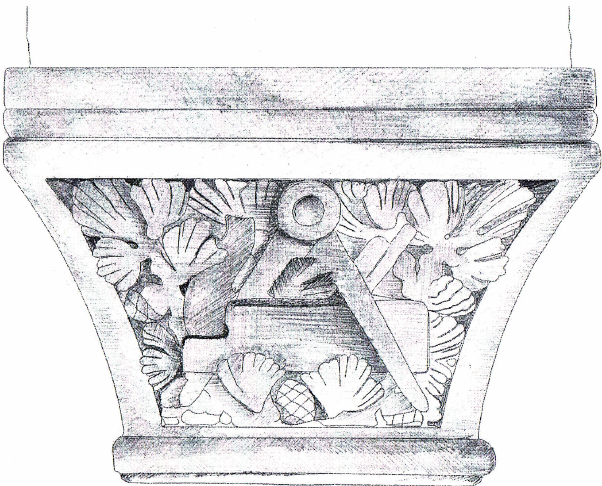
of St. Etienne at Olerat (Fig. 3) near to La Rochefoucauld
d’un droit de pacage pour les porcs et de l’usage du bois
tant pour le chauffage que pour les autres besoins.
401 A partir de 1147–1148? Don par Robert de Gaus,
à titre de dot monastique pour sa fi lle, de tous ses broits
sur le manse de Mas_Coudour avec confi rmation par ses
deux frères et par Itier et Aiz Vigier, et d’une éminée de
terre sise près du moulin Bozoneg.
402 Vers 1161–1162 Don par Ramnulfe de Vouzan et
Pétronille sa mère à l’abbé Gérauld I de tous leurs droits
sur la dime du manse de Cordoz (a titre de dot monastique)
pour Arnauld cousin de Ramnulfe.
403 Entre 1149 et Mars 1159 Don par Landric de
Vilhonneur et ses trois fi ls à l’abbé Etienne, d’un tiers de
setier de froment leur appartenant sur le manse de Cordoz.
404 A partir de 1147–1148? Don par Pierre Blancs de
Marthon d’un sixième de setier de froment lui appartenant
sur le manse de Cordoz.
Na mocy pierwszego dokumentu (400) w latach 1147–
1148 klasztor w Obazine otrzymał plebanię Mas Cordoz oraz
prawo do wypasu świń w lasach Grosbot. To właśnie dzięki
tej darowiźnie, jak twierdzi większość historyków, doszło
do powstania opactwa Grosbot. Lektura tych do ku mentów
w całości pozwala na wniosek, że było kilka da rowizn
pomiędzy rokiem 1147 a 1164, wszystkie dla opac twa Obazine
i wszystkie dotyczące Mas Coudur, gdzie oczywiście Obazine
miało folwark. Oprócz dokumentu z 1147 r. nie istnieje żadna
wzmianka na temat Grosbot. Dzisiejszy las Grosbot to obszar
kilku hektarów po drugiej stronie drogi wiodącej z opactwa,
jednak w początkach XII w. las Grosbot (Grossum Boscum)
był ogromny. Nawet po procesie trzebienia, który trwał od
XII do XIV w., to co pozostało, wystarczyło do utworzenia
pięciu lasów, a mia nowicie Horte, Dirac, Blois-Blanc i Tor-
sac. Prawa do wy pasu, które zostały nadane klasztorowi
z Obazine, nie stanowiły wyłączności. Rodzina Marthonów
udzieliła pra wa do lasu w Grosbot również opactwu z La
Couronne oraz mnichom z Mas Coudour. Mogli oni bez
problemów wypasać swoje zwierzęta w tym lesie.
Miejscowość Mas Coudour istnieje do dzisiaj. Jest tam
ogromna farma z rozciągającymi się przybudówka mi
z różnych okresów, jak również pozostałości XII-wiecz -
nej kaplicy. Rolnik, który mieszkał tam prawie 20 lat temu,
powiedział nam, że jego gospodarstwo i ziemia należa ły do
opactwa Grosbot i pierwotnie zostały przekazane Obazine.
Istnieją bardzo nieliczne wzmianki w późniejszych opi-
sach opactwa dotyczące terytoriów, które były włas noś cią
Fontvive podczas przejęcia przez cystersów. Do kład ne
badania kartulariusza [6] oraz samych budynków wska-
zują, że klasztor Fontvive już wtedy był bogaty. Brak ory-
gi nalnych dokumentów utrudnia niestety potwierdze nie
tego wniosku. Daty mówiące o niektórych darowiznach
czy nią jednak prawdopodobnym to, iż pierwotna da ro -
wiz na pochodziła z czasów przedcysterskich. Na przyk-
ład, w roku 1212 Hughes de Lusignan potwierdził fakt
da rowania ziemi farmy Arsac dokonanej przez swego pra-
dziadka i prababkę, co prawie na pewno nastąpiło przed
rokiem 1166. Posiadamy już informacje na temat istnienia
farmy Luquet z treści ustawy z roku 1121.
W początkach istnienia zakon cystersów nie mógł być
właścicielem kościołów, jednakże opactwo w Grosbot dys -
ponowało kilkoma świątyniami, dlatego zasadne wy da -
6 Ann Evans
belonged to Grosbot until it was swapped with the canons
of La Rochefoucauld in 1274 for the church at Cherves.
It is obviously a non Cistercian building with its wonderful
facade decorated with animals, probably dating from the
early 12
th
century.
For a long time it was not clear whether the original
abbey of Fontvive was on the same site as the later
abbey of Grosbot, but the springs, the fact that we fi nd
10/11
th
century pottery shards here and the archaeological
analysis of the buildings themselves have removed any
doubt. We know that Giraud, the bishop of Angoulême
built a church for the canons of Fontvive around 1125
(Fig. 4) and it would have been necessary to do a certain
amount of rebuilding for it to comply with Cistercian
building regulations. In particular, the chapter house
would probably have needed to be built.
What actually happened, we will probably never know,
but like most things, the reason is very likely political.
The Bishop of Angoulême, between 1148 and 1158,
Hughes II de la Rochefoucauld was of the same family
as the Marthon family, benefactors to both Fontvive and
Gros bot. By this time the Cistercian order had grown so
powerful that the fi rst Cistercian pope was in the Vatican
so it is easy to imagine that Hughes encouraged the Cis-
tercian take over of Fontvive, and so it became Notre
Dame de Grosbot.
je się pytanie, ile z nich zostało odziedziczonych przez
Fon tvive. Z dokumentu wynika, że Souffrignac został po -
darowany księżom w Fontvive w 1155 r. Wiadomo rów-
nież, iż w 1231 r. istniał konfl ikt dotyczący kościoła pod
wezwaniem Saint Maurice w Rougnac, który wówczas
na leżał do Grosbot. Czy mogła to być darowizna przeka-
za na przed cystersa mi? Kościół Saint Etienne w Olerat
(il. 3) w pobliżu La Rochefoucauld należał do Grosbot
do cza su zamiany z księżmi La Rochefoucauld na kościół
w Cherves w 1274 r. Z pewnością nie jest to budynek
cysterski i prawdopodobnie pochodzi z początku XII w.;
posiada on piękne fasady ozdobione zwierzętami.
Przez długi czas nie było jasne, czy pierwotne opactwo
Fontvive znajdowało się w tym samym miejscu co póź-
niejsze opactwo Grosbot, jednakże źródła oraz to, że
w czasie badań archeologicznych znaleziono tam fragmen-
ty naczyń ceramicznych, jak również archeologiczna ana-
li za samych budynków rozwiały wszelkie wątpliwości.
Wia domo, że Giraud, biskup Angoulême, wybudował koś -
ciół
dla księży Fontvive około 1125 r. (il. 4), ale konieczna
była pewnego rodzaju przebudowa, aby dostosować budy-
nek do regulaminu cystersów. W szczególności konieczna
była prawdopodobnie budowa kapitularza.
Jak tak naprawdę wyglądały początki opactwa, tego chy-
ba nigdy się nie dowiemy, jednak jak to zazwyczaj bywa,
przy czyna zmian była prawdopodobnie związana z polityką.
Bis kup Angoulême między rokiem 1148 a 1158 – Hughes II
de la Rochefoucauld – pochodził z tej samej rodziny co
Marthonowie – dobroczyńcy zarówno Fontvive, jak i Gros-
bot. W tym czasie zakon cystersów stał się tak potężny, że
papieżem w Watykanie został przedstawiciel tego właśnie
zgromadzenia, dlatego łatwo sobie wyobrazić sytuację,
w któ rej Hughes zachęcał zakonników do prze jęcia Font-
vive, które w ten sposób stało się Notre-Dame de Grosbot.
Tłumaczenie
Bogusław Setkowicz
Il. 3. Elewacja zachodnia kościoła w Olerat, 2012 (fot. A. Evans)
Fig. 3. Western facade of the church in Olerat, 2012 (photo by A. Evans)
Il. 4. Elewacja zachodnia kościoła w Grosbot, 2012
(fot. E. Łużyniecka)
Fig. 4. Western facade of the church in Grosbot, 2012
(photo by E. Łużyniecka)

Początki opactwa Notre-Dame de Grosbot /The origins of the Abbey of Notre-Dame de Grosbot 7
Bibliografia /References
[1] Janauschek P., Leopoldus Originum Cistercienum Tomus 1, Vindo-
bonae 1877 [Republished 1964 Gregg Press].
[2] Gallia Christiana, t. 2, col. 454–455 (1049–1050).
[3] Le Cartulaire de l’abbaye cistercienne d’Obazine: XII
e
–XIII
e
s.,
B. Barrière (ed.), Université de Clermont-Ferrand II, Clermont-
-Ferrand 1989.
[4] [receuil en forme] Histoire de ce qui se trouve escrit de la ville et des
comtes d’Angoulême, J.H. Michon (ed.), Paris 1846, 17 [la fondation
aurait en lieu vers 975].
[5] „Bulletin de la Société Historique et Archéologique de la Charente”
1846, pp. 121, 197–198.
[6] Abbaye cistercienne Notre Dame De Grosbot, Recueil de texte
(1121–1791), Etabli par M. Larigauderie-Beijeaud, Asso ciation pour
la Sauvegard et l’Etude du Patrimoine Religieux de la Charente,
1998.
Streszczenie
W artykule zostały przedstawione dotychczasowe poglądy na temat początków opactwa, które powstało niedaleko wsi Grosbot. Pierwsza nazwa
opactwa Fontus Vivus (Żywe źródło) związana była z położeniem siedziby przy źródłach. Uważa się, że w tym miejscu od około 975 r. istniała
siedziba benedyktynów lub augustianów, do dziś nie zachowały się jednak dokumenty poświadczające ten fakt. Na istnienie osadnictwa w tym
miejscu mogą wskazywać natomiast fragmenty ceramiki z X–XI w., odkrywane przez archeologów. Nie wiadomo także dokładnie, kiedy siedziba
została przekazana cystersom. Obecnie uważa się, że stało się to w 1142 lub 1147 r., gdy cysterskie opactwo w Obazine przejęło tereny przy źródle.
Wówczas zmieniono także nazwę na Grosbot. Nadal jednak istnieje wiele wątpliwości dotyczących początków opactwa. Wymagają one wyjaśnienia.
Słowa kluczowe: Notre-Dame de Grosbot, opactwo, cystersi, geneza
Abstract
The article presents the current views on the origins of the abbey which was built in the vicinity of Grosbot village. The fi rst name of the abbey, i.e.
Fontus Vivus (Living Source or Spring) was connected with its location near springs. It is believed that since about 975 at that place there was a seat
of Benedictines or Augustinians, however, there are no documents which would prove this fact. On the other hand, the existence of settlements in
this area might be indicated by the 10
th
and 11
th
-century pottery shards discovered by archaeologists. It is not know exactly when the seat in Fontus
Vivus was given to Cistercians. Nowadays, it is believed that it took place in 1142 or 1147 when the Cistercian abbey in Obazine took over the lands
near the springs. Then the name of the place was changed to Grosbot. However, there are still many doubts with regard to origins of the abbey. They
require an explanation.
Key words: Notre Dame de Grosbot, abbey, Cistercians, origins
Rys. Michał Szewczyk
Drawn by Michał Szewczyk