
2018
4(56)
DOI: 10.5277/arc180407
Cezary Głuszek*
Waloryzacja murowo-ziemnych obiektów pofortecznych
– tło problemu
The valuation of the wall-earth fortress facilities
– background of the problem
Ochrona dziedzictwa architektonicznego to przede
wszystkim zachowanie dawnych obiektów jako „doku-
mentów przeszłości”. Jednakże coraz częściej warunkiem
sine qua non zachowania i przetrwania zasobu jest wpro-
wadzenie do historycznych obiektów współczesnych funk-
cji
i – co się z tym wiąże – niezbędnego wyposażenia tech
nicznego i uzupełnienia struktur budowlanych. Ingerencje
w zabytkową substancję są zawsze trudne i z reguły po-
trzebują kompromisowych rozwiązań. Ten aspekt wyma-
ga metodycznego podejścia do wszelkich działań konser-
watorskoinwestycyjnych, aby uniknąć nieusuwalnych
błędów. Podstawą ich rozpoczęcia jest obiektywna walo-
ryzacja istniejących obiektów, ich autentyzmu, stopnia
zachowania itp. Kryteria wartościowania najczęściej są
odmienne dla różnych kategorii obiektów.
Fortyfikacje, a zwłaszcza fortyfikacje nowożytne skła-
dające się ze struktur ziemnych i murowych są wyróżniają-
cą się grupą zabytków. Ziemne formy obronne występowa-
ły od zaw sze, były naj prostsze, najtańsze w wykonaniu,
a budulec łatwo dostępny. Wzmacniano je elementami
drewnianymi i murowymi (palisady, mury obronne itd.) –
używając głównie jako przegrody. Od antyku po czasy no-
wożytne równolegle stosowano mury – droższe, lecz często
skuteczniejsze i odporniejsze na atak tradycyjnymi środka-
mi (lekka broń miotająca jak łuki, oszczepy, faszyna do za-
sypywania rowów itp.). Wynalezienie i wprowadzenie arty-
lerii zaczęło zmieniać proporcje używanych materiałów.
The protection of architectural heritage primarily means
the preservation of old structures as the “documents of the
past”. However, more and more often the introduction of
modern functions and consequently the necessary techni-
cal infrastructure in historic structures as well as the im-
provement of those structures is a sine qua non condition
of the preservation and survival of some architectural as-
sets. The interventions in their original fabric are always
difficult and as a rule they require some compromise. This
in turn requires a methodical, conservation approach to all
conservation and investment operations in order to avoid
irreversible mistakes. They should be based on an objec-
tive valuation of the existing structures, their authenticity,
degree of preservation, etc. The criteria of valuation are
usually different for different categories of structures.
Fortifications, especially early modern fortifications
with wallearth defensive works, are a distinctive groups
of historic monuments. Defensive earthworks have always
been used – they are the simplest, the cheapest to build and
the building material has always been readily available.
They were reinforced with timber and wall elements (pali-
sades, defensive walls, etc.) – used mainly as barriers. The
walls – more expensive yet often more effective and more
durable against the attacks with the use of traditional
means (light ranged weapons, such as bows, spears, fas-
cine for revetting trenches, etc.) were equally popular from
the antiquity to the early modern times. The invention and
application of artillery started a change in the proportions
of the materials used in the construction of fortifications.
Along with the development of means of attack, earth-
works started to dominate again in fortifications since the
* Wydział Architektury Politechniki Warszawskiej/Faculty of Ar
chitecture, Warsaw University of Technology.

80 Cezary Głuszek
W miarę rozwoju środków ataku od XIX w. w fortyfika-
cjach ponownie zaczęły dominować formy ziemne.
W twierdzach fortowych na przełomie XIX i XX w. realizo-
wano dzieła o dużej powierzchni – do kilkunastu hektarów
umocnień terenowych. Ówczesne dzieła to obwa łowania
(jako przeszkody, osłony oraz stanowiska dla piechoty i ar-
tylerii) z umieszczonymi pod powierzchnią obiektami mu-
rowymi służącymi jako ukrycia dla żołnierzy, magazyny
amunicji i broni. Dalszy rozwój siły niszczącej środków
ataku (nowoczesnych dział o dużych kalibrach i nowocze-
snych materiałów wybuchowych) wymusił konieczność
wprowadzania pod powierzchnię większej liczby ukryć,
znacznie już odporniejszych – betonowych i żelbetowych.
Na zewnątrz dominowały wyraźnie formy obwałowań.
Niestety dzieła ziemne, jako mniej odporne na warunki
atmosferyczne niż murowe, dość szybko traciły wyrazi-
stość narysów i profili. Z tego powodu do czasów współ-
czesnych przetrwały najczęściej w stanie niezbyt czytel-
nym. Przy obecnym stopniu i stanie zachowania oraz
parciu inwestycyjnym na te tereny ich użytkowanie staje
się czaso i kosztochłonne. Wymagają restauracji, a naj-
częściej odtwarzania. Z reguły niezbędne jest również
wprowadzenie pomiędzy (lub do wewnątrz) zachowane
relikty współczesnych elementów inwestycyjnych o róż-
nym stopniu intensywności – w zależności od wartości
istniejących autentycznych struktur.
Identyfikacja zasobu
Formy ziemne przysparzają znacznych problemów
konserwatorskich, będąc ze swojej natury zdecydowanie
bardziej podatne na uszkodzenia i zniekształcenia czy też
zniszczenia – generując znaczne problemy z identyfikacją
zachowanych struktur.
Wartościowanie tych umocnień często wiąże się z pro-
blemem ich małej czytelności, co wynika m.in. z zara-
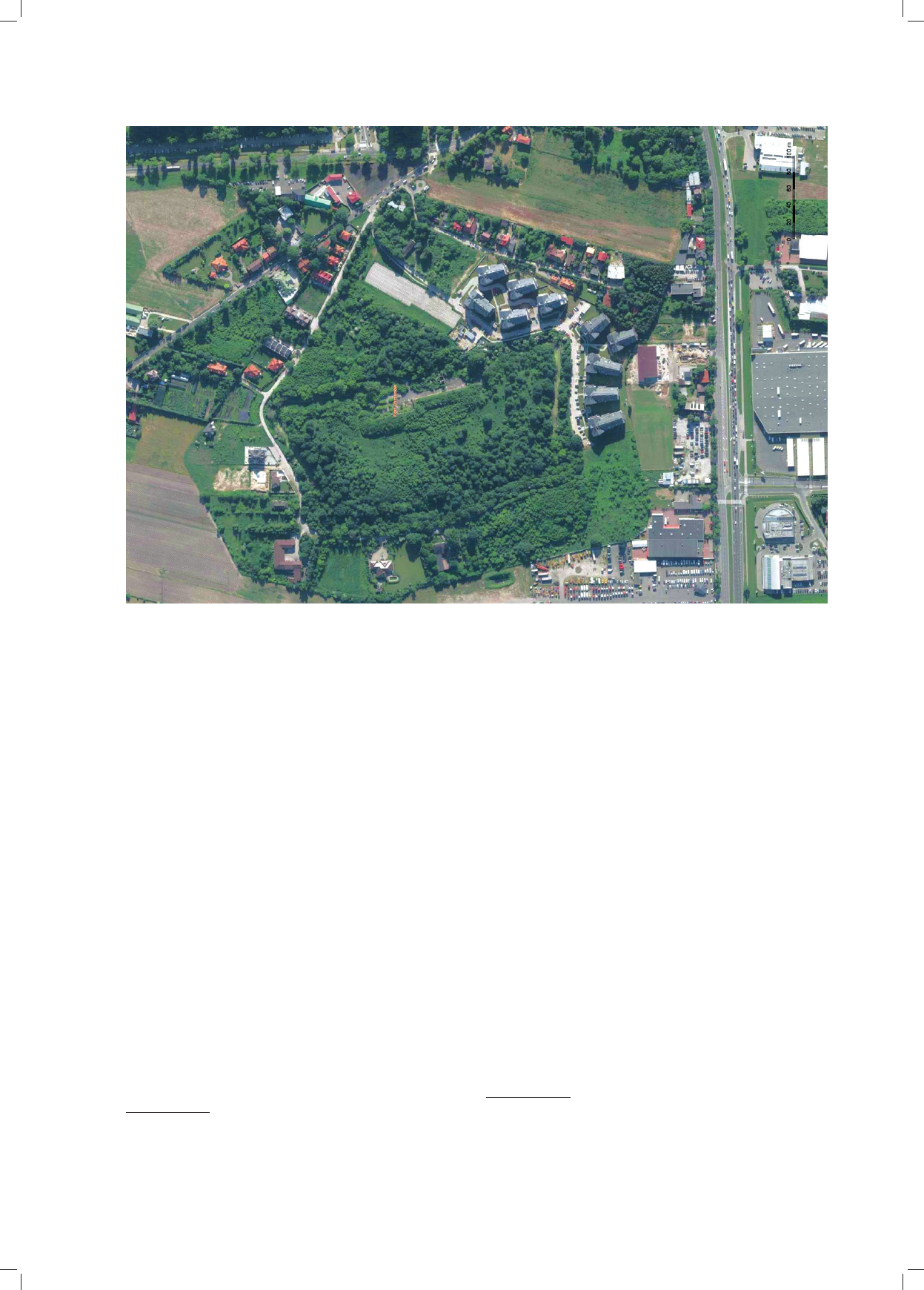
stania powierzchni zielenią inwazyjną uniemożliwiającą
ogląd obiektu i jego elementów. W tej trudnej sytuacji
z pomocą przychodzą współczesne techniki fotograme-
trii oraz teledetekcji oferujące źródła danych pozyskiwa-
nych z pułapu lotniczego i naziemnego. Jednym z istot-
niejszych narzędzi jest System Informacji Przestrzennej
(Geographical Information System – GIS). GIS jest syste-
mem zintegrowanych technik umożliwiającym nie tylko
gromadzenie i przetwarzanie danych, lecz również przy-
gotowywanie analiz. Ze względu na różnorodność obiek-
tów, ich rozmiarów, kształtu, położenia oraz środowiska
(otoczenia), w jakim się znajdują, niezbędne jest najczę-
ściej operowanie danymi uzyskanymi z użyciem różnych
technik fotogrametrycznych. Uzyskane dokumentacje fo-
togrametryczne są gromadzone głównie w bazach 3D GIS
jako bazy systemów informacji przestrzennej, tworzone
dla konkretnych obiektów dziedzictwa kulturowego wraz
z otaczającymi terenami. W ten sposób powstają archiwa
wiedzy dla specjalistów zajmujących się ochroną i kon-
serwacją zabytków
1
. Współczesne, zaawansowane tech-
1
Jedno z archiwów cyfrowych wykorzystujących takie dane ist-
nieje w Państwowym Muzeum Archeologicznym w Warszawie.
19
th
century. They included large defensive works, cover-
ing up to a dozen or so hectares of field works which were
built in forts at the turn of the 19
th
and 20
th
centuries, such
as earthworks (obstacles, shields, and positions for infan-
try and artillery) with underground wall facilities which
served as covers for soldiers, warehouses for munition
and weapons. The further development of the destructive
power of the means of attack (modern big caliber cannons
and explosives) necessitated the introduction of more and
more underground hiding places which would be stronger
and made of concrete as well as rebarreinforced concrete.
The external defensive facilities were evidently domi
nated by earthworks.
Unfortunately, earthworks, being less resistant to the el-
ements than wallworks, lost their layouts and profiles rath-
er quickly. That is why most of their original examples
have now unclear layouts. With their current degree of
preservation, on the one hand, and the investment pressure,
on the other hand, their use is timeconsuming and expen-
sive. They need restoration and often rebuilding. In gener-
al, it is also necessary to introduce modern investment ele-
ments of various intensity degree – depending on the value
of the existing, authentic structures – between the original
relics (or from inside).
Identification of assets
Earthworks, being in their nature much more prone to
damage and deformation or destruction – generating seri-
ous problems with identification of original structures –
cause a lot of conservation problems.
The valuation of those defensive works is often con-
nected with the problem of their poor clarity, which re-
sults among others from their surfaces overgrown with
plants which makes it impossible to see the facilities and
their elements. These difculties can be dealt with the use
of modern photogrammetry and remote sensing which
provide data collected from the air and on the ground.
One of the most useful tools in this area is the Geographic
Information System (GIS) which is a system of integrated
techniques employed to gather and process data as well
as to prepare analyses. Due to the complexity of defen-
sive facilities, the their size, shape, location, and their sur-
roundings (environment), it is usually necessary to handle
data collected with the use of various photogrammetric
techniques. The photogrammetric documentations are
gathered mainly in 3D GIS as spatial information system
bases created for specic items of cultural heritage with
the areas around them. This is how archives of knowl-
edge for the specialists dealing with the protection and
conservation of historic monuments are developed
1
. The
modern, technologically advanced remote sensing tools
provide highly precise data to be used in connections with
readily available software to generate multicriteria spa-
tial analyses and faithfully render the topography of the
terrain (including green areas – with the use of remote
1
One of the digital archives that use such data operates at the
National Museum of Archeology in Warsaw.
Waloryzacja murowo-ziemnych obiektów pofortecznych/The valuation of the wall-earth fortress facilities 81
nologicznie narzędzia teledetekcji dostarczają opracowa-
nia o dużej dokładności, co w powiązaniu z dostępnością
oprogramowania do wykonywania wielokryterialnych
analiz przestrzennych umożliwia dokładne odtworzenie
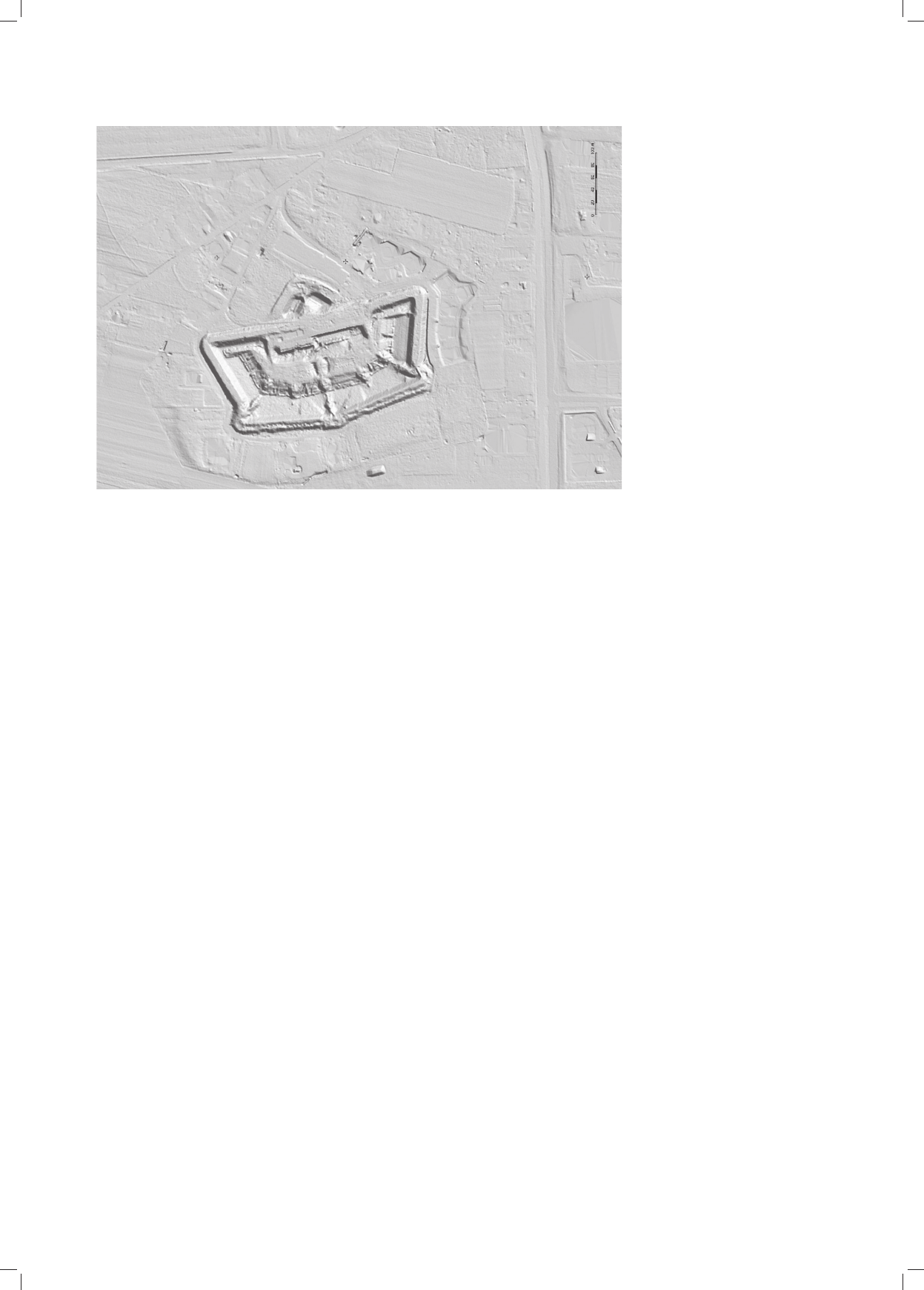
topograi terenu (również ukrytej w zieleni – dzięki tech-
nologii teledetekcji zdalnej LiDAR) wraz z pokryciem.
Dzięki temu możliwe staje się również stworzenie trój-
wymiarowych modeli zabytkowych budowli architek-
tonicznych znajdujących się na powierzchni terenu oraz
cech przestrzennych innych obiektów ważnych dla dzie-
dzictwa kulturowego
2
[1] (il. 1, 2).
Wartościowanie zabytków
podstawą działań konserwatorskich
Ochrona obiektów zabytkowych opierała się dotych
czas na zasadzie ich równocenności, a tym samym – na
stoso wa niu uniwersalnych rygorów ochrony – nie
uwzględ nia jących indywidualnych wartości zabytko-
wych
3
. W kon sek wencji nie różnicowano granic do-
puszczalnych ingerencji adaptacyjnomodernizacyjnych
2
Powyższe zagadnienia były przedmiotem rozważań na konferen-
cji „Cyfryzacja w naukach o przeszłości i ochronie zabytków – analiza
potencjału i zagrożeń” 24 listopada 2015 r. w Warszawie.
3
Zagadnienia wartościowania opracowano z wykorzystaniem [2,
s. 43–48].
sensing technology LiDAR). Additionally, it is possible
to generate threedimensional models of historic architec-
ture located on the ground as well as spatial features of
other objects crucial for cultural heritage
2
[1] (Fig. 1, 2).
Valuation of historic monuments
as a basis for conservation
Previously, the protection of historic structures was
based on the principle of their equal value, and as such, on
the application of universal protection provisions which
do not take into account the varied historic values
3
. Con-
sequently, the admissible constraints for conversion and
modernization interventions were the same for their dif-
ferent categories. A historic monument was considered
to be an enclosed and unchangeable form which does not
undergo any developmental transformations. Nowadays,
the approach to architectural heritage allows for modern
interventions in historic structures in order to adjust to the
changing functional and technical requirements.
2
Those issues were the topic of the discussions at the conference
titled “The digitalization in the sciences of the past and the protection of
historic monuments – analysis of the potential and threats” November
24, 2015 in Warsaw.
3
The issues of valuation have been studied with the use of [2,
pp. 43–48].
Il. 1. Fort IV Chrzanów w Warszawie, widok z góry – zieleń przesłania formę fortu (źródło: www.geoportal.gov.pl [data dostępu: 30.12.2017])
Fig. 1. Fort IV Chrzanów in Warsaw, bird’seye view – green screens off the forms of the fort
(source: www.geoportal.gov.pl [accessed: 30.12.2017])
82 Cezary Głuszek
dla ich odrębnych kategorii. Zabytek traktowano jako
formę zamkniętą, niezmien ną – niepodlegającą proce-
sowi przekształceń rozwojowych. Obecne podejście do
dziedzictwa architektonicznego dopuszcza współczesne
ingerencje w historyczne struktury, w celu dostosowania
do ewoluujących wymogów funk cjonalnotechnicznych.
Niewiele obiektów architektury zachowuje swój pier-
wotny stan. Architektura stopniowo ewoluuje – zwykle
w wyniku zmieniających się form życia jednostek i społe-
czeństw oraz rozwoju poglądów estetycznych. Nie usta jącej
„modernizacji” są poddawane ich struktura materialna
i wartości niematerialne. Szeroko pojmowana ar chitektura
tworzy ramy przestrzenne faktów i wydarzeń. Wydarzeń
społecznych, kulturalnych, religijnych i politycznych
o wadze lokalnej, narodowej i ponadnarodowej – utrwa-
lanych w zbiorach historycznych i w pamięci społecznej
[3, s. 65, 66].
Impulsem do zmian najczęściej staje się
konkretne zapotrzebowanie społeczne, zwykle o zabar-
wieniu ludzkim lub politycznym, pojawiające się bezpo-
średnio po istotnym wydarzeniu lub po jakimś czasie. Jak
zauważył prof. Andrzej Tomaszewski: W ten sposób za-
bytek architektury, który tworzył ramy przestrzenne wyda-
rzenia, był jego niemym świadkiem, uzyskuje nowy wy-
miar wartości upamiętniającej, wykazuje tendencję do
wychwytywania danego momentu historycznego z prze-
szłości i uwidoczniania go tak wyraziście, jakby należał
do teraźniejszości. Ikonologiczna interpretacja tych prze-
mian wydobywa wartość upamiętniającą każdej zmia-
ny formy i funkcji. […] Wiedza o wartościach zabytków
i umiejętność wartościowania jest ważnym narzędziem
ich ochrony. Niejednokrotnie, jedynie świadomość warto-
ści obiektu/zespołu uruchamia społeczne zaintereso
wanie i przekonanie o konieczności ochrony, nawet w naj-
trudniejszych warunkach – powodzi, pożarów, wojen [3,
s. 65, 66].
O niedostatkach w rozwiązywaniu współczesnych pro-
blemów wartościowania Bogumiła Rouba wypowiada się
Few architectural structures maintain their original form
unchanged. Architecture evolves gradually – usually as a re-
sult of changing lifestyles of individuals and societies as
well as the development of aesthetics. Their tangible struc-
ture and intangible values are being constantly “modern-
ized”. In its broad sense, architecture provides a spatial
framework for facts and events. Social, cultural, religious
and political events which are of local, national and supra
national significance – recorded in historic assets as well
as in social memory [3, pp. 65, 66].
Most frequently, an
impulse for changes comes from some specific social need,
usually human or political in its nature that emerges direct-
ly after some important event or sometime later. As Pro
fessor Andrzej Tomaszewski mentioned: This way a his-
toric monument which provided a spatial framework for
some event was its passive viewer, acquires a new aspect of
commemorative value, demonstrates the ability to capture
a specific historic moment from the past and exposes it so
clearly as if it belonged to the present. The iconological
interpretation of those changes brings out the commemo-
rative value of every change to the form and function. […]
The knowledge of the values of historic monuments and
the ability to valuate them is an important tool to protect
them. Frequently, being aware of the value of an asset/
compound is enough to initiate social interest and become
convinced of the necessary protection even in the most dif-
ficult conditions – floods, fires, wars [3, pp. 65, 66].
Bogumiła Rouba said the following about the ineffec-
tiveness of the solutions to the current problems of valua-
tion: […] there is for instance no pattern assigning an
order or a sequence of analyzing individual values and
there is no simple grading scale for the values to “see”
a historic monument more closely against other ones rep-
resentative of the same or similar group of objectives of
the protection of historic monuments [4, p. 203]. The au-
thor distinguishes two groups of valuation objectives –
social and practical ones. Social objectives are connected
Il. 2. Fort IV Chrzanów
w Warszawie, widok z góry
– formy fortu czytelne,
zdjęcie w technologii LiDAR
(źródło: www.mapy.zabytek.gov.
pl/nid [data dostępu:
30.12.2017])
Fig. 2. Fort IV Chrzanów
in Warsaw, bird’seye view
– the forms of the fort are readable,
photo in Lidar technology
(source: www.mapy.zabytek.gov.
pl/nid [accessed: 30.12.2017])

Waloryzacja murowo-ziemnych obiektów pofortecznych/The valuation of the wall-earth fortress facilities 83
następująco: […] jest brak choćby podstawowego sche-
matu narzucającego porządek i kolejność analizowania
poszczególnych wartości oraz najprostszej choćby skali
ocen wartości, pozwalającej dokładniej „zobaczyć” za-
bytek na tle innych, reprezentujących tę samą lub podob-
ną grupę celów ochrony zabytków [4, s. 203]. Autorka
wyróżnia dwie grupy celów wartościowania – społeczne
i praktyczne. Cele społeczne wiążą się przede wszystkim
z funkcjami pełnionymi przez zabytki m.in. kulturotwór-
czą, edukacyjną, ekonomiczną, propagatorską. Cele prak-
tyczne to wprowadzanie nowoczesnego podejścia do wie-
dzy o zasobach składających się na nasze dziedzictwo,
usprawnianie procedur ochrony, podejmowanie decyzji
służących bezpośrednio praktyce konserwatorskiej [4,
s. 203, 204].
Intensywne dyskusje o wartościowaniu trwają od kilku
lat i doprowadziły do wyodrębnienia znaczących grup
wartości materialnych i niematerialnych, retrospektyw-
nych i prospektywnych, konserwatorskich i pozakonser-
watorskich
4
. Zasób grup jest tak rozległy, że obecnie
istotnym problemem staje się przyporządkowanie odpo-
wiednich wartości poszczególnym kategoriom dziedzic-
twa architektonicznego – jeśli mają mieć praktyczne
i skuteczne znaczenie konserwatorskie i projektowe.
Wstępne analizy zagadnienia upoważniają do autorskiego
wyodrębnienia wartości mających zastosowanie w odnie-
sieniu do obiektów pofortecznych:
A. Cechy obiektu jako dokumentu przeszłości:
– autentyzm (w tym autentyzm funkcji),
– integralność form.
B. Wartości podlegające ocenie:
1. Retrospektywne – zabytkowe (istotne z punktu
widzenia ochrony konserwatorskiej):
– wartość historyczna,
– wartość naukowa,
– wartość artystyczna,
– wartość genius loci.
2. Prospektywne – współczesne i przyszłe (istotne
z punktu widzenia wykorzystania obiektu):
– wartość użytkowa,
– wartość ekonomiczna,
– wartość edukacyjna/poznawcza,
– wartość społeczna,
– wartość polityczna.
Nawet wstępne uznanie wartości obiektu za zabytko
we implikuje objęcie go analizą konserwatorską. Należy
ziden tyfikować elementy obiektu lub ich wyróżniają
ce się cechy indywidualne (szczególne) na tle całego za
ło żenia. Wartości szczególne mogą dotyczyć elementów
w skali detalu, obiektu, a nawet twierdzy jako całości – ze
względu na:
– wysoki stopień zachowania pierwotnych cech w po-
równaniu z innymi podobnymi lub powtarzalnymi,
– unikatowość – obiekt lub element jest jedynym
w swoim rodzaju zrealizowanym bądź zachowanym,
4
Zagadnienie to jest tematem intensywnych rozważań konserwa-
torskich od dawna, m.in. w kontekście atrybutów i nośników wartości
szerzej charakteryzowali je: Bogusław Szmygin [5, s. 187–196], Janusz
Krawczyk [6, s. 139–146], Piotr Molski [7, s. 189–194].
primarily with the functions served by historic monu-
ments, such as cultureforming, educational, economic or
informative. Practical objectives are connected with the
application of a modern approach to knowledge of the as-
sets of our heritage, improvement of protection proce-
dures, making decisions directly affecting the conserva-
tion practice [4, pp. 203, 204].
The intensive discussions of the issue of valuation
have been going on for several years now and they have
resulted in the emergence of the groups of values, such as
tangible and intangible values, retrospective and prospec-
tive values, conservation and other than conservation val-
ues
4
. The assets of the groups are so extensive that the
assigning relevant values to individual categories of ar-
chitectural heritage is becoming a big problem at the mo-
ment – if they are supposed to be practical and effective in
respect of conservation and designing. The preliminary
analyses of that issue have brought about the formation of
the following distinctive values applicable to the former
fort facilities:
A. Features of a structure as a document of the past:
– authenticity (including authenticity of function),
– integrity of forms.
B. Assessable values:
1. Retrospective – historic (signicant in respect of
conservation protection)
– historic value,
– scientic value,
– artistic value,
– genius loci value.
2. Prospective – present and future (signicant in
respect of the use of structure):
– usability value,
– economic value,
– educational/informative value,
– social value,
– political value.
Even the preliminary recognition of the value of
a structure as historic implies its inclusion in the conser-
vation analysis. The structure’s elements or their distinc-
tive (special) features in the light of the whole design
should be identified. The special values may regard the
elements in the scale of details, structure or even the for-
tress as a whole – in respect of:
– high degree of preservation of original features in
comparison to other similar or repetitive features,
– uniqueness – the structure or element is one of a kind
or the only original one,
– representativeness – the structure or element demon-
strates the features which are highly characteristic of the
whole defensive complex, “fortification school”, etc.,
– intangible values connected with the character of the
structure, its function and atmosphere, the history of the
structure and its users (fortress crew).
4
This issue has been the topic of intensive conservation dis
cussions for a long time; it has been described in more detail among
others in the context of attributes and carriers of value by Bogusław
Szmygin [5, pp. 187–196], Janusz Krawczyk [6, pp. 139–146], Piotr
Molski [7, pp. 189–194].

84 Cezary Głuszek
– reprezentatywność – obiekt lub element ma cechy
w najwyższym stopniu charakterystyczne dla całego ze-
społu umocnień, „szkoły fortyfikacyjnej” itp.,
– wartości niematerialne związane z charakterem
obiektu, jego funkcją i atmosferą, przekazem o historii
obiektu i jego użytkownikach (załodze fortecznej).
Z autorskich badań wynika, że wartościowanie histo-
rycznych obiektów murowych jest zbliżone do postępo-
wania analogicznego jak w przypadku obiektów innych
kategorii dziedzictwa architektonicznego, natomiast for-
my ziemne wymagają odmiennego podejścia.
Zagadnienia konserwatorskie
rewaloryzacji dziedzictwa pofortecznego
Fortyfikacje – bezpośrednio i nieustannie niszczone
działalnością człowieka oraz erodujące pod wpływem
warunków atmosferycznych – sukcesywnie i dość szybko
tracą autentyzm formy i często substancji. Jakie więc sto-
sować kryteria wartościowania, a w ślad za oceną warto-
ści – jakie podejmować działania konserwatorskie? Jak
restaurować, a właściwie jak odtwarzać formy historycz-
ne i czy tylko odtwarzać, czy również wprowadzać nowe?
Odpowiedzi na te pytania są złożone i trudne. Jako istotną
wartość identyfikującą obiekt można przyjąć odbiór wi-
zualny formy przestrzennej fortu, wyglądu z zewnątrz i jego
wewnętrznych przestrzeni (dających poczucie bezpie-
czeństwa i ukrycia przed wrogiem) otoczonych wałami
z elementami obronnymi umożliwiającymi obronę artyle-
ryjską i piechotną.
W przy padkach fortyfikacji intensywnie bronionych
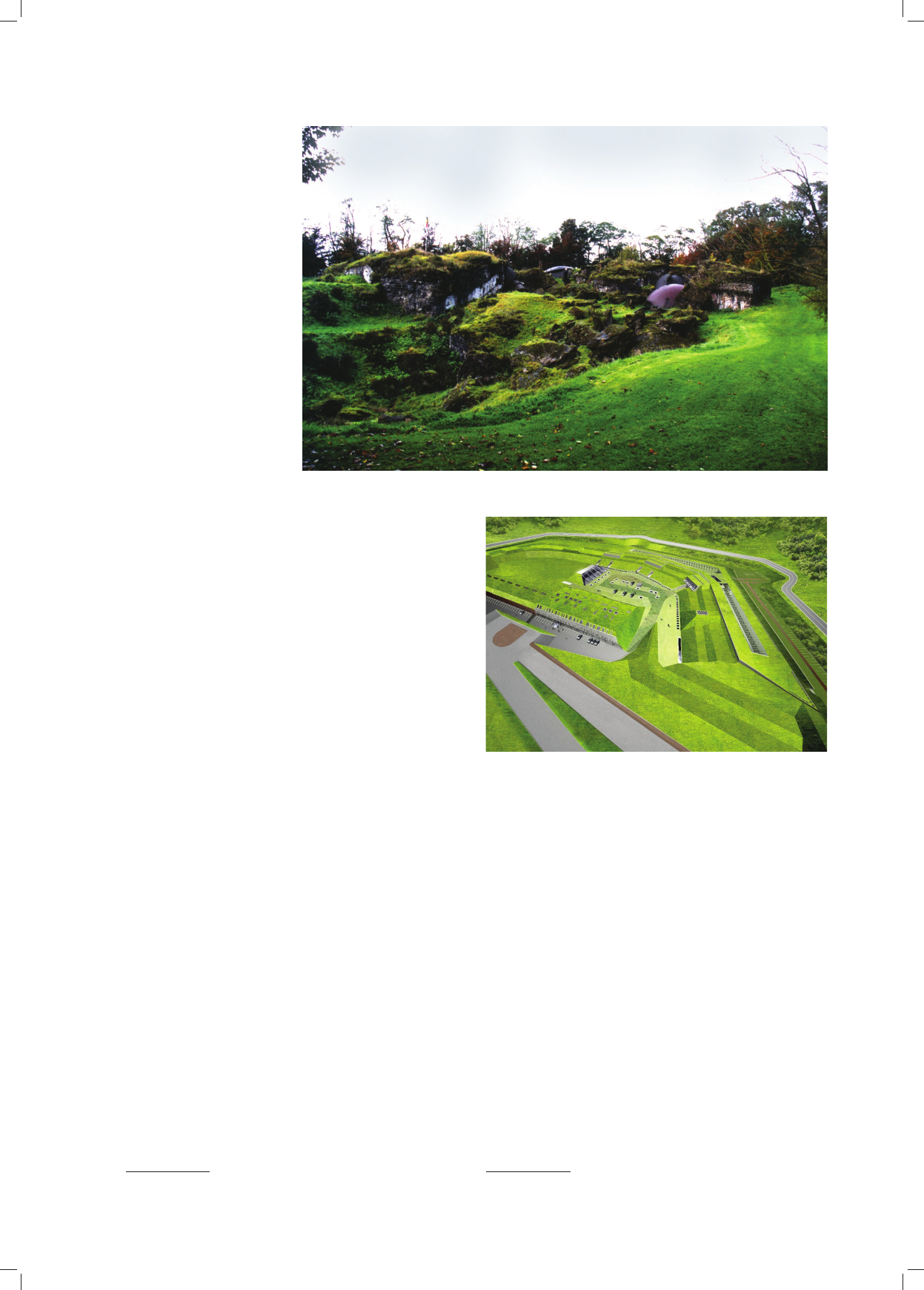
i długo „walczących” (Verdun), czy też wysadzonych
przez wroga razem z załogą (Fort Loncin w Twierdzy
Liège), można wyeksponować ich wartość jako pola bi-
twy, martyrologii, honoru żołnierza. Przy takim ujęciu
można zastosować zasady konserwatorskie „trwałej ru-
iny” dla całej struktury fortu (il. 3) – zabezpieczając, kon-
serwując formy murowe i pielęgnując ziemne, tym sa-
mym nie dopuszczając do rozwoju zieleni inwazyjnej.
W przypadku naturalnie erodujących ziemnych umoc-
nień z kolei nie należy jedynie przemieszczać i formo
wać gruntu. Jeżeli występuje konieczność odtworzenia
wa łów, dziedzińców, to można również rozważać wpro
wadza nie w ich kubatury współczesnych uzupełnień ar
chi tekto nicznych. Uwzględniając wartości użytkowe, eko
nomiczne i częściowo również społeczne, można osiągnąć
podwójny efekt: odtwarzając kształt zewnętrzny elementu,
a w miejsce masywu ziemnego wprowadzając kubatury
użytkowe. Aktualny stopień i stan zachowania fortyfika-
cji oraz presja inwestycyjna na terenach zurbanizowanych
unaoczniają, że nieodzowne staje się czasem wprowadza-
nie nowych elementów w historyczne struktury – w za-
kresie zależnym od ich wartości. Powinien to być rodzaj
kompromisu konserwatorskiego, który ostatnio jest coraz
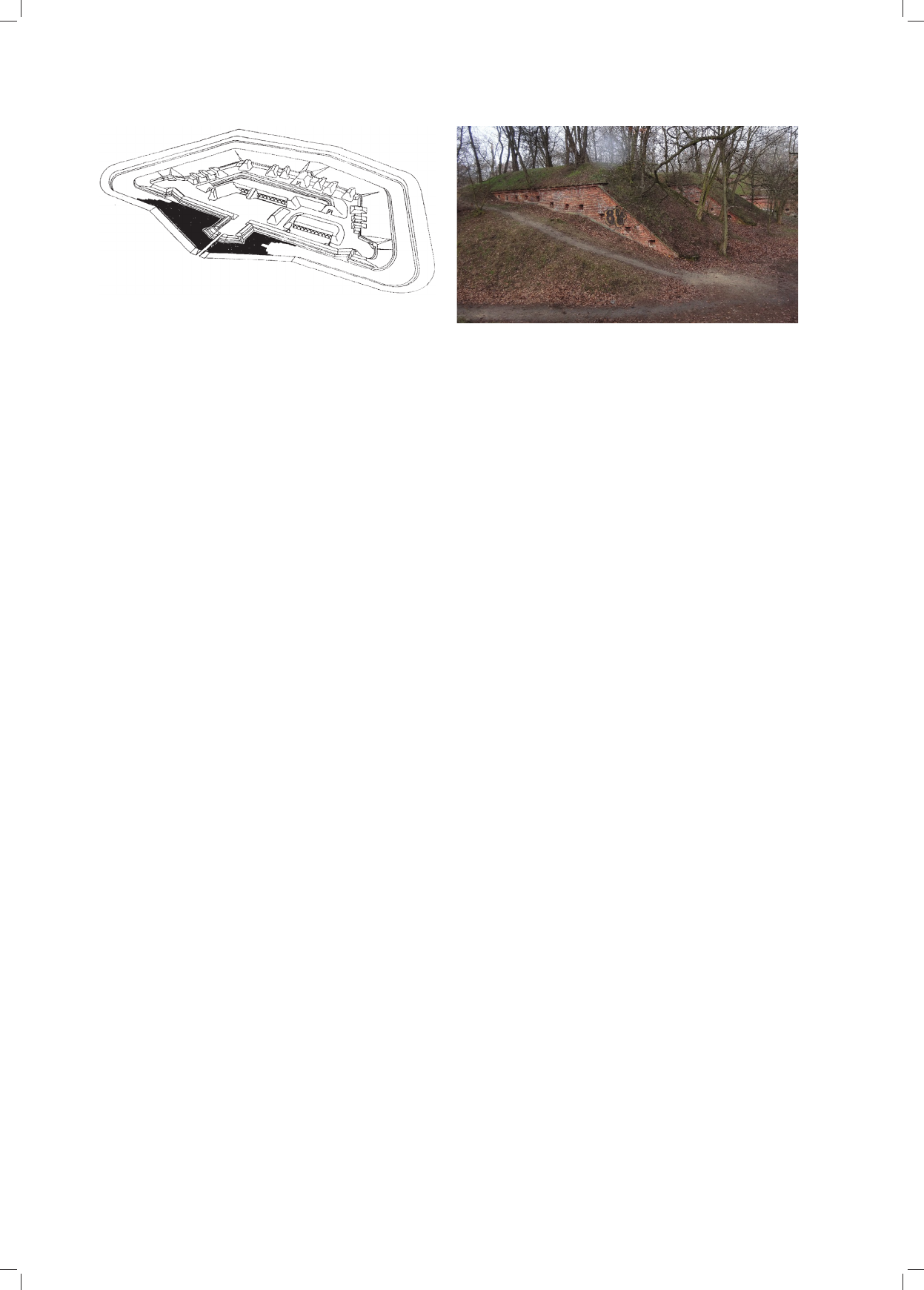
częściej niezbędny przy ratowaniu fortyfikacji. Przy kła
dem takiego kompromisu może być projekt budowlany
rewaloryzacji Fortu IV (Chrzanów) w Warszawie (il. 4).
Koncentrując się na praktyce postępowania konserwa-
torskiego, zwykle zapomina się o nie mniej istotnej prak-
tyce projektowej, niedocenianej przez środowisko specja-
The author’s research indicates that the valuation of
historic wall structures resembles the procedure employed
when dealing with the facilities from other categories of
architectural heritage, whereas earthworks require a dif-
ferent approach.
Conservation issues regarding the restoration
of former fort heritage
Fortifications – directly and constantly being damaged
by human activity and weathering – gradually and rather
quickly lose the authenticity of form as well as substance.
What valuation criteria should be then applied, and conse-
quently – after the value assessment – what conservation
activities should be taken? How should historic forms be
restored or actually rebuilt and should they be only rebuilt
or should new forms be introduced too? The answers to
those questions are complex and difficult. It may be as-
sumed that a significant value identifying a structure is
the visual perception of the spatial form of a fort, its exter-
nal appearance as well as its internal spaces (providing
a sense of security and good cover against the enemy) sur-
rounded by embankments with defensive elements facili-
tating the defense against artillery and infantry.
What can be emphasized in case of fortifications inten-
sively defended which were “fighting” for a long time
(Verdun) or the Fort de Loncin in the Fortifications of
Liège, blown up with their crews by the enemy is their
value as battle fields, their martyrdom, honor of the sol-
diers. When treated this way, the conservation principles
of “permanent ruins” can be applied to the whole struc-
ture of the fort (Fig. 3) – securing and preserving the wall
forms and maintaining the earth ones, preventing them
from being overgrown by invasive plants.
In case of naturally eroding earthworks, however, the
ground should not be just moved and shaped. If it is neces-
sary to rebuild the embankments or yards, the introduction
of contemporary architectural infills into their interior spac-
es can be also considered. Taking into account their usabili-
ty, economic as well as social values, two results can be
achieved: restoration of the external shape of an element,
and introduction of useful interiors in the place of earth-
works. The current degree of preservation of the fortifica-
tions and the investment pressure in urbanized areas demon-
strate that more and more often it is necessary to introduce
new elements into the historic structures – to the degree de-
pending on their value. It should result from a kind of con-
servation compromise which has recently been more and
more often necessary when saving fortifications. The design
development plans of the restoration of Fort IV (Chrzanów)
in Warsaw (Fig. 4) is a good example of such a compromise.
When focusing on the practice of conservation pro-
ceedings, the specialists in this area often forget about the
equally important design practice. Ultimately, however, it
is the very design practice which determines the architec-
tural forms of modernization, conversion or infills. How
then should the design process be supported with the
knowledge of the values of historic monuments?
Generally, it should be assumed on the basis of earlier
experiences and studies that the possibility of conducting
Waloryzacja murowo-ziemnych obiektów pofortecznych/The valuation of the wall-earth fortress facilities 85
listów z tej dziedziny. Tymczasem finalnie to ona naj
częściej decyduje o architektonicznych formach moderni-
zacji, adaptacji czy uzupełnień. Jak więc wspomóc proces
projektowy wiedzą o wartościach zabytków?
Na podstawie wcześniejszych doświadczeń i badań na-
leży przyjąć ogólne założenie, że możliwość działań ar-
chitektonicznych odnośnie do formy, konstrukcji, mate-
riału, koloru zależy od stopnia i stanu zachowania dzieła
fortyfikacyjnego, jego elementów i urządzeń
5
. Dlatego
kluczowe jest konserwatorskie rozpoznanie dzieła, m.in.
stopnia i stanu zachowania oryginalnych elementów obiek-
tu, a zwłaszcza rozmytych czy zdeformowanych umoc-
nień ziemnych, często niezrozumiałych dla niewprawne-
go architekta. Prawidłowe decyzje projektowe można
podejmować dopiero w wyniku właściwego zdefiniowa-
nia historycznej formy obiektu i autentycznej substancji
koniecznej do pozostawienia. Z reguły spotyka się z sytu-
acjami, gdy swoboda projektowa jest związana ze stop-
niem zachowania autentycznych form: im pełniej zacho-
wany jest obiekt, tym mniejsza i odwrotnie. O trafności
przyjętych rozwiązań architektonicznych może świad-
czyć uzyskanie docelowo dużej czytelności historycznych
elementów i całego układu dzieła. Jest to ważny miernik,
szczególnie w przypadkach intensywnego zagospoda
rowania otwartych terenów umocnień ziemnych. Dotyczy
przede wszystkim adaptacji obiektów kubaturowych
i współczesnych uzupełnień pierwotnych form.
W świetle powyższych rozważań uprawnione jest
przyjęcie założenia, że do realizacji uzupełnień form for-
tecznych należy przyjmować poniższe wskazania konser-
watorskie:
– z zewnątrz dzieł preferowane jest nawiązywanie do
kształtów wałów, w celu uzyskania wizualnego odbioru
dzieła jako ziemnego, trawiastego, zielonego, zintegro-
wanego z otoczeniem,
5
Wyniki wcześniejszych badań zostały opublikowane w [2].
architectural activities regarding the form, structure, ma-
terial and color depends on the degree of preservation of
fortification works, their elements and equipment
5
. That
is why it is crucial to perform a conservation survey of the
works, including the degree of preservation of their origi-
nal elements, especially the unclear or deformed defen-
sive earthworks which inexperienced architects often do
not realize. The right design decisions can be made only
after the historic form of the works and the authentic sub-
stance which is necessary to remain have been correctly
defined. Usually the designing freedom is connected with
the degree of preservation of the authentic forms: the big-
ger the preservation of the structure, the smaller the free-
dom is and the other way around. The extent of the clarity
of the historic elements and of the whole work layout can
5
The findings of the earlier research were published in [2].
Il. 3. Fort Loncin w Liège
– trwała ruina, miejsce pamięci
(fot. C. Głuszek, 2001)
Fig. 3. Fort Loncin in Liège
– the lasting ruin, memorial site
(photo by C. Głuszek, 2001)
Il. 4. Fort IV Chrzanów w Warszawie, widok projektu
(źródło: Pracownia Architektoniczna ARC Sp. z o.o., Katowice, 2008)
Fig. 4. Fort IV Chrzanów in Warsaw, view of the project
(source: Architectural Studio ARC Sp. z o.o., Katowice, 2008)
86 Cezary Głuszek
– od wewnątrz dopuszczalna jest większa wizualnie
czytelność współczesnych uzupełnień – ze względów
technicznych i funkcjonalnych (doświetlenie, przewie-
trzanie itp.) – z zachowaniem charakteru i proporcji pier-
wotnych wnętrz fortecznych.
W wyniku wcześniejszych badań umocnień ogólnie zi-
dentyfikowane zostały ich następujące cechy materiało-
we, fakturowe i kolorystyczne [2, s. 61–63]:
1. Formy struktur ziemnych:
– do końca XIX w.: dość regularne, kubiczne wały
z trawiastymi powierzchniami,
– od początku XX w.: swobodniej formowane prze-
szkody ziemne z otwarciami na otoczenie, do ostrzału.
2. Dominujące kolory:
– struktur ziemnych – zielenie o różnych odcieniach;
powierzchnie trawiaste z fragmentami krzewiastymi,
–
obiektów kubaturowych (zwykle ukrytych pod ziem
nymi nasypami) – odcienie brązów cegły i szarości betonu.
Ważne są wartości edukacyjne/poznawcze możliwe do
wyeksponowania w formie aranżacji uzbrojenia i obrony
na wałach (makiety dział, broni ręcznej, manekiny, odgło-
sy walk itp.).
Zagadnienia konserwatorskie
a realia projektowania i realizacji
Niestety w codziennej praktyce projektowej można
spotkać dużo przykładów na brak wiedzy na temat budo-
wy i funkcjonowania fortyfikacji, a szczególnie dzieł
ziemnych – skutkujący znacznymi błędami konserwator-
skimi w zakresie rewaloryzacji takich dzieł: wprowadza-
niem współczesnych funkcji i form architektury bez rozu-
mienia wartości zabytkowych.
Obecnie klinicznym wręcz przykładem niezrozumienia
inwestorskoprojektowego są uzupełnienia nową za bu
dową przeprowadzane bez niezbędnych badań i wytycz-
nych konserwatorskich w sposób skutecznie zama zujący
i wręcz niszczący historyczne formy. Podejmowane przez
inwestorów próby zagospodarowywania Cytadeli Twier
dzy Modlin i fortów Twierdzy Warszawa świadczą o tym
aż nazbyt dobitnie. Preferowanym przez inwesto
rów
przeznaczeniem dla fortów jest zabudowa mieszkaniowa
testify to the correctness of the selected architectural solu-
tions. This is an important indicator, especially in case of
intensive development of open areas of defensive earth-
works. This regards mainly the conversion of enclosed
structures and modern infills of the original forms.
In the light of the above, it is reasonable to assume that
the following conservation guidelines should be followed
when developing infills in original fort architecture:
– externally, it is preferred to match the shape of em-
bankments to create a visual perception of grassy and
green earthworks blended in with the surroundings,
–
internally, it is admissible to develop a visually great-
er
clarity of contemporary infills – for technical and
functional
reasons (more light, more air, etc.) – maintain-
ing the cha racter and proportions of the original interiors
of the fort.
The following general characteristics of materials, tex-
tures, and colors were identified in the earlier research of
defensive works [2, pp. 61–63]:
1. Earthworks:
– until the end of the 19
th
century: rather regular,
cubic embankments with grassy areas,
– since the beginning of the 20
th
century: more free-
dom in designing open earth obstacles.
2. Dominant colors of:
– earth structures – various shades of green; grassy
areas with bushes,
– enclosed structures (usually hidden underground)
– various shades of brown brick and gray concrete.
There are important educational/informative values
which could be displayed, such as armament and defen-
sive facilities on embankments (cannons, small arms,
dummies, the sounds of battle, etc.).
Conservation issues and the reality
of designing and construction
Unfortunately, in everyday design practice there are
a lot of examples of the lack of knowledge regarding the
construction of fortifications, especially defensive earth-
works, and their operations – which results in serious con-
servation mistakes connected with the restoration of such
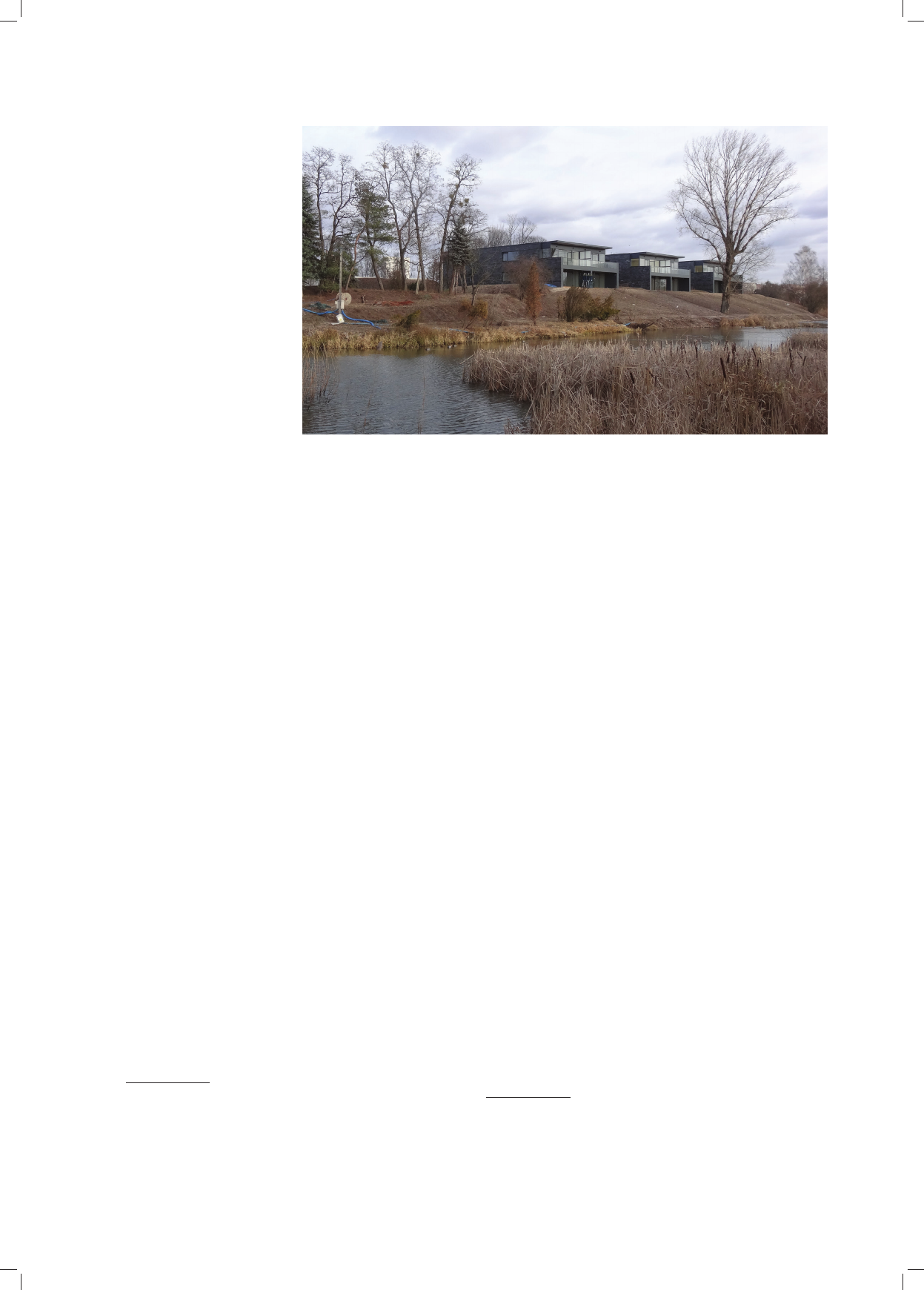
Il. 6. Fort Cze (Piłsudskiego) w Warszawie. Poprzecznice
(fot. C. Głuszek, 2006)
Fig. 6. Fort Cze (Piłsudski) in Warsaw. The traverses
(photo by C. Głuszek, 2006)
Il. 5. Fort Cze (Piłsudskiego) w Warszawie.
Ostateczna forma historyczna sprzed I wojny światowej
(oprac. C. Głuszek)
Fig. 5. Fort Cze (Piłsudski) in Warsaw.
The last historic form, from before WWI
(by C. Głuszek)
Waloryzacja murowo-ziemnych obiektów pofortecznych/The valuation of the wall-earth fortress facilities 87
works: introduction of modern functions and architectural
forms without understanding the historic values.
At present, the infills with new structures which are
built without necessary studies and conservation guide-
lines and effectively cover the historic forms or even
damage them are in fact a clinical example of miscon-
struction on the part of investors and designers. The at-
tempts made by investors at developing the Citadel in
Modlin Fortress and the forts in Warsaw Fortress evident-
ly testify to that. Investors would prefer to use forts for
residential purposes – the least appropriate option for
those structures. In practice, this would include extensive
simplifications or even removing earthworks and con-
structing residential buildings on those newly “recovered”
areas. For the time being, it is only plans but what will
happen in the future? A partial answer is provided in the
latest and highly controversial conversion of Fort Cze
(Piłsudski) in Warsaw Fortress into apartments
6
. With
their purely “creative” approach, the architects located
massive forms of residential architecture (and their con-
struction has already started!) on the “artistically” re-
stored embankments – in the place of small earth tra
verses
7
. According to the authors of the design this
“alludes to the historic forms” – which testifies to an ap-
palling misconstruction of the operations of a fortification
and adjusting proper spatial forms to them. This is actually
architecture of a “pretext” and not of a historical “context”.
From the point of view of conservation, it would be much
more appropriate to look for a possibility of introducing
enclosures into historic spaces of ramparts and not only
alluding to their shapes, enlarging their forms (Fig. 5–7).
Fort Cze (Piłsudski) – is a great example demonstrat
ing the complex issue of the protection and restoration of
6
Its popular name “Fort Mokotów II” is used in the National In
ventory of Historic Monuments (NIoHM no. 806/1973). Russian name
is Fort Cze (“Ч”) Czerniaków. It was named Piłsudski Fort for the first
time in the interwar period and the name was used again in the 1990s.
7
Traverse – small earthwork providing cover for cannon crews
against explosions in nearby artillery stations.
–
zdecydowanie najmniej odpowiednia dla tych obiek tów.
Realizacja ma polegać na maksymalnym uprasz czaniu
lub wręcz usuwaniu form ziemnych, a na „uwolnionych”
w ten sposób terenach wznoszeniu budynków mieszkal-
nych. Na razie są to głównie projekty, lecz co będzie póź-
niej? Częściową odpowiedź znajduje się w najaktualniej-
szej, bardzo kontrowersyjnej adap tacji fortu do funkcji
apartamentowej, w Forcie Cze (Pił sudskiego) Twier dzy
Warszawa
6
. Przy czysto „kreacyjnym” podejściu architek-
tów na „artystycznie” odtworzonych wałach – w miejscu
niedużych ziemnych poprzecznic
7
– zlokalizowano (i roz-
poczęto realizację!) ma sywne bryły zabudowy mieszka-
niowej. Według autorów projektu jest to „nawiązanie do
form historycznych” – co świadczy o znacznym niezrozu-
mieniu funkcjonowania fortyfikacji i dostosowywania do
nich odpowiednich form przestrzennych. Jest to raczej
architektura „pretekstu”, a nie „kontekstu” historycznego.
Z konserwatorskiego punktu widze nia zdecydowanie bar-
dziej poprawne byłoby poszu kanie możliwości wprowa-
dzenia kubatur w przestrzenie historycznych narysów
i profili wałów, a nie jedynie odwołanie się do ich kształ-
tów – z kilkukrotnym przeskalowaniem brył (il. 5–7).
Przytoczony przykład Fortu Cze (Piłsudskiego) jest
wyrazistym podsumowaniem złożonego problemu uwa-
runkowań ochrony i waloryzacji umocnień ziemnych
dziedzictwa pofortecznego. Problemu, u którego podstaw
leży nietrwałość budulca i niewłaściwe użytkowanie
obiektów lub jego brak, powodujące szybką utratę czytel-
ności elementów obronnych. Na to nakłada się per
manentny niedostatek wiedzy o wartościach tej kategorii
zabytków, „prezentowany” przez inwestorów, użytkowni-
ków, projektantów i (niestety) część konserwatorów za
6
W rejestrze zabytków użyto potocznej nazwy „Fort Mokotów II”
(nr rej. zab. 806/1973). Rosyjska nazwa to Fort Cze („Ч”) Czerniaków.
W okresie międzywojennym po raz pierwszy, a w latach 90. XX w. po
raz drugi nadano mu nazwę Fort Piłsudskiego.
7
Poprzecznica – niewielki wał ziemny osłaniający obsługę działa
przed skutkami wybuchu pocisku w sąsiedztwie stanowiska artyleryj-
skiego.
Il. 7. Fort Cze (Piłsudskiego)
w Warszawie.
Widok zabudowy fortu
(fot. C. Głuszek, 2018)
Fig. 7. Fort Cze (Piłsudski)
in Warsaw.
View of the fort buildings
(photo by C. Głuszek, 2018)

88 Cezary Głuszek
Streszczenie
Istnieje dużo przykładów na brak wiedzy o typach, funkcjonowaniu i zasadach ochrony dzieł fortyfikacyjnych – skutkujący znacznymi błędami
konserwatorskimi w zakresie ich rewaloryzacji: wprowadzania współczesnych funkcji i form architektonicznych. Dlatego podstawą rozpoczęcia
prac inwestycyjnych musi być obiektywna waloryzacja istniejących obiektów: ich autentyzmu, stopnia zachowania itp. Niniejszy tekst dotyczy tej
problematyki i sygnalizuje kierunki postępowania konserwatorskoprojektowego. Artykuł powstał w efekcie autorskich badań terenowych i biblio-
graficznych zagadnienia wartościowania zabytków architektury. Zarysowano w nim tło problematyki waloryzacji murowoziemnych obiektów po-
fortecznych. Na podstawie badań: 1) rozpoznano historyczne formy umocnień oraz rodzaje budulca, z jakiego je wykonywano, 2) identyfikowano
pozostałości umocnień ziemnych oraz ich stopień i stan zachowania, ze szczególnym uwzględnieniem Fortu Cze (Piłsudskiego), 3) wyodrębniono
potencjalne wartości omawianej kategorii dziedzictwa architektonicznego. Na zakończenie przedstawiono negatywny konserwatorsko przykład
adaptacji Fortu Cze (Piłsudskiego), przekazujący nieprawdziwy obraz historycznego obiektu.
Słowa kluczowe: fort, umocnienia ziemne, wartościowanie, realizacje, błędy
Abstract
There are many examples of the lack of knowledge about the types, functioning and principles of protection of fortification works – resulting in
significant conservation errors in their revalorisation: the introduction of contemporary functions and architectural forms. Therefore, the basis for
commencing investment works must be the objective valorisation of the existing objects: their authenticity, degree of preservation, etc. This text
concerns this issue and signals the directions of conservation and design proceedings. The article was written as a result of original field and biblio-
graphical research on the issue of architectural monuments valuation. The background to the problem of valorization of brick and earth postfortifi-
cations objects has been drawn.
On the basis of research: 1) historical forms of fortifications were identified and the types of building material from which they were made, 2) the re-
mains of earth fortifications were identified as well as their degree and state of preservation, with particular emphasis on Fort Cze (Piłsudski), 3) the
potential values of the discussed architectural heritage category were distinguished. At the end, a negative conservator’s example of the adaptation of
Fort Cze (Piłsudski), conveying an untrue image of a historical object, was presented.
Key words: fort, terrestrial fortifications, valuation, realisations, errors
Bibliografia /References
[1]
Zawieska D., Markiewicz J., Wykorzystanie nowoczesnych technik foto-
grametrycznych w inwentaryzacji zabytkowych obiektów dziedzictwa
kultury – potencjał i ograniczenia, referat wygłoszony na konferencji
„Cyfryzacja w naukach o przeszłości i ochronie zabytków – analiza po-
tencjału i zagrożeń”, 24 listopada 2015 r. Warszawa, UKSW. Streszczenia
umieszczone w materiałach konferencyjnych, Warszawa 2015.
[2] Głuszek C., Rewaloryzacja zabytkowych fortyfikacji przełomu XIX
wieku w Polsce. Architektura współczesnych uzupełnień, Oficyna
Wydawnicza PW, Warszawa 2013.
[3] Tomaszewski A., Materialne i niematerialne wartości dóbr kultury
w tradycji i nauce zachodniej, [w:] A. Tomaszewski, Ku nowej filo-
zofii dziedzictwa, E. Święcka (wyb. i oprac.), Międzynarodowe
Centrum Kultury, Kraków 2012, 51–69.
[4] Rouba B.J., Wartościowanie w praktyce konserwatorskiej, [w:]
B. Szmygin (red.), Wartościowanie w ochronie i konserwacji zabyt-
ków, Polski Komitet Narodowy ICOMOS, Biuro Stołecznego Kon
ser watora Zabytków Urzędu Miasta Stołecznego Warszawa, Po
li
technika Lu bel ska, Fun da cja Politechniki Lubelskiej, Lub lin–War sza
wa 2012, 201–208.
[5] Szmygin B., Propozycje założeń do systemu wartościowania zabyt-
ków architektury – podmiot, przedmiot, status wartości, [w:]
B. Szmygin (red.), Wartościowanie zabytków architektury, Polski
Komitet Narodowy ICOMOS, Muzeum Pałac w Wilanowie, War
sza wa 2013, 187–196.
[6] Krawczyk J., Kryteria i metody wartościowania zabytków architek-
tury, [w:] B. Szmygin (red.), Wartościowanie zabytków architektury,
Polski Komitet Narodowy ICOMOS, Muzeum Pałac w Wilanowie,
Warszawa 2013, 139–146.
[7] Molski P., Funkcja – atrybutem wartości i ochrony zabytku, [w:]
B. Szmygin (red.), Wartość funkcji w obiektach zabytkowych, Polski
Komitet Narodowy ICOMOS, Muzeum Pałac w Wilanowie, Poli
tech nika Lubelska, Warszawa 2014, 189–194.
bytków. Wydaje się, że ten aspekt ma często najistotniej-
sze znaczenie, generując niewłaściwe postępowanie od
początku procesu inwestycyjnego – przez kolejnych jego
uczestników. Negatywne efekty widzimy zbyt często.
original defensive earthworks. The issue whose funda-
mental problem is the perishable building materials and
improper use of the structures or the lack thereof, causing
a quick loss of clarity of defensive ele ments. This is con-
nected with a permanent deficit of knowledge of the val-
ues of that category of historic mo numents on the part of
investors, users, designers and (unfortunately) some con-
servation officers. It seems that this is often the most im-
portant aspect, generating improper approach from the
very beginning of the investment process – on the part of
its participants. The negative effects are evident too often.
Translated by
Tadeusz Szałamacha