2010
Nr 2(28)
Attitudes to the historical and architectural heritage of
the state situated in its territory determine not only the
general level of culture, but also a considerable degree
of self-awareness of a group of people as a community
which is united by the historical background, spiritual
and material heritage, requiring constant care and promo-
tion. We know that at this stage of the development of
the world civilization, this problem is especially acute in
two cases: mainly in the period of strengthening of the
state as an independent political union and globalization
and similar processes related to the levelling of national
cultural characteristics.
After regaining independence by Poland in 1918, this
problem became very sharp. Therefore, in our opinion,
activities in the eld of ancient monuments protection, in-
cluding architectural and urban heritage were selected as
a way to protect the national identity in this period. “Hu-
manity today has deeply looked into the essence of sights
and sees in these visual witnesses history of the spirit re-
ection of people, its culture evidentiary testimony, the
arguments of those characteristics that are in the eld of
art created national individualism, nally, source of moti-
vation for the development of national art. From this point
of view of understanding, sights appear in the light of their
Olga Mykhaylyshyn*
Architectural heritage protection in Volyn in 1920–1930
as a source of cultural and national identity
*
National University of Water Economy and Natural Resources Use,
Rivine, Ukraine.
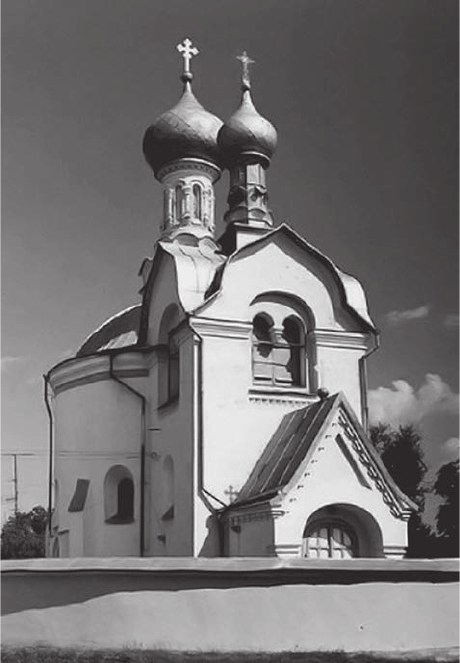
Fig. 1. St. Uspenska Lavra
in Pochaiv. Overall view
54 Olga Mykhaylyshyn
true value. Therefore, care about preservation of national
works of art from ancient times, arising from a love to
the motherland and its great past and no less captivating
beauty, fascinated by the sculptural forms in architecture,
sculpture and painting, is characteristic for each cultural
community. Everywhere we see the principle, put forward
to an important place: the efforts of our duty to preserve
monuments for the offspring in the least changed, most
authentic state” [9, p. 16] – this the basic thesis in the eld
of cultural heritage preservation was included in one of
the Regency Council decrees, issued in late October 1918,
in the eve of independence of Poland.
Signicant destruction caused by the First World
War in Great Poland, especially in its south-eastern part,
has been a factor for starting the work in this direction.
Numerous facts of destruction of material substance of
objects slightly changed the approaches, declared in the
document quoted above, in favour of reconstruction and
restoration of hundreds of architectural objects across the
entire state.
Particular weight was given to the monument-preser-
vation work in the “eastern borderlands” (Kresy) – on the
territories of Kholmshchyna, Podlasie, the western part
of Volyn, Polissia and Belarus, annexed to Poland by the
Treaty of Riga in 1921. These territories needed special
efforts of “return” after more than a century of being in the
administrative limits of the Russian Empire. Visualisation
of the Russian presence was reected primarily in the ar-
chitectural image transformations of religious buildings,
as well as in open neglecting of these and other buildings
that represented preliminary “Polish” period (beginning
with the Union of Lublin in 1569) and earlier, “pre-union”
times in the history of the region. As the Polish researcher
P. Dettloff says, the Imperial Archaeological Commis-
sion in St. Petersburg “... engaged exclusively Byzantine
monuments of culture, without regard to the historical
buildings from the territory of the Kingdom of Poland,
which belonged to the works of the Western culture”
[10, p. 41].
Modern Polish scientists in their works touched the
problems of organization and methods of monument-pre-
serving activities of the Second Polish Republic, consider-
ing this area of architectural activity in the national scale.
The most fundamental, in particular, is research of J. Le-
vitsky and P. Dettloff [10]. Tangential to our researched
topic are publications of M. Tshevik and Y. Zhyvitskyj.
However, the motivational aspect of the complex work
carried out in Volyn was not investigated separately.
Aim. We pay particular attention to monument-pre-
serving activity in Volyn in 1920–1930 as a means of
visualization and consolidation of the national identity.
The range of inventory work which was planned to be
carried out in the Second Polish Republic as soon as pos-
sible was directly proportional to the desire of fast crys-
tallization of the Polish nation by developing the sense
of common ethnic origin, in particular the cultural com-
munity, “whose members are joined or united on the basis
of common historical memory, some myths, symbols and
traditions” [5, p. 16]. Therefore, the proposed article will
discuss only one aspect of cultural heritage in Volyn in the
interwar period – xation, preservation, restoration and
reconstruction of individual architectural structures-
symbols, materialized evidence of the historicity of the
nation, its high cultural development and belonging to the
Western civilization as opposed to the Eastern one which
was outside.
A number of actions of the Polish authorities aimed
at organizing the monument-preserving work contrib-
uted to improving the situation: rst of all, issuance of
the Minister of Arts and Culture Ordinance dated April 5,
1919 on the establishment of preservation ofces. Besides
state bodies of Preservation – Restorers Departments es-
tablished the Council of restorers in 1919. To resolve the
monument-preserving tasks in a particular region and on
specic buildings, the special institution of the Congress
of the Council of Restorers was founded, the rst works
of which took place in April 1919 [6].
Every citizen who loves his country and its past, has
to value historical sites and monuments of the past, which
after various historical disasters, and in the last period
– after the occupants left and the World War 1 storms
ended, now in the revived Polish Republic face complete
damage and destruction.
One of the greatest concerns of the revived Polish state
was indeed a proper organization of monument protection
which was reected in the Decree of 31.10.1918 on the
care of monuments of art and culture. These intentions,
planned on a large scale, could not be introduced later in
life due to the necessity of economy, dictated by the state.
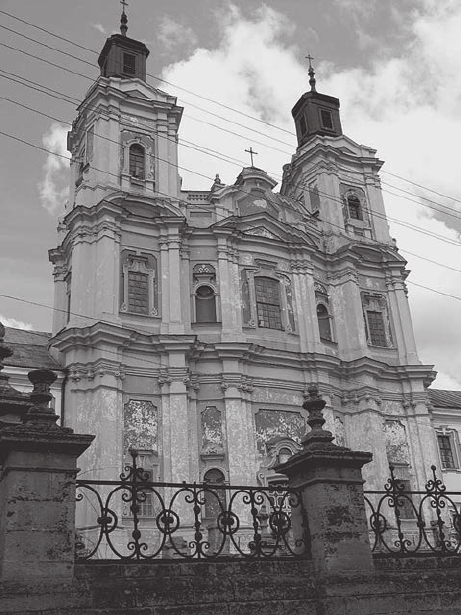
Fig. 2. St. Basil Сhurch in Vladimir in Volyn
Architectural Heritage Protection in Volyn in 1920-30-s as a Source of Cultural and National Identity 55
There is a great concern that while these views in this
regard will be crucial, a lot of sites will no longer exist in
the absence of proper care and preservation. Only joint
efforts of the government, communities and society can
save these cultural monuments of the past.
These words, quoted from “okolnyk” of the Inte-
rior Minister Sl. Skladkovskiy (Nr. Min. 778/27) from
12.05.27 are extremely important, because they empha-
sise the value of the highest state ofcial attention to the
internal administration of our national cultural heritage in
the eld of monuments.
First of all, there is a great need to have an accurate
list of these monuments in order to take care of them ef-
ciently. Realizing this need, civilized European states
have long started the scientic inventory of monuments
and have done a lot of work in this eld. It is sufcient to
say that the inventory works have already been completed
in England, France, Italy and Germany (…).
In Poland, works in this area were postponed. Occupy-
ing states, realizing the weight of monuments that prove
the greatness of our country and people, made it impos-
sible for us to have access to our sites (Russia), or per-
formed an inventory by themselves, giving it favourable
political overtones.
A typical example of such work is the inventory of
Poznan [principality – O.M.] performed (...) by Professor
of Architecture Juliusz Kohte. This scientist researched all
valuable monuments of architecture, sculpture, paintings,
decorative arts, construction and related industries with
great integrity and ability.
This work, which lasted 12 years, with a whole army
of assistants, is of paramount value and is part of the in-
ventory of the German Reich; it consists of eight volumes,
published on good paper, lavishly illustrated and is now
the only completed systematic study in the eld of inven-
tory in the lands of Poland. However, the prominent sci-
entist was unable to avoid the German chauvinism. This is
evident in the list of artists and craftsmen who worked on
the lands of Great Poland in the arts. No Polish surnames
– German ones only (…).
From the Polish papers in this area we are proud to
highlight the publication of Krakow Academy of Sci-
ences, the folder of conservators ancient [Ancient History
– O.M.] and reports on research of art history in Poland.
The materials collected by Malopolska restorers, espe-
cially Professor Marian Sokolovskiy and Professor Sta-
nislav Tomkovych constitute today rich scientic mate-
rial, which, however, unfortunately in many cases is still
awaiting publication, as a result of governmental and so-
cial indifference and a general lack of funds.
In connection with inventory work, without which it is
not possible to achieve reasonable care and preservation
with the most extensive network of companies and sites
of care over the government efforts, the Polish govern-
ment on 31.10.1918 established the network of restores
whose number is seven in Poland today.
Their main task is to conduct scientic inventory of
monuments in the provinces entrusted to them. I would
like to point out that the Lublin district, which should in-
terest us primarily consists of Lublin, Polissia and Volyn
provinces. Unfortunately, the large area of the district as
well as a lack of permanent professional assistance, forces
a restorer to a considerable effort, the results of which
from the numeral side are insignicant.
I would like to point out that in one small area of so-
called “Prowinz Pozen” Kohte, with the help of the major
works of the highest class workers (Dr. Warachauer), per-
formed the assigned work in 12 years.
Lublin restorer in today’s situation had to spend about
40 years on the most primitive investigations of his dis-
trict. Without mentioning in general that the world of
processing, systematization and publication of the results
of this quadragenarian work would still remain an open
problem to be tackled in subsequent years, I would like
to emphasize that this particular case is not a question of
ambition of a single scholar. It is a matter of life and death
of Polish artistic culture (...).
Volyn province, where the XII Congress of Restorers
was held in September this year, understands the case and
is sincerely concerned about the destiny of their monu-
ments, mute witnesses of ancient Polish greatness on
these lands which were Russied with such enthusiasm.
They intend to subsidize work in the eld of inventory,
preservation of monuments of art and culture by means of
municipalities [2, pp. 61–64].
In late 1927 Jerzy Siennitskiy (1886–1956) – Restorer
of the Lublin district delivered an emotional speech be-
fore the headmen of the county town council of Volyn. He
placed special emphasis on major challenges, which in this
period were experienced by the professionals in daily in-
ventory process both in the state in general and in Volyn.
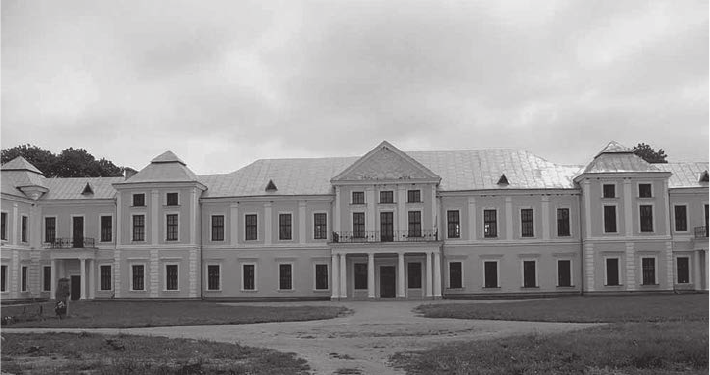
Fig. 3. Jesuit monastery in Kremenets. St. Ignacio Сhurch
56 Olga Mykhaylyshyn
During the years 1919–1921 and 1923–1930 E. Sien-
nitskiy performed considerable amount of work in the eld
of monument preservation. In his work he combined the
work of architect practitioners and academic research-
ers. Due to the active search, in the years 1925–1930 the
foundation registry monuments located on the territory of
historical Volyn was established. In addition, the report
materials that are stored in State Archive of Volyn region
[2], and the city of Lublin and Lublin province [19] reect
the activities of arts and culture restorers in Lublin, Polissia
and Volyn provinces, contain information on the character
of preservation activities on specic buildings and permis-
sions to introduce local changes in structure and environ-
ment.
The report for the second half of 1927 tackles the prob-
lem of the technical condition of the studied monuments
of Volyn, where the information is accompanied by brief
historical references, stylistic characteristics of buildings,
data reconstruction and repairs as well as a description of
works of art available in the interior. The list includes the
folowing items: architectural complex of the former Fran-
ciscan monastery in Mezhyrichi Ostrogski (now in the
Rivne region); Mstislav Cathedral (Holy Virgin Uspinya
Church) in Vladimir in Volyn (now in the Volyn region);
bell tower at the Cathedral Gate Mstislav in Vladimir in
Volyn; “Bishop castle” in Vladimir in Volyn; architectural
ensemble of the former Carmelite church and monastery
in Vyshnivets (now the territory of Ternopil region); Vy-
shnivets parish church in [2, pp. 45–56].
According to the list, the rst group of objects that
were carefully studied were the most signicant in view
of the construction period (Mstislav Cathedral), formation
peculiarities (monastery in Mezhyrich Ostrozki) and those
that were somehow associated with eminent national his-
tory (the building in Vyshnivets).
The Decrees of the President of the Polish Republic
on March 6, 1928 “On the care of monuments” [17] and
the Minister of religious confessions and public education
on July 17 that year “On implementing the registry of the
monuments” [16] conrmed the importance of ongoing
work, made the concept of monuments more specic, the
criteria by which objects can be registered and their struc-
ture determined. Detailed instructions provided in these
documents were based on substantial, almost a decade-
long experiences of the inventory.
Up to 1928 the card catalogue included the objects
located in more than eighty towns of Polissia and Volyn
province, with the total number reaching almost one hun-
dred seventy [19, pp. 235–242]. The directory arrange-
ment was the rst step on the way to include these objects
to the aforementioned ofcial national register of monu-
ments. Speaking of the works performed during the dec-
ade, the main Restorer of the Volyn district Z. Revskiy
noted that at the end of 1937 there were 405 items in the
inventory positions, and their number over the past two
years doubled [15, p. 224]. It should be noted that apart
from the Catholic temples, in the number of inventoried
objects there were also included the oldest Orthodox
churches, representing groups of traditional wooden ar-
chitecture.
During the research work in Volyn, some considerable
practical solutions were applied. In particular, in the mid
1930’s during the repair of St. Basil church in Vladimir in
Volyn, where fragments of Roman masonry were cleared
of plaster, which, according to the contemporary restorer
of Volyn Y. Dutkevich, “will facilitate future reconstruc-
tion of the original form-eastern Roman architectural and
sculptural decoration of this valuable monument” [11,
p. 229]. Moreover, in 1937, experts began the work to
remove Russian layers – domes and bell towers. In the
Russian Empire the image reconstruction and the volume
reconstruction of the temple were dealt with, according
to Countess Uvarova, so as to “hurt every eye that is at
least a little familiar with the artistic monuments and their
style” [4, p. 79]. As for the return of its original to the
temple, then in our opinion, such a desire had also the
following arguments: “Roman” part of the architectural
and constructive solutions made the monument nearer to
the Western civilization circle, “Eastern” – was consist-
ent with the promotion of the Polish Orthodox Church,
ancient wooden structures of Kyivs’ka Rus in the church
building as such, that best meet its canons [8].
In general the demolition of the onion-formed domes
became an immediate measure to restore the original
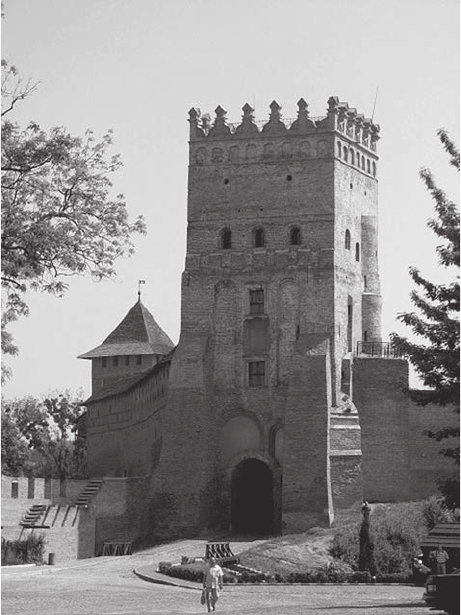
Fig. 4. Palace in Vyshnivets.
Overall view from the courtyard
Architectural Heritage Protection in Volyn in 1920-30-s as a Source of Cultural and National Identity 57
forms of religious buildings, destroying traces of Russian
statehood and ideology. In the same way the authentic
forms were returned by means of completion of the main
tower of the post-Jesuit church facade in Vladimir [14,
p. 253], church in Boremel (Rivne region), Bernardynian
towers in Dubno, eliminating the Russian restructuring
period in the church in the Novy Zagoriv (Volyn region)
after repossession of these temples, dismantling typical
for Russian architecture roofs over the entrance to the Us-
penskiy Cathedral and Lavra monastery in Pochaiv [15,
p. 225], reconstructing the “Russian” annex to the former
Jesuit monastery in Kremenets [18, p. 351].
The pragmatic goals that urged the Polish government
in Volyn and other associated areas to pay attention to the
restoration of historic, mostly secular objects should also
be noticed. Bodies of public administration, public order,
educational institutions and other institutions organized in
the provinces, required a large number of buildings and
facilities. For this purpose, the ancient castles and palaces
were adapted more seldom than the monastery buildings,
which in various circumstances were taken over by the
state. In the early 1930’s column porticos were restored
along with some elements of decoration and detail in Vy-
shnivets palace [15, p. 227]. Large-scale repair and recon-
struction began in the early 1920s initiated by the owners
of the residence – counts Grokholski; they were continued
in the years 1924–1925, when the estate was purchased by
the state as the property of Kremenets county municipal
union to house various institutions here (hospitals, Crafts
School and others.) [20, p. 485; 18, p. 352]. Important
place in the plans of the local authorities was taken by the
restoration of the palace of kn. Lyubomyrskiy in Rivne
for the location of the magistrate here [3, p. 484], Berna-
dine and Dominican monasteries in Lutsk – as govern-
ment agencies [13, pp. 2–3], reconstruction of a medi-
eval castle of Czartoryskiy in Klevan and a penitentiary
[12, p. 302], rehabilitation and reconstruction of impor-
tant buildings and building of the Overgate Ostrozki-
-Lubomirski Castle in Dubno for the location of the coun-
ty municipality, county local government, ofcial state
housing, the ofce of inspector of schools and police bar-
racks [7].
A special place among the local monuments which
were restored in Volyn was occupied by Lubart castle
in Lutsk. Back in 1922, a special commission consisting
of representatives of local authorities invited from War-
saw and local experts was set up and it worked on the
problem of urgent steps to strengthen the castle. Previous
studies were based on materials inventory of 1910–1912,
made during the expedition led by a renowned architect
K. Ivanitskiy of the Imperial Archaeological Commission
(measure drawings and photographs) [1, pp. 44, 75]. The
state of emergency of solid defence building was twice
discussed at the congresses of the Restorers in 1921 and
1927, but lack of funds did not allow performance of all
the necessary works. At the end of 1920 the tower was
strengthened as it was in the worst condition, in the fol-
lowing years the basements were cleaned and some lost
walls were restored. In 1939 an authoritative Polish scien-
tist Jan Zahvatovych from the Institute of Polish Architec-
ture of Warsaw Polytechnic was invited to draft the plan
of further work to observe the castle. For further accumu-
lation of funds and performance of work, local authori-
ties allowed to make reservations for tour top Lutsk castle
ruins and supported the release of special editions of its
history. Collected money from sold brochures was direct-
ed to the treasury of reconstruction. Constant attention,
support and continual promotion of this building, which
witnessed a long history and was considered a symbol of
the Polish State in Volyn is a telling example of nding
a path of the national identity.
In general we can state that in 1920–1930 in Volyn in
monument-preserving activities one form of identity was
established – traditional, which during the revival of the
Polish statehood was based on the restoration of the lost
architectural monuments that expressed particularly valu-
able national and cultural identity.
Fig. 5. Lubart Castle in Lutsk. Gate Tower
References
[1] Державний архів Волинської області (ДАВО), ф. 158, оп. 1,
p. 49.
[2] Державний архів Волинської області (ДАВО), ф. 46, оп. 1,
p. 3354.
[3] Михайлишин О., Резиденція князів Любомирських в Рівному: до
історії розвитку та занепаду, [in:] Записки Наукового Товариства
ім.Т.Г.Шевченка: Праці Комісії архітектури та містобудування,
Т. CCXLIX, 2005, pp. 469–484.
58 Olga Mykhaylyshyn
[4] Ричков П.А., Луц В.Д., Сакральне мистецтво Володимира-Во-
линського, Техніка, Київ, 2004.
[5] Черкес Б.С., Національна ідентичність в архітектурі міс та,
Ви давництво Національного університету „Львівська полі тех-
ніка”, Львів, 2008.
[6] Archiwum Akt Nowych w Warszawie (AAN), MWRiOP, sygn.
7030.
[7] AAN w Warszawie, MSW, sygn. 2517, 2518.
[8] Cerkwie Prawosławne. Wyniki konkursu, Wydawnictwo św. synodu
Kościoła Prawosławnego w Polsce, Warszawa 1928.
[9] Dekret Rady Regencyjnej z dn. 31.X.1918 o opiece nad zabytkami,
Аrchive of New Acts (Warsaw) (AAN), MWRiOP, sygn. 179.
[10] Dettloff P., Оdbudowa i restauracja zabytków architektury w Polsce
w latach 1918–1930. Teoria i praktyka, UNIVERSITAS, Kraków
2006.
[11] Dutkiewicz J., Kronika konserwatorska, BHSiK, 1935/36, pp.
223–230.
[12] Dutkiewicz J., Odbudowa zamku w Klewaniu, BHSiK, 1933/34,
No. 4, p. 302.
[13] Prusiewicz A., Klasztory katolickie w Diecezji Łuckiej, Łuck
1922.
[14] Rewski Z., Prace konserwatorskie, BHSiK, 1937, No. 2, pp.
252–253.
[15] Rewski Z., Prace konserwatorskie, Biuletyn Historii Sztuki i Kultury
(BHSiK), 1938, No. 2, pp. 224–227.
[16] Rozporządzenie Ministra Wyznań Religijnych i Oświecenia Pu-
blicznego, Dziennik Ustaw Rzeczypospolitej Polskiej, 1928, No.
76, item 675.
[17] Rozporządzenie Prezydenta RP z dnia 6 marca 1928 r. o opiece nad
zabytkami, Dziennik Ustaw Rzeczypospolitej Polskiej, 1928, No.
29, item 265.
[18] Siennicki J., Kronika konserwatorska za rok 1929 i 1930, Ochrona
Zabytków Sztuki, 1930/31, cz. 1–4, pp. 351–352.
[19] S1. Archiwum Panstwowe w Lublinie. Wojewodzki Urząd Lubelski.
Wydział V Komunikacyjno-Budowlany. Okręgowa Dyrekcja Robót
Publicznych. 1919–1939, sygn. 3260.
[20] Wiśniowiec, Sztuki Piękne, 1924/25, No. 10.
Ochrona dziedzictwa architektonicznego Wołynia w latach 1920–1930
jako środek tożsamości kulturowej i narodowej
W okresie odnowienia niepodległości Polski w latach 1920–1930
odbyła się znaczna aktywizacja działalności dotyczącej opieki i kon-
serwacji pamiątek architektury. Na terenie Wołynia, który został dołączony
do II Rzeczypospolitej, został zrealizowany duży zakres prac w dziedzinie
inwentaryzacji oraz renowacji znakomitych zespołów architektonicznych
i oddzielnych budowli. Działalność ta może być rozpatrzona jako jeden
z przejawów konstruowania tożsamości narodowej polskiego etosu
w warunkach państwa wielonarodowego, jeden ze sposobów budowy
moralnych podstaw narodu w tym okresie oraz wizualizacji tych procesów
przez środki architektoniczne.
Key words: Volyn, cultural heritage, identity Słowa kluczowe: Wołyń, dziedzictwo kulturowe, tożsamość